What is the statistical reality of US voter fraud?
Empirical data from multiple election cycles indicates that instances of US voter fraud are statistically negligible. While political rhetoric often suggests widespread malfeasance, research from major think tanks paints a different picture of electoral integrity.
The Brookings Institution analyzed the 2016, 2018, 2020, and 2022 elections, finding that fraudulent activity averaged roughly four cases for every 10 million postal votes cast. This research utilized data from the Heritage Foundation, a think tank that maintains a database of electoral fraud cases resulting in legal convictions.
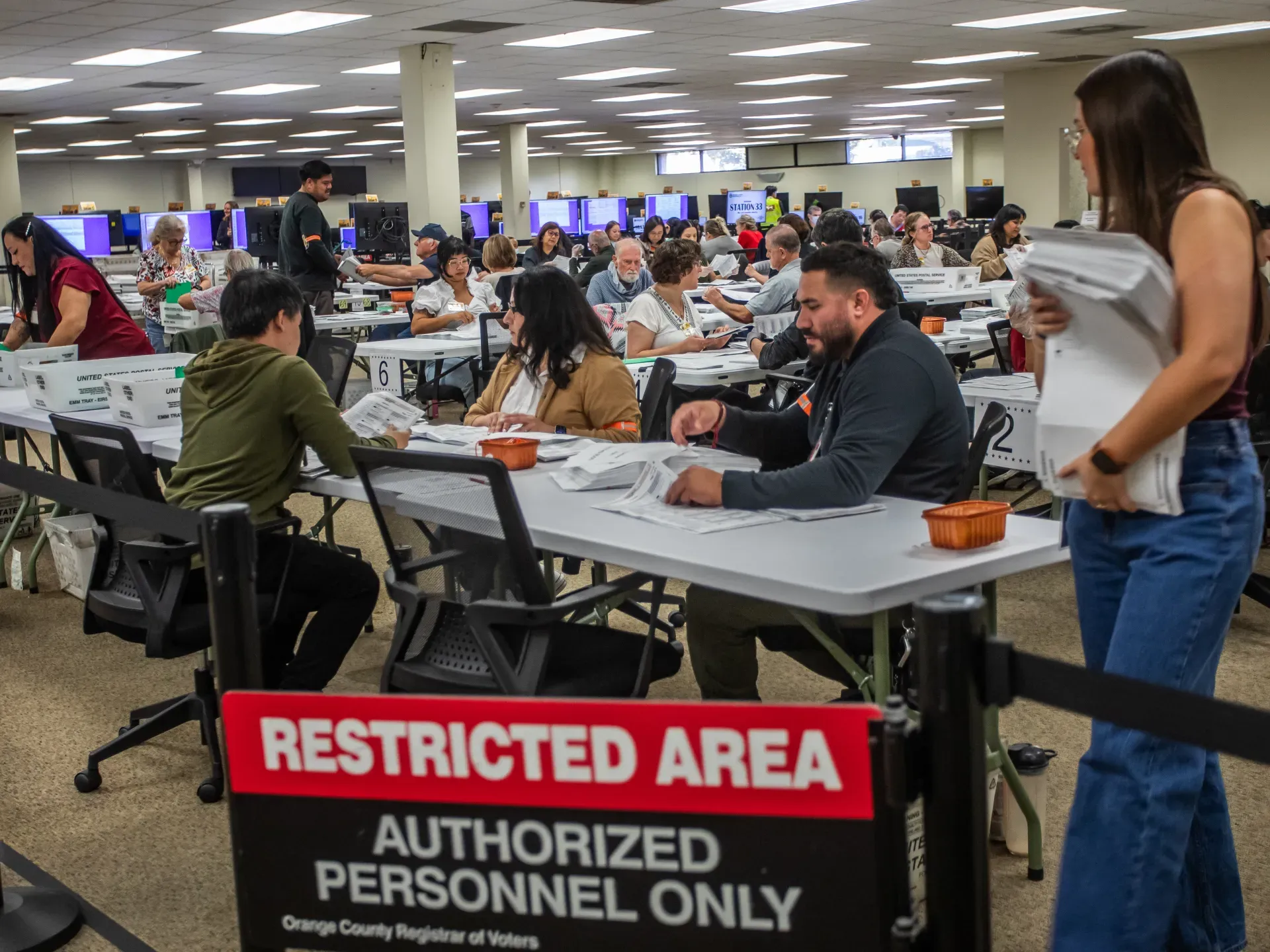
A review of the Heritage Foundation's database spanning two decades revealed a total of 325 convictions related to the fraudulent use of postal ballots. This figure, while representing actual criminal activity, stands in stark contrast to the scale of American elections, where hundreds of millions of ballots are processed.
Comparative studies on mail-in voting
Beyond the Heritage Foundation data, other academic and statistical analyses have reinforced the rarity of mail-in fraud. A 2020 study conducted by the American Statistical Association examined eight states that utilize universal postal voting for all eligible citizens. The study concluded that the transition to mail-in systems did not increase the overall risk of voter fraud.
For instance, Oregon serves as a significant case study. Between the years 2000 and 2020, the state issued more than 100 million postal ballots, yet recorded only 40 fraud cases during that 20-year period. Such figures suggest that the mechanisms for verifying postal ballots—which include matching voter information and conducting signature checks—are highly effective at maintaining security.
How has the administration attempted to restrict postal voting?
President Trump has consistently challenged the security of mail-in ballots, despite having used the method himself in previous elections. His efforts to alter the voting landscape have faced significant judicial resistance.
In an attempt to limit the accessibility of mail-in voting, the President previously sought legislation through Congress that would restrict postal ballots to specific groups, such as the disabled, the ill, military personnel, or those traveling. However, these efforts have not succeeded in overturning the current system where most states allow any eligible voter to request a mail-in ballot without providing a specific justification. In the 2024 presidential election alone, approximately 48 million citizens utilized postal voting.
The administration has also utilized executive actions to influence the process. An executive order directed the US Postal Service to deliver ballots only to voters appearing on citizenship lists compiled by government agencies. Additionally, the order attempted to mandate a uniform envelope style for all postal votes across different states.
Supreme Court intervention
These attempts to overhaul postal voting protocols met a significant legal hurdle in the US Supreme Court. The justices rejected the administration's executive order, characterizing the proposed changes as "arbitrary and capricious," particularly given their proximity to the midterm elections. While the Court indicated it might revisit the legality of such restrictions in the future, the immediate impact was to preserve the existing voting framework for the upcoming cycle.
What are the implications of stricter voter ID requirements?
The debate over voter ID laws centers on the tension between preventing non-citizen voting and ensuring broad access for legal citizens. President Trump has frequently alleged that mass migration is being leveraged to influence election outcomes through illegal voting.
Current federal law strictly prohibits non-citizens from voting in US federal elections, with penalties including fines, imprisonment, and deportation. To address his concerns, the President has pushed for legislation requiring voters to present government-issued photo identification and provide proof of citizenship during both registration and ongoing verification processes.
Critics of these measures, such as Jonathan Diaz of the Campaign Legal Center, argue that the lack of a universal national ID card in the United States creates significant barriers. While a driver's license is a common form of identification, it does not necessarily verify immigration status, meaning many citizens might find themselves unable to meet the proposed heightened standards.
Impact on voter turnout and existing laws
The actual effect of these laws remains a point of contention among experts. According to the Brennan Center for Justice, 21 restrictive voting laws have been enacted since the 2024 election to tighten ID requirements. A 2023 survey by the same organization suggested that approximately 21.3 million voting-age citizens—about 9% of the population—do not have readily available documentation to prove their citizenship.
However, some analysts suggest the impact is less definitive than critics claim. Walter Olson of the Cato Institute notes that there is little empirical proof to support either the claim of widespread fraud or the claim of widespread voter suppression caused by ID laws. Despite this, several Republican-led states have moved forward with more stringent identification requirements in recent years.
Is there evidence of non-citizen voting in US elections?
Evidence regarding non-citizen participation in US elections suggests that such instances are exceptionally rare and have not reached a level capable of influencing national outcomes.
Data from the Heritage Foundation identified only 24 convictions of non-citizens for voting between 2005 and 2025. Furthermore, a 2026 analysis by Reuters of federal court cases showed that over a 30-year period, 129 individuals were criminally charged for non-citizen voting, with only 73 resulting in convictions. Darrell West of the Brookings Institution suggests that the legal risks, including deportation, serve as a powerful deterrent for non-citizens.
The administration has also sought to utilize the Systematic Alien Verification for Entitlements (SAVE) database to identify and remove suspected non-citizens from voter rolls. While the Supreme Court has allowed the use of this database for such purposes, experts warn of potential inaccuracies.
The reliability of the SAVE database
The SAVE database was originally designed in the 1980s to help agencies verify eligibility for government benefits. Because it relies on historical data, critics argue it may contain outdated information, such as records of individuals who have since become naturalized citizens. This could lead to the accidental removal of legitimate voters.
Real-world applications of the database have shown mixed results. In Georgia, an audit identified 432 potential non-citizens on voter rolls spanning 30 years. Conversely, in Nevada, the Department of Homeland Security provided a list of 185 suspected non-citizens, but state officials subsequently verified that every individual on that list was, in fact, a US citizen. While the database can be a tool for updating rolls, its use remains a subject of intense debate regarding accuracy and voter disenfranchisement.
Frequently asked questions
Is postal voting prone to widespread fraud?
No, empirical evidence suggests postal voting fraud is extremely rare. Research from the Brookings Institution found an average of only four fraud cases per 10 million postal votes. Studies in states like Oregon show that high volumes of mail-in ballots do not correlate with increased fraud rates.
Can non-citizens legally vote in US federal elections?
No, it is illegal for non-citizens to participate in US federal elections. Individuals caught attempting to vote illegally face severe consequences, including criminal fines, prison sentences, and deportation. Most experts agree that the legal risks act as a significant deterrent for non-citizens.
What is the SAVE database used for?
The Systematic Alien Verification for Entitlements (SAVE) database is a federal tool used to verify the immigration status of individuals. While it was created to assist with government benefit eligibility, some states now use it to cross-reference voter rolls to identify potential non-citizens.
Why are voter ID laws controversial?
Voter ID laws are controversial because they balance election security against voter access. Proponents argue they prevent fraud, while critics contend they disproportionately affect citizens who lack specific government-issued photo IDs, potentially suppressing legal voter turnout.
Has the Supreme Court ruled on mail-in ballot restrictions?
Yes, the US Supreme Court blocked certain executive attempts to restrict mail-in ballots, labeling the moves "arbitrary and capricious." The Court noted that such significant changes were being implemented too close to the midterm elections to be considered appropriate.
Key takeaways
- Studies show postal voting fraud averages only four cases per 10 million ballots.
- The Heritage Foundation recorded 325 postal ballot fraud convictions over 20 years.
- Non-citizen voting convictions are rare, with only 24 cases identified between 2005 and 2025.
- The SAVE database is used to check voter rolls but faces criticism regarding data accuracy.
Conclusion
The debate over US voter fraud highlights a significant divide between political rhetoric and statistical reality. While President Trump has campaigned on the premise of "rampant" cheating, data from the Brookings Institution, the American Statistical Association, and the Heritage Foundation consistently indicate that fraudulent activity is an outlier rather than a systemic issue. As the administration continues to push for stricter ID requirements and the use of federal databases like SAVE, the legal and social implications for voter access remain a central tension in American democracy. The balance between ensuring election integrity and preventing voter suppression will likely remain a primary focus of the judicial system and legislative bodies in the coming years.