What do the latest US midterm polls indicate?
Democrats currently hold a substantial lead in national polling, though this advantage is not uniformly distributed across individual state contests. According to RealClearPolling, the national average shows Democrats at 51.4% compared to 43.2% for Republicans, representing an 8.2 percentage point margin.
However, the battle for specific Senate seats tells a more nuanced story. In Texas, a state where Democrats have not secured a Senate victory since 1988, Democrat James Talarico is currently leading Republican Ken Paxton with 48.5% to 46.7%, according to the poll aggregator. This suggests a significant shift in a traditionally Republican stronghold.
Michigan also remains a critical focal point for both parties. A Mitchell Research poll conducted for CBS Detroit, covering October 26-27, found Democrat Abdul El-Sayed leading Republican Mike Rogers 51% to 44%. This represents a widening of his lead to seven percentage points from earlier in the month. Conversely, RealClearPolling reported a much tighter margin in the same state, with El-Sayed at 48% and Rogers at 46%.
The battle for young voters in Michigan
Both political parties are aggressively targeting younger demographics to secure victory in swing states like Michigan. Democratic candidates are emphasizing personal connection to counter negative advertising. Will Lawrence, a Democratic candidate for Michigan’s 7th Congressional District, noted that young people are a vital part of the coalition that could decide the outcome on November 3rd.
Democratic Congressman Maxwell Frost, campaigning for El-Sayed, highlighted the importance of face-to-face interaction. He suggested that while voters have been exposed to "negative bigoted ads" and "Islamophobic ads," direct conversations are necessary to explain why El-Sayed is the appropriate choice for the Senate. On the other side, some Republican supporters claim there is an emerging conservative movement within Gen Z that is being overlooked by mainstream media.
Can Democrats secure control of Congress?
Democrats are pursuing a path to overturn Republican majorities in both the House of Representatives and the Senate, but the mathematical requirements for each chamber differ significantly. To take control of the House, Democrats require a net gain of three seats. To flip the Senate, they need a net gain of four seats.
The current Senate composition stands at 53 Republicans and 47 Democrats, with two independents who caucus with the Democrats. To reach the 51-seat threshold required for a majority, Democrats must navigate a complex landscape of contested seats. Even if Democrats successfully win in North Carolina and Ohio while maintaining their current seats, they would still remain two seats short of a majority.
Potential paths to a Democratic Senate majority include victories in Alaska and Texas. Meanwhile, Republicans are looking to hold their ground in Michigan to prevent a Democratic surge. Even if the Senate remains out of reach, gaining control of the House would provide Democrats with significant leverage. A Democratic-led House could block portions of the legislative agenda and initiate investigations into the administration, including the ability to call officials to testify before congressional committees.
How are the major campaigns progressing on the ground?
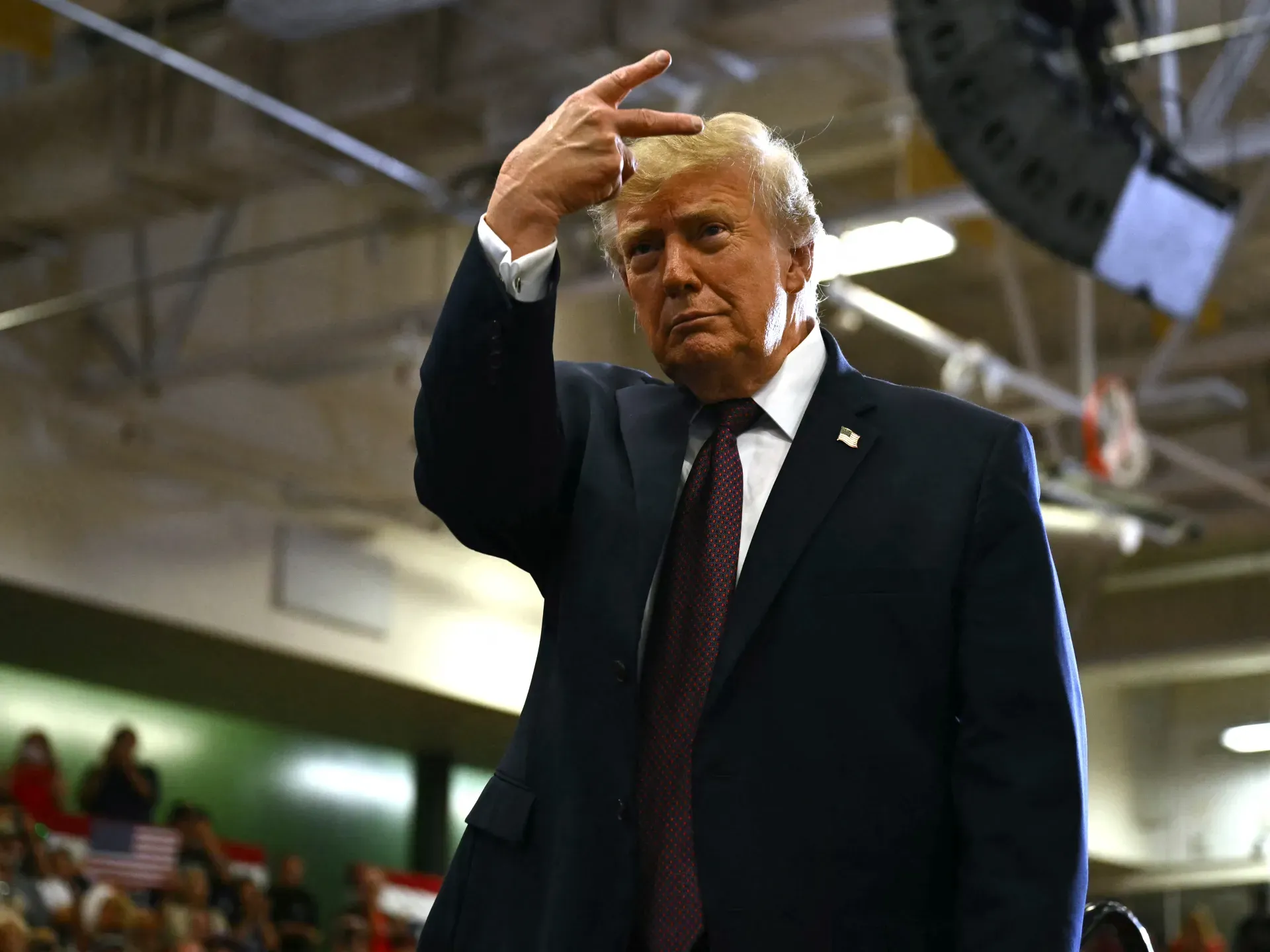
The final days of the campaign have seen high-profile figures from both parties engaging in intensive regional rallies. President Donald Trump has been active in the Midwest, recently campaigning in Ohio for Republican Senator Jon Husted, who is challenging former Democratic Senator Sherrod Brown. During these events, Trump has addressed various controversies, including defending Republican gubernatorial candidate Vivek Ramaswamy against criticism regarding an advertisement featuring the mother of rival Amy Acton.
In Georgia, the Democratic effort is being bolstered by former President Barack Obama. Joining Senator Jon Ossoff and gubernatorial candidate Keisha Lance Bottoms, Obama criticized the Republican response to his recent comments regarding White House renovations. Obama argued that the opposition was focusing on trivialities rather than addressing the rising cost of living, stating that the Republican leadership lacks solutions for actual problems.
Republican Vice President JD Vance has also been active, specifically in North Carolina, where former Governor Roy Cooper is facing Republican Michael Whatley in a Senate contest. These high-stakes appearances reflect the intense focus on swing states as the election approaches.
Voter turnout and demographic concerns
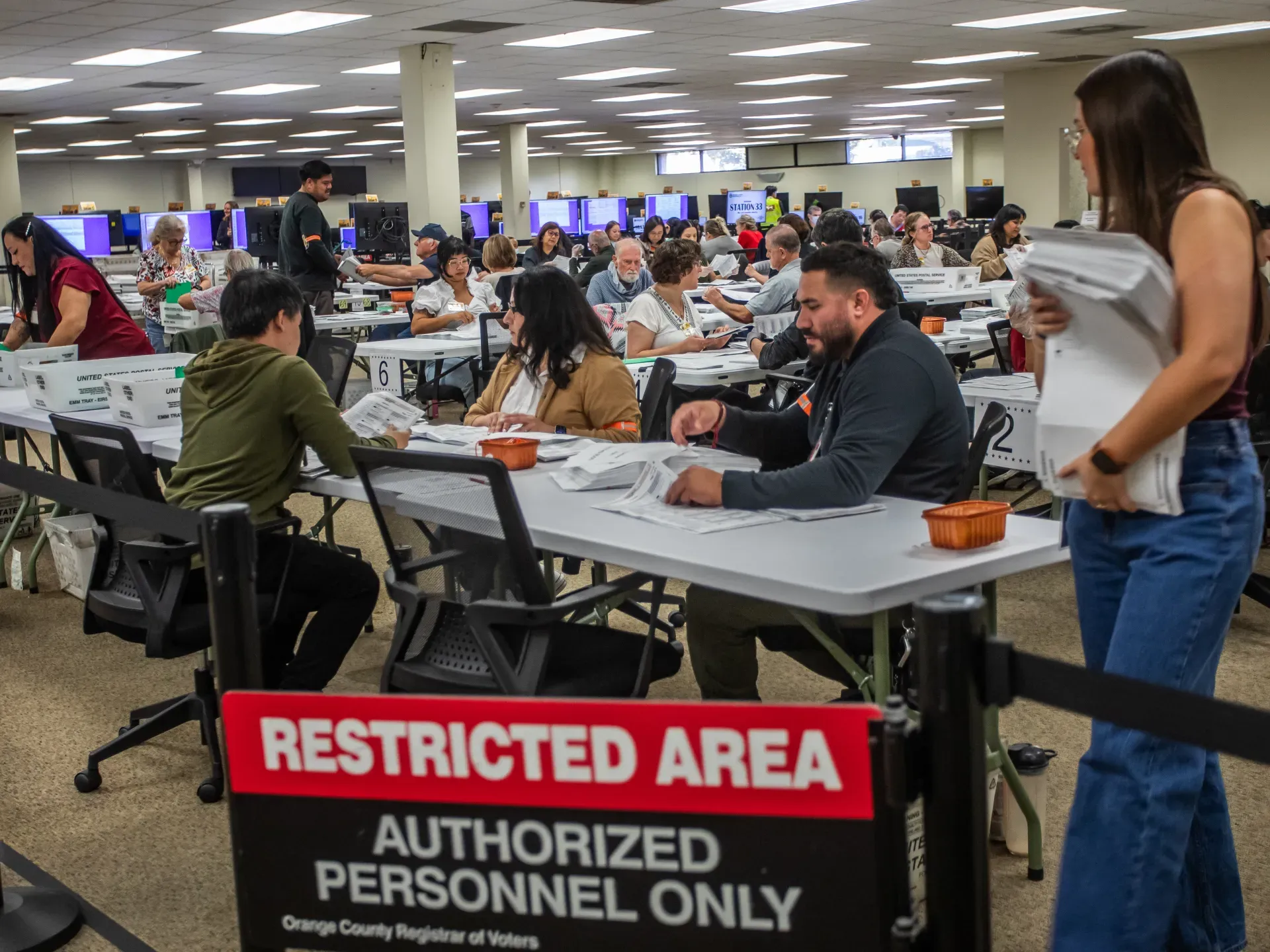
As the election nears, Republicans are expressing specific concerns regarding voter turnout in rural versus urban areas. In Texas, data suggests a disparity in engagement: approximately 21% of registered voters in rural areas have cast ballots, compared to 24% in more densely populated metropolitan regions. Ensuring rural turnout remains a priority for the GOP to offset Democratic strength in cities.
What is the upcoming schedule for the candidates?
The final week of campaigning is packed with scheduled appearances designed to mobilize key voter blocs. President Trump is set to move through the South and the Midwest, with scheduled stops in South Carolina, Florida, and Kansas. South Carolina is a particularly important target for Democrats, who are attempting to make inroads in a traditionally conservative state.
In Texas, Vice President JD Vance is scheduled to hold a rally in Weatherford to support Ken Paxton's Senate bid. This coincides with campaign efforts by Democrat James Talarico in Dallas. Meanwhile, former Vice President Kamala Harris is expected to focus her efforts on Georgia, supporting Senator Jon Ossoff as he defends his seat against Republican Mike Collins. As Georgia concludes its early in-person voting on Friday, the intensity of the campaign is expected to peak.
Frequently asked questions
What is the current national polling lead in the 2026 midterms?
Democrats currently hold a national lead of 8.2 percentage points. According to RealClearPolling, the national average places Democrats at 51.4% and Republicans at 43.2%. This lead, however, does not guarantee success in individual state-level Senate or House races.
How many seats do Democrats need to win to control the Senate?
Democrats need to reach a total of 51 seats to secure a Senate majority. Currently, Republicans hold 53 seats, while Democrats hold 47, supplemented by two independents who caucus with them. This requires a net gain of four seats for the Democrats.
What are the primary issues driving voter frustration?
Voters have expressed significant frustration regarding the rising cost of living, specifically mentioning increasing fuel prices, rent, and mortgage costs. Some voters have described feeling "frustrated and out of hope" due to these economic pressures, which may influence their decision at the polls.
What impact would a Democratic House of Representatives have?
A Democratic House would allow the party to block specific elements of the President's legislative agenda. Additionally, it would grant them the authority to launch congressional investigations and call administration officials to testify before various committees, potentially increasing oversight of the executive branch.
Which states are considered critical battlegrounds?
Michigan, Texas, Georgia, North Carolina, and Ohio are identified as key battleground states. In Michigan, the race between Abdul El-Sayed and Mike Rogers is particularly tight, while in Texas, the race between James Talarico and Ken Paxton is seeing unexpected shifts in momentum.
Key takeaways
- Democrats hold a national polling lead of 51.4% to 43.2% according to RealClearPolling.
- Democrats need a net gain of four Senate seats and three House seats to take control.
- James Talarico leads Ken Paxton in Texas with 48.5% to 46.7%.
- Economic concerns like rising rent and fuel prices are driving voter frustration.
- Republicans are focused on rural voter turnout to compete with urban Democratic strength.
The final countdown to Election Day
As the US midterm elections 2026 approach, the political landscape remains highly volatile. While the national polling suggests a Democratic advantage, the actual control of Congress will be decided by narrow margins in specific swing states. The upcoming days will see intense mobilization from top leaders, including Donald Trump and Kamala Harris, as they attempt to sway undecided voters and maximize turnout in their respective strongholds. The outcome will significantly shape the legislative capacity and oversight power of the next congressional term.