Why has the suspension of Bogdan Swieczkowski triggered a national crisis?
The suspension of Chief Judge Bogdan Swieczkowski on Friday served as the primary catalyst for the current escalation in tensions between the Polish government and the Constitutional Tribunal. President Karol Nawrocki characterized the move as an urgent matter, citing a direct "threat to Poland’s internal security" resulting from the sudden removal of the court's head. The suspension has effectively paralyzed the top judicial body responsible for deciding constitutional matters, creating a power vacuum and a legal deadlock.
The crisis is not merely about a single appointment but reflects a deep-seated struggle over the control of judicial institutions. The Constitutional Tribunal has been the focal point of a multi-year political battle regarding the politicization of the Polish judiciary. The current standoff represents a collision between the executive branch's attempt to reform the court and the judiciary's attempt to maintain its existing structure and personnel.
The role of the Constitutional Tribunal
As Poland's highest court for constitutional matters, the Tribunal holds the power to invalidate laws passed by Parliament if they are deemed unconstitutional. This power makes it a central player in the country's political landscape, as any major legislative shift can be challenged and overturned by the court's rulings. Consequently, the composition of the Tribunal is a matter of intense political interest for both the governing coalition and the opposition.
How do the conflicting perspectives of Tusk and Nawrocki shape the standoff?
Prime Minister Donald Tusk and President Karol Nawrocki represent fundamentally different interpretations of the rule of law and the legitimacy of the current judicial system. Tusk, leading the centrist Civic Coalition, views the suspension of Swieczkowski as a necessary, albeit painful, step to dismantle the judicial influence established by the previous Law and Justice (PiS) administration. He has accused opposition leaders of attempting to "destroy democracy and rule of law," arguing that the court's current makeup is not politically neutral.
In contrast, President Nawrocki, a right-wing figure, has participated in consultations with nationalist and far-right parties to address the security implications of the judicial disruption. While Nawrocki has also been involved in blocking certain court nominations during his administration, his current stance focuses on the instability caused by the government's unilateral actions against the Tribunal. The lack of participation from Tusk's Civic Coalition in the President's crisis talks underscores the profound political fragmentation in Warsaw.
The political divide in the Presidential Palace
The recent meetings at the presidential palace highlighted the widening chasm in Polish politics. By convening representatives from nationalist and far-right factions while excluding the governing centrist party, the President has signaled a preference for a conservative bloc to address the crisis. This exclusion prevents a unified governmental response and suggests that any potential resolution must navigate a highly polarized legislative and executive environment.
What are the underlying causes of the judicial dispute?
The current conflict is rooted in the long-standing politicization of the Polish courts that began during the 2015-2023 government led by the Law and Justice (PiS) party. Bogdan Swieczkowski, the suspended judge, was appointed during that era. Tusk’s administration argues that Swieczkowski utilized his authority as head of the court to obstruct the democratic process, specifically by preventing Parliament from electing new judges to the Tribunal.
A significant point of contention involves the hierarchy of legal authority within Poland. The Tusk government and its pro-European allies have frequently criticized the Constitutional Tribunal for issuing rulings that favor domestic Polish legislation over European Union law. This tension has placed the Tribunal at the center of a broader debate regarding Poland's sovereignty and its obligations as an EU member state. The court's official communications have even labeled the government's recent actions as a "coup d’etat," reflecting the extreme nature of the rhetoric used by both sides.
The PiS legacy and judicial appointments
The influence of the former PiS government continues to shape the legal landscape. Many of the judges currently serving on the Tribunal were appointed under their tenure, leading to accusations from the current administration that the court serves the interests of the previous political order rather than the constitution. This legacy of appointments has created a judicial body that is viewed by the governing coalition as an obstacle to the restoration of democratic norms.
What is the impact of the crisis on Poland's international standing?
The ongoing standoff has drawn immediate concern from international institutions, most notably the European Commission. The Commission has urged President Nawrocki to accept the nomination of new judges to resolve the impasse and prevent a further spiral of confrontation. The stability of Poland's judiciary is closely linked to its adherence to EU legal standards, and the current crisis threatens to further complicate Poland's relationship with Brussels.
The international community views the situation as a test of the rule of law in a key EU member state. If the crisis remains unresolved, it could lead to increased friction regarding the application of EU law and the potential for further legal or financial repercussions from the European Union. The ability of the Polish government and the opposition to find a compromise will likely determine whether the country can stabilize its judicial institutions or if it will enter a period of prolonged institutional instability.
European Commission intervention
The intervention by the European Commission, as reported by the AFP news agency, underscores the high stakes involved. By calling for the acceptance of new judicial nominations, the Commission is attempting to steer the country toward a consensus-based resolution. The warning that Poland needs to avoid a confrontation that "spirals into something far worse" highlights the fear that the domestic judicial dispute could evolve into a broader geopolitical or economic crisis for the nation.
Frequently asked questions
What is the Constitutional Tribunal's role in Poland?
The Constitutional Tribunal is Poland's highest judicial body for constitutional matters. Its primary function is to ensure that laws passed by the legislature align with the country's constitution. It has the authority to strike down legislation that is found to be in violation of constitutional principles, making it a critical check on parliamentary power.
Why was Bogdan Swieczkowski suspended?
Bogdan Swieczkowski was suspended by the government amid allegations that he misused his position as head of the Constitutional Tribunal. Prime Minister Donald Tusk's administration argues the suspension was necessary to prevent the judge from blocking the election of new judges and to restore judicial neutrality following years of perceived politicization.
How has the European Union responded to the crisis?
The European Commission has urged President Karol Nawrocki to accept the nomination of new judges to resolve the standoff. The Commission expressed concern that a deepening confrontation could lead to a significant escalation, emphasizing the need for stability and the preservation of the rule of law within Poland.
Who is participating in the crisis talks?
President Karol Nawrocki has held consultations with representatives from nationalist, far-right, and certain governing coalition parties. However, Prime Minister Donald Tusk's centrist Civic Coalition has declined to participate in these specific talks, reflecting the deep political divide regarding the handling of the judicial crisis.
What are the main arguments used by the opposition?
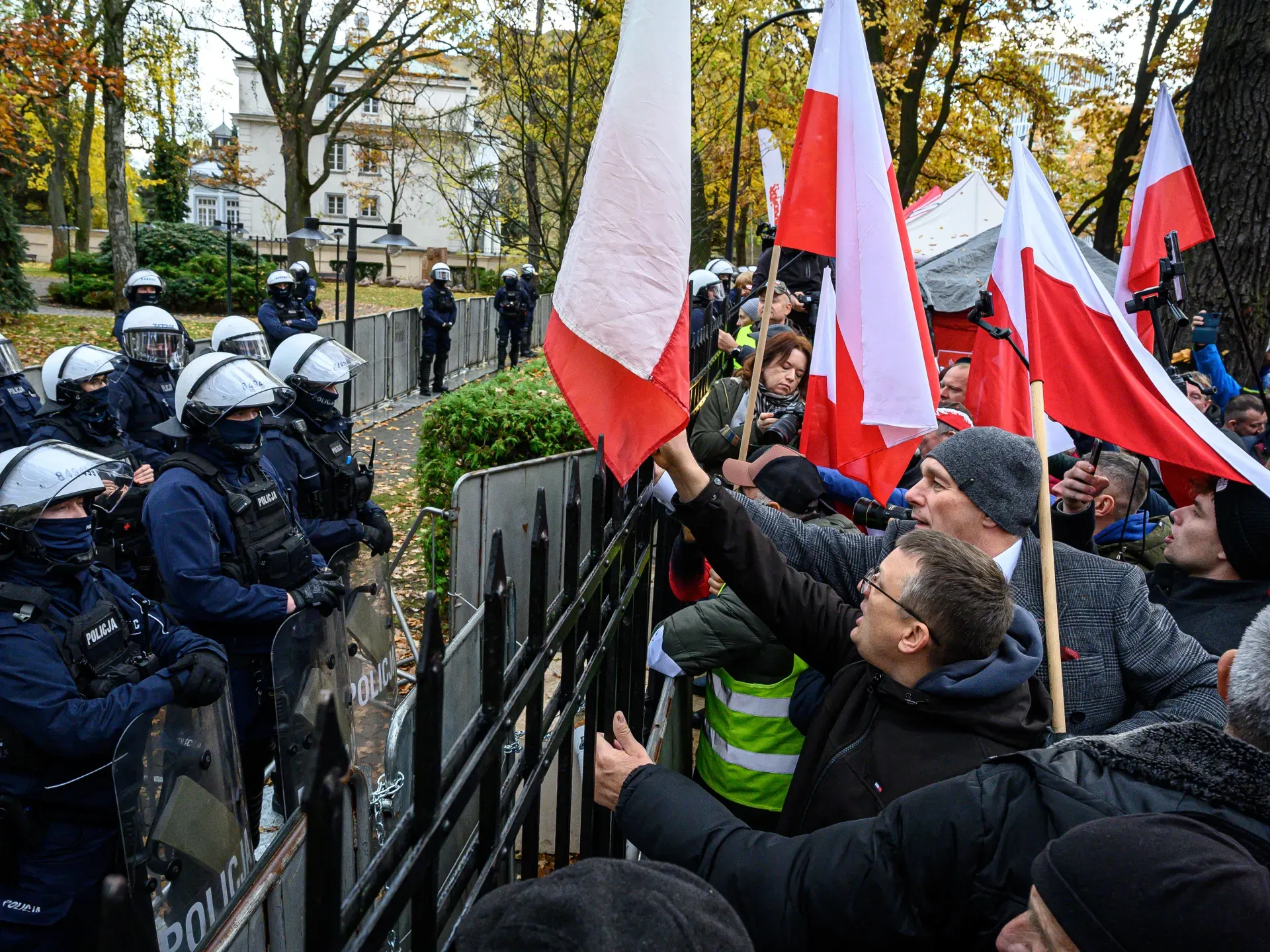
Opposition leaders, including those from the Law and Justice (PiS) party, argue that the government's actions against the court constitute an attack on democracy. They view the suspension of judges as a way to undermine the independence of the judiciary and have organized protests in support of the existing court members.
Key takeaways
- The suspension of Chief Judge Bogdan Swieczkowski has triggered a major constitutional crisis in Poland.
- President Nawrocki held crisis talks with nationalist and far-right leaders, excluding the Civic Coalition.
- Prime Minister Tusk views the judicial reforms as essential to restoring the rule of law.
- The European Commission has urged the acceptance of new judge nominations to prevent escalation.
- The dispute is rooted in years of tension regarding the politicization of the judiciary under PiS.
Conclusion
The Polish constitutional crisis has moved beyond a mere judicial dispute into a fundamental struggle over the nature of governance and the rule of law. The standoff between the Tusk administration's reformist agenda and the President's defense of the existing judicial structure has created a state of institutional paralysis. As the Constitutional Tribunal remains at the center of this storm, the involvement of the European Commission highlights the international implications of Poland's domestic instability. Whether a compromise can be reached through political dialogue or if the confrontation will continue to escalate remains the defining question for Poland's democratic future.