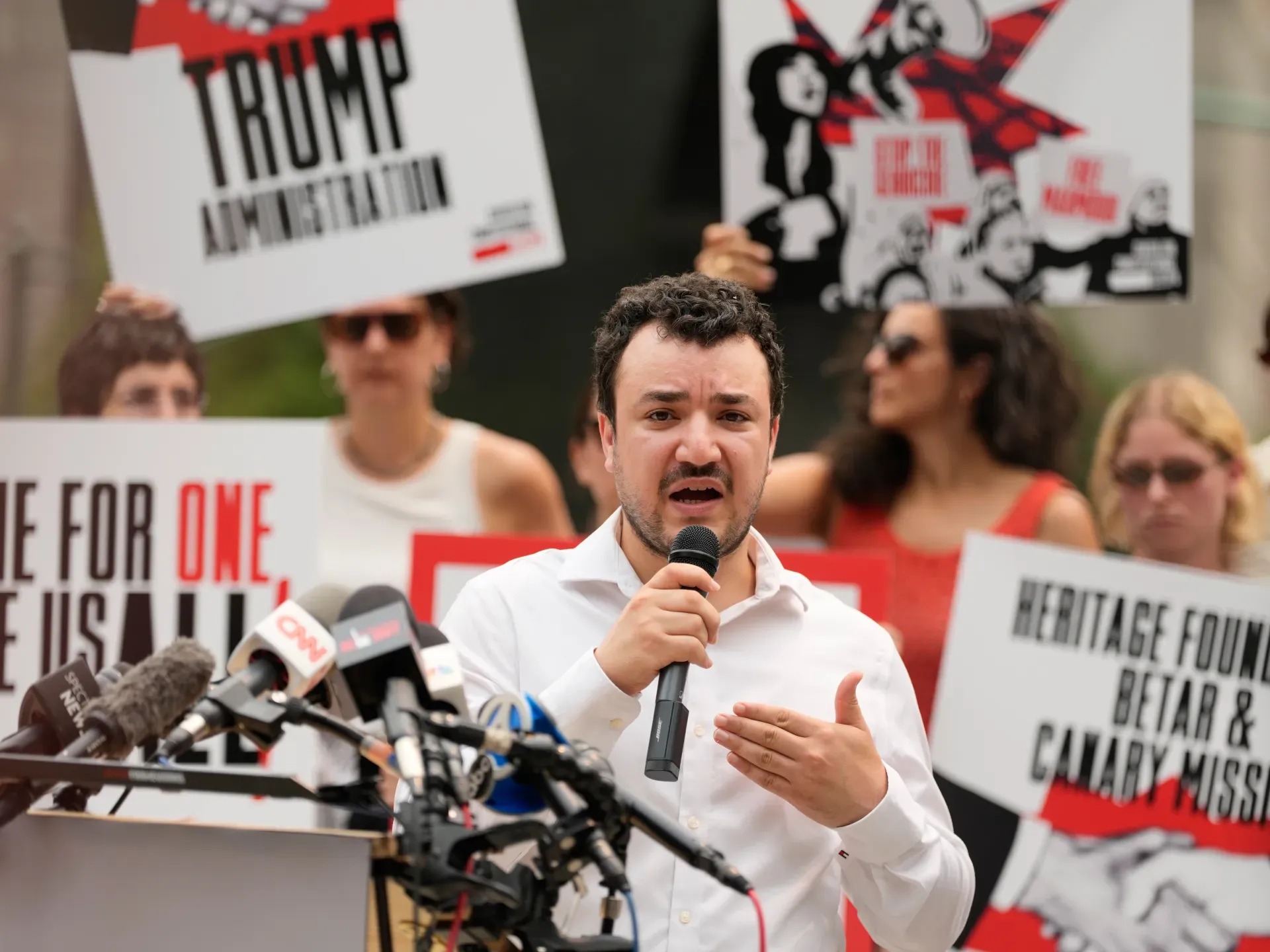
How has Mahmoud Khalil influenced US political discourse?
Mahmoud Khalil believes that Palestinian student advocacy has acted as a catalyst for significant shifts in the American political landscape. Speaking at a recent event, Khalil noted that the American public is increasingly viewing Palestinians as equal human beings, a shift he attributes to the intensity and persistence of campus-based advocacy. This change in public perception is not merely social; it is manifesting in electoral outcomes.
Khalil pointed to the rise of progressive candidates in high-level positions as tangible evidence of this movement's impact. He specifically cited figures such as Dr. Abdul El-Sayed, who is campaigning for the US Senate in Michigan, and Zohran Mamdani, the Mayor of New York City, as examples of leaders whose presence in power reflects a changing political tide. According to Khalil, the activism seen on campuses has empowered a generation to question long-held views on Middle Eastern policy and domestic civil rights.
What was the experience of Mahmoud Khalil during his detention?
The personal journey of Mahmoud Khalil is marked by a period of significant legal and physical upheaval following his involvement in the 2024 Columbia University demonstrations. Khalil, a 31-year-old Columbia graduate and permanent US resident, was arrested by immigration authorities on March 8, 2025, during a federal crackdown targeting foreign student activists. He was subsequently held in immigration custody for three months without being charged with a crime.
His memoir, No Land to Stand On: Notes from Detention, provides a detailed account of this period. Khalil's detention occurred at the height of a broader government effort to suppress student-led protests. Even after his release from immigration custody on June 20, 2025, his legal status remains precarious, as the Trump administration continues to pursue his deportation. For Khalil, the struggle has become dual-faceted: a fight for his personal right to live a normal life with his family and a fight for the broader principle of free speech within the United States.
The personal toll of political activism
Beyond the legal complexities, Khalil has emphasized the human cost of his activism. He described a desire to return to 'normalcy'—a life where he can exist as a father in public spaces without the constant threat of state interference. This personal dimension underscores the high stakes involved for student activists who find themselves caught between ideological movements and federal enforcement actions.
What is the conflict between activists and Columbia University?
The relationship between student protesters and Columbia University administration has been characterized by intense friction and legal disputes. Khalil has been a vocal critic of the university's response to the 2024 demonstrations, which saw the Manhattan campus become a focal point for nationwide protests against the war in Gaza. He accused the university of choosing 'brutality' and 'repression' when it authorized the New York Police Department to clear protesters from the campus.
Furthermore, Khalil has filed a discrimination lawsuit against the university, alleging that the institution failed to protect him from harassment prior to his detention. He has accused the leadership of attempting to 'erase' Palestinian voices from the academic environment. In response to these allegations and the controversy surrounding his return to campus, Columbia University has maintained a stance of institutional neutrality regarding the content of his speech.
University responses to campus unrest
Columbia University has defended its actions by citing safety concerns and the necessity of maintaining order during demonstrations. A spokesperson for the university stated that the institution is committed to 'rigorous debate, inquiry, and respectful dialogue across differing perspectives.' To address the controversy regarding Khalil's recent visit, the university clarified that while it supports the rights of faculty to organize academic events, an invitation to speak does not constitute an official endorsement of the speaker's viewpoints.
How is the legal landscape affecting student activists?
The legal challenges faced by Mahmoud Khalil are indicative of a broader trend involving the intersection of immigration law and political activism. The federal crackdown on foreign student activists has created a volatile environment for those participating in high-profile demonstrations. Khalil's case is particularly notable because he holds permanent US residency, yet was still subjected to prolonged detention without criminal charges.
Recent judicial rulings have attempted to navigate this tension. For instance, a US judge recently ruled against efforts by the Trump administration to deport certain pro-Palestinian students, suggesting that the legal battle over the rights of activists to protest is far from settled. Khalil's ongoing fight against deportation serves as a primary example of how immigration enforcement is being used as a tool in the context of political dissent, creating a precedent that could affect many international students and residents in the United States.
Key takeaways
- Mahmoud Khalil asserts that campus activism is driving the election of progressive candidates like Zohran Mamdani and Dr. Abdul El-Sayed.
- Khalil was detained by ICE for three months starting in March 2025, despite holding permanent US residency.
- Columbia University faces a discrimination lawsuit from Khalil regarding his treatment and the university's handling of protests.
- The Trump administration continues to pursue the deportation of Khalil following his release in June 2025.
- Khalil's memoir, No Land to Stand On, details his experiences during federal crackdowns on student activists.
Frequently asked questions
Who is Mahmoud Khalil?
Mahmoud Khalil is a 31-year-old Columbia University graduate and a prominent pro-Palestinian activist. He became a central figure during the 2024 campus protests in the United States and is currently involved in legal battles regarding his residency and his right to free speech.
Why was Mahmoud Khalil arrested?
Khalil was arrested by immigration authorities on March 8, 2025, during a period of federal crackdowns on foreign student activists. His arrest occurred amidst nationwide student demonstrations protesting the war in Gaza, though he was held without criminal charges.
What is the status of Khalil's residency?
Despite being released from immigration custody on June 20, 2025, Khalil's residency remains under threat. The Trump administration is actively seeking his deportation, leading to an ongoing legal struggle over his ability to remain in the United States.
How has Columbia University responded to Khalil's claims?
Columbia University has denied allegations of repression, stating that it supports academic inquiry and respectful dialogue. The university maintains that its decision to involve the NYPD during protests was based on safety threats and that hosting Khalil does not imply endorsement of his views.
What impact does Khalil claim his activism has had?
Khalil claims that Palestinian activism has shifted American public perception and contributed to the election of more progressive political candidates in the US Congress and other influential positions, such as the Mayor of New York City.
Conclusion
The case of Mahmoud Khalil serves as a significant intersection of civil rights, immigration law, and international politics. His journey from a student leader at Columbia to a target of federal immigration enforcement highlights the increasing tensions between political dissent and state authority in the United States. While the personal consequences for Khalil have been severe, including detention and ongoing deportation threats, he views the movement as a successful driver of political evolution. As the legal battles regarding his status and the university's responsibilities continue, the outcome will likely influence the future of student activism and the boundaries of political expression on American campuses.