What are the early projections for the Israel election 2026?
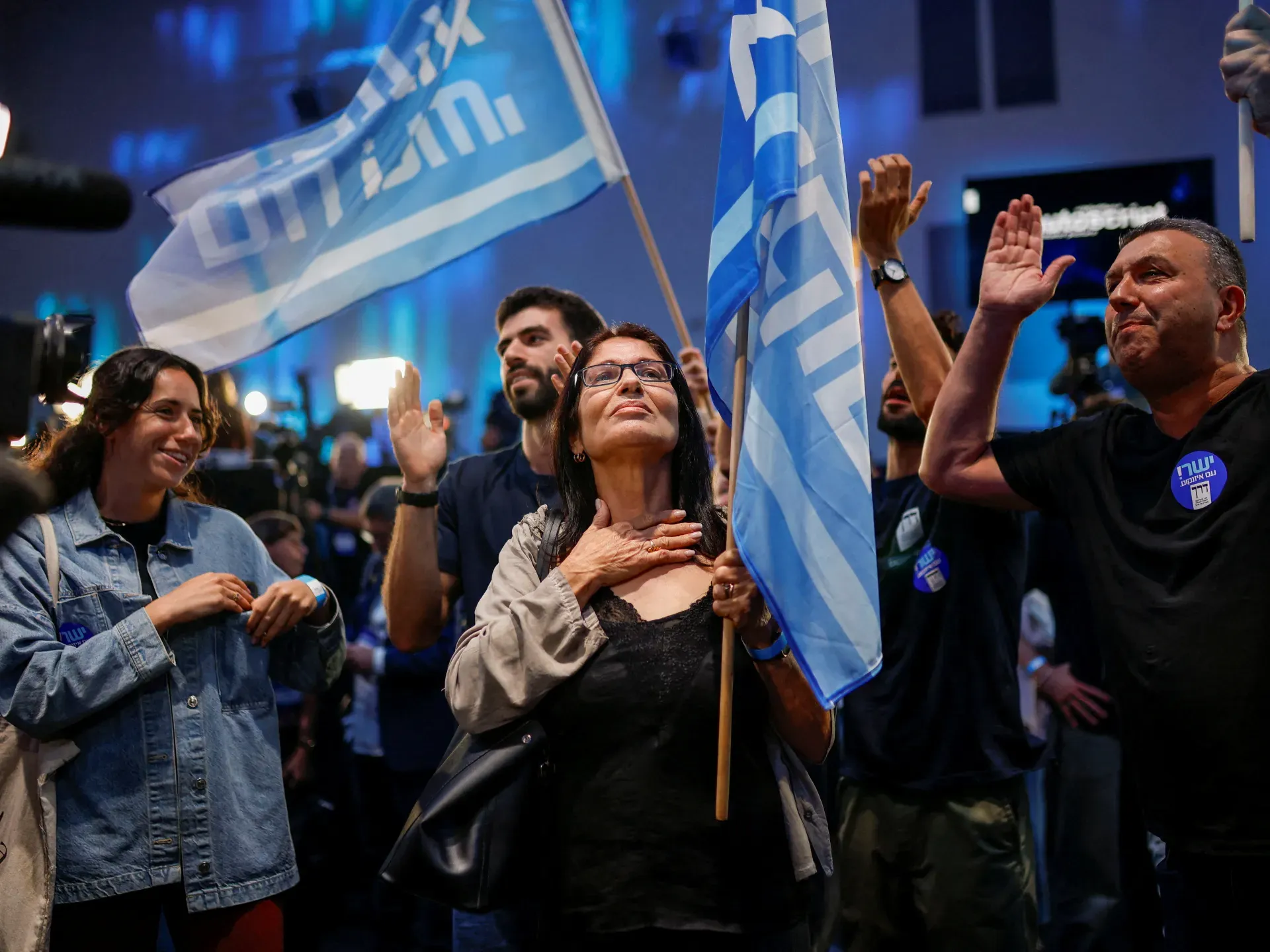
Early projections following the Israel election 2026 indicate a highly fragmented Knesset, where no single bloc has secured a definitive path to power. According to projections from Israeli Channels 12 and 13, the Likud party is on track to win approximately 27 seats, placing it as the largest single party in the parliament. This stands in contrast to Gadi Eisenkot’s Yashar party, which is projected to receive 21 seats.
The broader political landscape remains contested between two main camps. The Times of Israel projected that Netanyahu’s overall bloc would secure 56 seats, while the alliance led by Gadi Eisenkot is estimated to hold 49 seats. With more than 50% of the ballots counted at the time of reporting, the gap between the major blocs suggests that the final outcome will depend heavily on the remaining uncounted votes.
Seat distribution overview
The current projections highlight a significant divide in the Israeli electorate. While Likud maintains its status as the dominant individual party, the combined strength of the opposition blocs remains a formidable challenge to Netanyahu's goal of forming a right-wing government. The competition between Netanyahu and Eisenkot defines the primary struggle for control over the legislative agenda.
How did Benjamin Netanyahu respond to the election results?
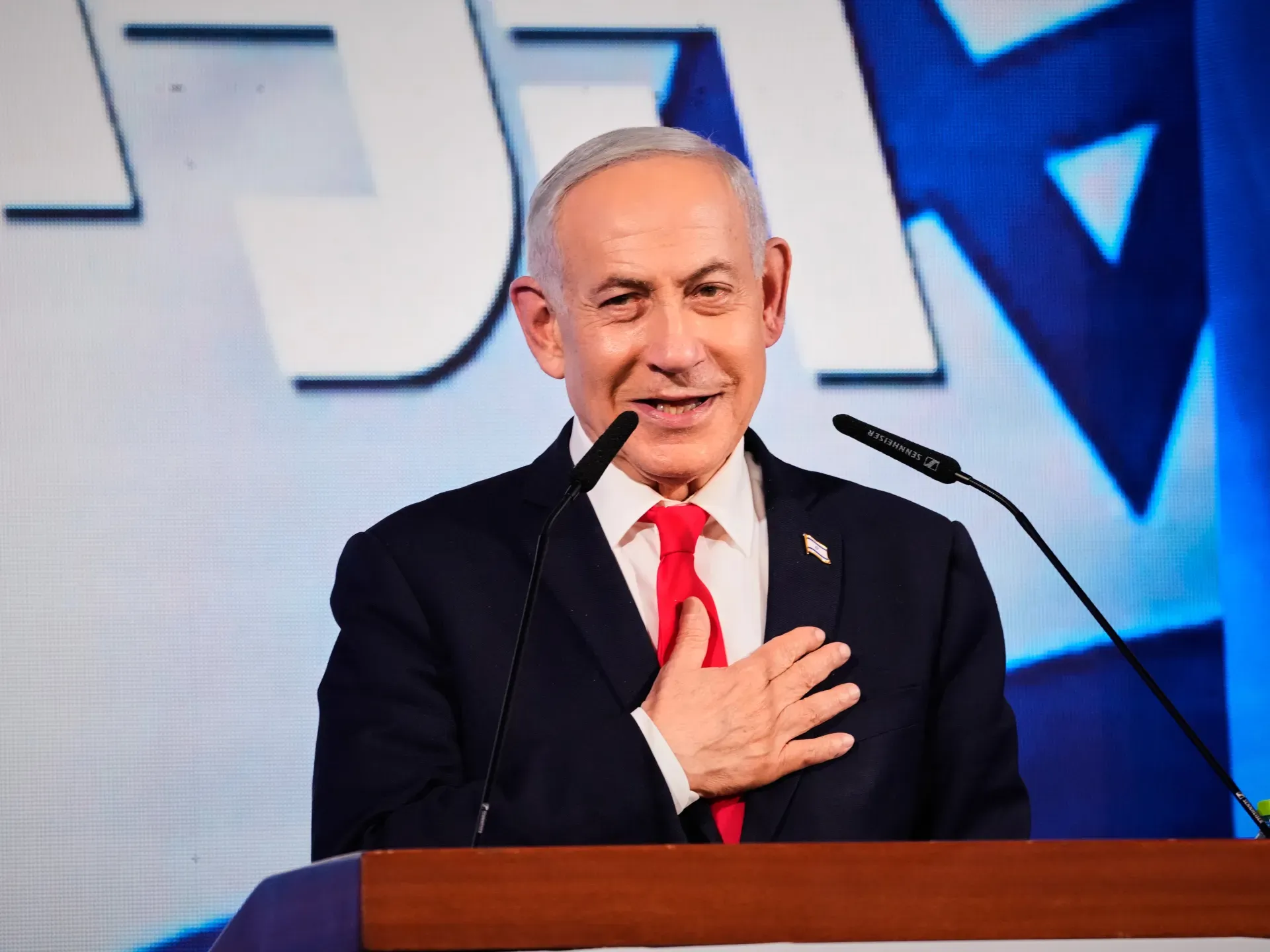
Benjamin Netanyahu addressed his supporters at the Likud party headquarters in West Jerusalem, emphasizing the necessity of a right-wing government for national security. Speaking on Tuesday, October 28, 2026, shortly after polls closed, Netanyahu asserted that a coalition involving Arab parties is not a viable option because he views them as being "against our existence."
Netanyahu attempted to frame the election results in a positive light, acknowledging Likud's position as the largest party while maintaining that the "true results" would not be fully realized for another one or two days. His speech focused heavily on his administration's security record since 2022, framing his leadership as a period of decisive action against regional threats.
Netanyahu's security narrative
During his address, the Prime Minister listed several high-profile military and intelligence achievements as the foundation for his continued leadership. He claimed that his government had successfully targeted key figures in regional militant and state-sponsored organizations, asserting that these actions had fundamentally altered the security landscape of the Middle East. He positioned these successes as essential for Israel's survival.
What security achievements did Netanyahu claim?
Netanyahu claimed that his administration has "worked wonders" that have fundamentally reshaped the Middle East. He specifically cited the elimination of several high-ranking leaders, including Mohammed Deif, Ismail Haniyeh, Yahya Sinwar, Hassan Nasrallah, and the Iranian Supreme Leader Ali Khamenei, as evidence of Israel's increased strength. He argued that these operations have effectively neutralized immediate existential threats.
Beyond the elimination of specific leaders, Netanyahu highlighted the establishment of security zones within Gaza, Lebanon, and Syria. He stated that these strategic moves have brought the Iranian regime to the "edge of the abyss" and left the nation weaker than ever. He expressed a desire to work alongside United States President Donald Trump to finalize the removal of the Iranian threat from the region.
Strategic territorial claims
The Prime Minister's rhetoric focused on the concept of "security zones" as a means of providing a buffer against regional instability. By claiming these zones exist deep within Gaza, Lebanon, and Syria, Netanyahu is presenting a vision of proactive defense that seeks to move the front lines away from Israeli borders. This stance is central to his argument for a right-wing government that prioritizes military strength over diplomatic compromise.
Why is forming a coalition so difficult in this election?
The difficulty in forming a government stems from the lack of a clear majority for either the Netanyahu-led bloc or the opposition. Even though Likud is projected to be the largest party, the mathematical reality of the Knesset makes a stable coalition a complex task. Analysts suggest that the path to a governing majority will require navigating deeply ideological divides.
Alon Pinkas, a former Israeli ambassador, noted that the party securing the most seats might be forced into an "uncomfortable" coalition deal to achieve the necessary numbers. However, he also observed that voters who supported the opposition might be unwilling to accept a government that relies on a deal with Netanyahu's coalition. This creates a political deadlock where the winning party may struggle to find partners that satisfy both their mandate and the parliamentary arithmetic.
The challenge of political legitimacy
A significant hurdle for any incoming government will be the perceived legitimacy of its coalition. If a leader is forced to partner with parties that contradict their campaign promises, they risk internal instability and public backlash. This is particularly acute in the current climate, where the electorate is sharply divided on the future direction of Israel's security and social policies.
What do political analysts say about the Likud's performance?
Political analysts have offered a more critical view of Netanyahu's claims of success, suggesting that his rhetoric may be an attempt to mask a relative decline in Likud's strength. Marwan Bishara, a senior political analyst for Al Jazeera, stated that Netanyahu was attempting to project a level of success he does not merit, noting that while Likud is the largest party, this represents its lowest level of support since 2009.
Similarly, political analyst Dan Perry suggested that Netanyahu's speech was a strategic attempt to "spin the situation" following the release of exit polls. The consensus among these observers is that while Netanyahu is maintaining his position as the leader of the largest party, the underlying trend shows a shrinking base of support compared to previous election cycles. This fragmentation makes the prospect of a stable, long-term government increasingly uncertain.
FAQ: Israel election 2026
Which party is leading in the 2026 Israeli election projections?
The Likud party, led by Benjamin Netanyahu, is projected to be the largest party in the Knesset. Early estimates from Israeli Channels 12 and 13 suggest Likud will win approximately 27 seats, though no party has yet secured a clear governing majority.
How many seats is Gadi Eisenkot's party expected to win?
Gadi Eisenkot’s Yashar party is projected to win 21 seats according to early election data. His broader alliance is estimated to hold a total of 49 seats, making it the primary challenger to Netanyahu's bloc in the current legislative session.
What is Netanyahu's stance on coalition with Arab parties?
Benjamin Netanyahu has stated that a right-wing government is essential for Israel's security and has explicitly rejected coalitions with Arab parties. He characterized these parties as being "against our existence," arguing that they cannot be part of a stable governing majority.
What security achievements did Netanyahu highlight in his speech?
Netanyahu cited the elimination of several regional leaders, including Ismail Haniyeh and Hassan Nasrallah, as key achievements. He also claimed the establishment of security zones in Gaza, Lebanon, and Syria has significantly weakened the Iranian regime and reduced existential threats to Israel.
Is a stable government likely to form quickly?
A stable government may be difficult to form due to the fragmented nature of the results. Analysts suggest that the leading parties may have to pursue "uncomfortable" coalition deals, which could face significant opposition from voters and lead to political instability.
Key takeaways
- Likud is projected to be the largest party with approximately 27 seats.
- Netanyahu's bloc is estimated to hold 56 seats, while Eisenkot's alliance holds 49.
- Netanyahu claims his administration has neutralized major regional threats and leaders.
- Analysts suggest Likud's current standing is its lowest since 2009.
- Coalition formation remains uncertain due to the lack of a clear majority.
Conclusion
The 2026 Israeli legislative election has resulted in a deeply divided parliament, with Benjamin Netanyahu's Likud party emerging as the largest single entity but failing to secure a mandate for easy governance. While Netanyahu has leveraged his administration's security record to project strength and stability, analysts point to a shrinking political base and the mathematical difficulty of forming a cohesive coalition. As the final results are tallied, the central tension remains between the drive for a right-wing security-focused government and the reality of a fragmented Knesset that may demand unprecedented political compromises.