Why is the opposition demanding the resignation of the election chief?
The central demand of the massive rally in Delhi is the immediate resignation of Chief Election Commissioner Gyanesh Kumar. Opposition leaders argue that his leadership has compromised the integrity of the electoral process during the Special Intensive Revision (SIR) exercise. This movement, spearheaded by the INDIA bloc, claims that the current administration of the Election Commission is facilitating a systematic disenfranchisement of legitimate voters to benefit the Bharatiya Janata Party (BJP).
The controversy gained significant momentum following reports regarding the internal decision-making processes within the poll panel. According to a report by The Indian Express in September, Kumar allegedly made pivotal decisions concerning the electoral roll revision despite facing objections from the two other election commissioners. While the Election Commission defended these internal disagreements as a normal part of institutional functioning, the opposition views this as evidence of unilateral and biased governance.
The symbolic impeachment move
Prior to the massive gathering on Sunday, opposition leaders engaged in a symbolic impeachment of Gyanesh Kumar on Saturday. While these proceedings held no legal weight under Indian law, they served as a high-profile demonstration of unity for the INDIA bloc. Under the current legal framework, the removal of a chief election commissioner requires a formal parliamentary process, making the symbolic gesture a political tool rather than a legal mechanism.
What is the impact of the Special Intensive Revision on voters?
The Special Intensive Revision (SIR) has become the focal point of the national political crisis after resulting in the removal of more than 130 million names from India's draft electoral rolls. This massive reduction in the number of registered voters has triggered widespread alarm among civil society groups, legal professionals, and opposition political entities. The scale of the deletions has led to accusations that the democratic mandate of the country is being fundamentally altered through administrative means.
The dispute hinges on two conflicting interpretations of the SIR's purpose and execution:
- The Election Commission's position: The commission maintains that the exercise is a necessary administrative cleanup designed to eliminate duplicate registrations and remove the names of deceased individuals, those who have relocated, or others who are no longer eligible to vote. They have stated that any eligible voter wrongly excluded can apply to have their name restored.
- The Opposition's position: The INDIA bloc alleges that the process is being weaponized to strip legitimate voters of their rights. They contend that the specific demographics being removed could provide a strategic advantage to the ruling BJP in upcoming electoral contests.
Legal experts and citizens have expressed deep concern regarding the lack of transparency in these deletions. For instance, legal professionals in Delhi have noted that if names are removed without clear, individual explanations, the very basis of democratic voting is placed at risk.
How did the INDIA bloc organize the Delhi rally?
The rally at Ramlila Maidan served as a significant show of strength for the INDIA bloc, an alliance of opposition parties formed in 2023 to challenge the dominance of the BJP. The event featured a wide spectrum of political leadership, signaling a unified front against Prime Minister Narendra Modi's government. Prominent figures in attendance included Congress leaders Sonia Gandhi and Mallikarjun Kharge, alongside influential regional leaders such as Mamata Banerjee, Akhilesh Yadav, Mehbooba Mufti, Supriya Sule, and Tejashwi Yadav.
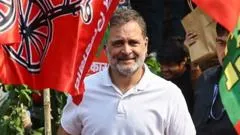
Rahul Gandhi, a central figure in the protest, led the procession through the crowds in an open jeep. His address to the supporters framed the protest not merely as a partisan struggle, but as a defense of the nation's foundational institutions. He stated that the movement represented the voices of India's youth, women, farmers, and workers, rather than just political elites. The atmosphere at the venue was described as a mix of patriotic fervor and serious political protest, with some participants singing Bollywood songs while others focused on the speeches regarding constitutional protection.
Participation of youth and independent groups
Beyond the established political parties, the protest movement has seen involvement from younger demographics and independent political entities. The Gen Z-led Cockroach Janta Party (CJP) has been a vocal supporter of the movement against the Election Commission, though they chose to observe Sunday's rally from a distance to maintain their political independence. This inclusion of youth-led groups highlights a growing trend of non-traditional political activism in India's current climate.
What has been the government's response to the protests?
The ruling BJP and Prime Minister Narendra Modi have responded to the massive demonstrations by accusing the opposition of attempting to destabilize the country. Senior BJP leader and federal minister JP Nadda characterized the rally as a "calculated conspiracy" intended to incite anarchy under the pretext of defending democracy. The government's stance is that the opposition is using the issue of electoral rolls to create unrest and undermine the stability of the administration.
Prime Minister Modi has also addressed the tensions during his own public appearances, accusing opposition parties of attempting to create chaos and disrespecting the dignity of the Indian Constitution. The government maintains that the Election Commission is acting within its mandate to ensure the accuracy of the voter rolls and that the opposition's claims are unfounded.
How has the policing of protests changed in Delhi?
The execution of the Ramlila Maidan rally was conducted under stringent conditions imposed by the Delhi Police, reflecting a period of heightened tension regarding the right to demonstrate in the capital. Organizers were mandated to adhere to strict time limits, install CCTV surveillance at the venue, and restrict the movement of protesters to the designated grounds. These measures were implemented against a backdrop of recent confrontations between law enforcement and demonstrators.
The atmosphere of the Sunday rally was notably more peaceful than previous demonstrations. This stands in contrast to events on October 10, where leaders of the Cockroach Janta Party were detained during protests. During those earlier incidents, witnesses reported aggressive police tactics, including the use of batons against demonstrators. The contrast between the peaceful nature of the massive Sunday gathering and the previous instances of police intervention underscores the volatile political environment currently surrounding the electoral roll controversy.
Frequently asked questions
Who is the primary target of the opposition protests?
The protests primarily target Chief Election Commissioner Gyanesh Kumar. The opposition INDIA bloc is demanding his resignation, accusing him of overseeing a controversial voter list revision process that they claim unfairly disenfranchises legitimate voters to benefit the ruling BJP.
What is the Special Intensive Revision (SIR)?
The Special Intensive Revision is an administrative exercise conducted by the Election Commission to update India's electoral rolls. The commission states it is intended to remove duplicate entries and names of deceased or ineligible voters, though the opposition claims it is being used to remove legitimate voters.
How many voters have been removed from the rolls?
According to the details of the dispute, more than 130 million names have been removed from India's draft electoral rolls as part of the Special Intensive Revision process, a figure that has fueled the current political controversy.
What is the INDIA bloc?
The INDIA bloc is an alliance of various opposition political parties in India, formed in 2023. Its primary objective is to provide a unified opposition front against the governing Bharatiya Janata Party (BJP) led by Prime Minister Narendra Modi.
Can the Chief Election Commissioner be easily removed?
No, the removal of the Chief Election Commissioner is not a simple administrative process. Under Indian law, the official can only be removed through a formal parliamentary process, making the opposition's recent symbolic impeachment a political statement rather than a legal action.
Key takeaways
- The opposition INDIA bloc held a massive rally in Delhi demanding the resignation of Chief Election Commissioner Gyanesh Kumar.
- Over 130 million names have been removed from India's draft electoral rolls through the Special Intensive Revision (SIR) process.
- The Election Commission claims the SIR is intended to remove duplicates and deceased voters, while the opposition alleges voter manipulation.
- The BJP has dismissed the protests as a conspiracy to create national anarchy and destabilize the government.
Conclusion
The massive rally in Delhi highlights a profound crisis of confidence in India's electoral administrative processes. As the INDIA bloc intensifies its demands for the resignation of Gyanesh Kumar, the dispute over the Special Intensive Revision has moved from a technical administrative matter to a central pillar of national political conflict. While the Election Commission maintains its actions are necessary for accuracy, the scale of voter deletions and allegations of internal bias have provided the opposition with significant momentum. The resolution of this tension will likely depend on whether the government can address concerns regarding transparency or if the movement for electoral reform continues to escalate.