Why is the Department of Justice challenging the Alaska Senate race?
The United States Department of Justice (DOJ) has launched a renewed legal effort to block the certification of Alaska's Senate election results if Republican incumbent Dan Sullivan loses the seat. This updated lawsuit, filed on October 29, 2026, targets what prosecutors describe as an intentional attempt to mislead the Alaskan electorate during the midterm cycle.
At the heart of the DOJ's complaint is the allegation that Democratic political operatives engaged in a coordinated effort to confuse voters by placing a candidate with a nearly identical name to the incumbent on the ballot. The DOJ claims this tactic was designed to siphon votes away from Sullivan and facilitate a victory for Democratic challenger Mary Peltola.
The legal push follows a report from the New York Times on October 28, 2026, which alleged that members of the Peltola campaign were involved in the recruitment of Dan J Sullivan Jr., a retired teacher. The report suggests that the junior Sullivan was positioned as a 'spoiler candidate' to disrupt the Republican vote share. In response to these allegations, the DOJ has issued 40 subpoenas and formal requests for the preservation of documents to investigate potential violations.
The role of the 'spoiler candidate' allegation
The central accusation rests on the concept of voter confusion. Prosecutors argue that the presence of Dan J Sullivan Jr. on the ballot was not a coincidence of nomenclature but a manufactured strategy. According to the DOJ's amended complaint, the campaign 'orchestrated his sham campaign for the purpose of misleading Alaskan voters and getting Peltola elected.' This legal theory posits that the democratic process was undermined by a deceptive tactic intended to exploit voter error.
How do the allegations of 'ballot stacking' impact the legal case?
The legal battle in Alaska touches upon a controversial political practice known as 'ballot stacking,' which involves recruiting candidates specifically to split an opponent's support. While the DOJ characterizes this as a partisan trick, legal experts note that the practice is often considered legal and has been utilized by political parties on both sides of the aisle in Alaska.
The complexity of the case is heightened by existing state-level rulings. In June 2026, the Alaska Supreme Court ruled that Dan J Sullivan Jr. had the legal right to compete in the midterm elections. Furthermore, the Alaska state election office had already implemented measures intended to minimize voter confusion between the two candidates before the DOJ's intervention.
The tension between state-sanctioned candidate eligibility and federal allegations of fraud creates a significant legal hurdle. If the DOJ seeks to decertify results based on the presence of a legally qualified candidate, they must prove that the recruitment process itself violated specific federal laws, rather than merely being a strategic, albeit aggressive, political maneuver.
What is the impact of this lawsuit on the 2026 midterms?
The Alaska Senate race is one of seven critical 'toss-up' contests that could determine which party maintains control of the US Senate. Currently, Republicans hold a slim majority with 53 of the 100 seats. Because the outcome of the entire chamber hinges on a handful of races, the DOJ's intervention in Alaska has implications that extend far beyond the state's borders.
The lawsuit introduces a layer of uncertainty into the certification process. If the results are contested in court, it could delay the final tally and the subsequent seating of the new Senate, potentially impacting the legislative agenda for the remainder of President Donald Trump's second term. This uncertainty is particularly acute given the highly polarized nature of the 2026 elections.
National political stakes and the Senate majority
The battle for the Senate is a proxy war for the broader political direction of the United States. Republicans are fighting to protect their narrow majority, while Democrats are attempting to capitalize on voter frustration regarding the cost-of-living crisis and the unpopularity of the current administration. A shift in Senate control would fundamentally alter the ability of the executive branch to pass legislation, confirm judicial appointments, and oversee federal agencies.
The Alaska race is a microcosm of this national struggle. Any delay in certification caused by federal litigation could create a vacuum of leadership or lead to further challenges in other states where margins are equally thin. The DOJ's move is seen by some as a necessary defense of election integrity and by others as a tool to influence the final political outcome.
Is the federal government's intervention constitutional?
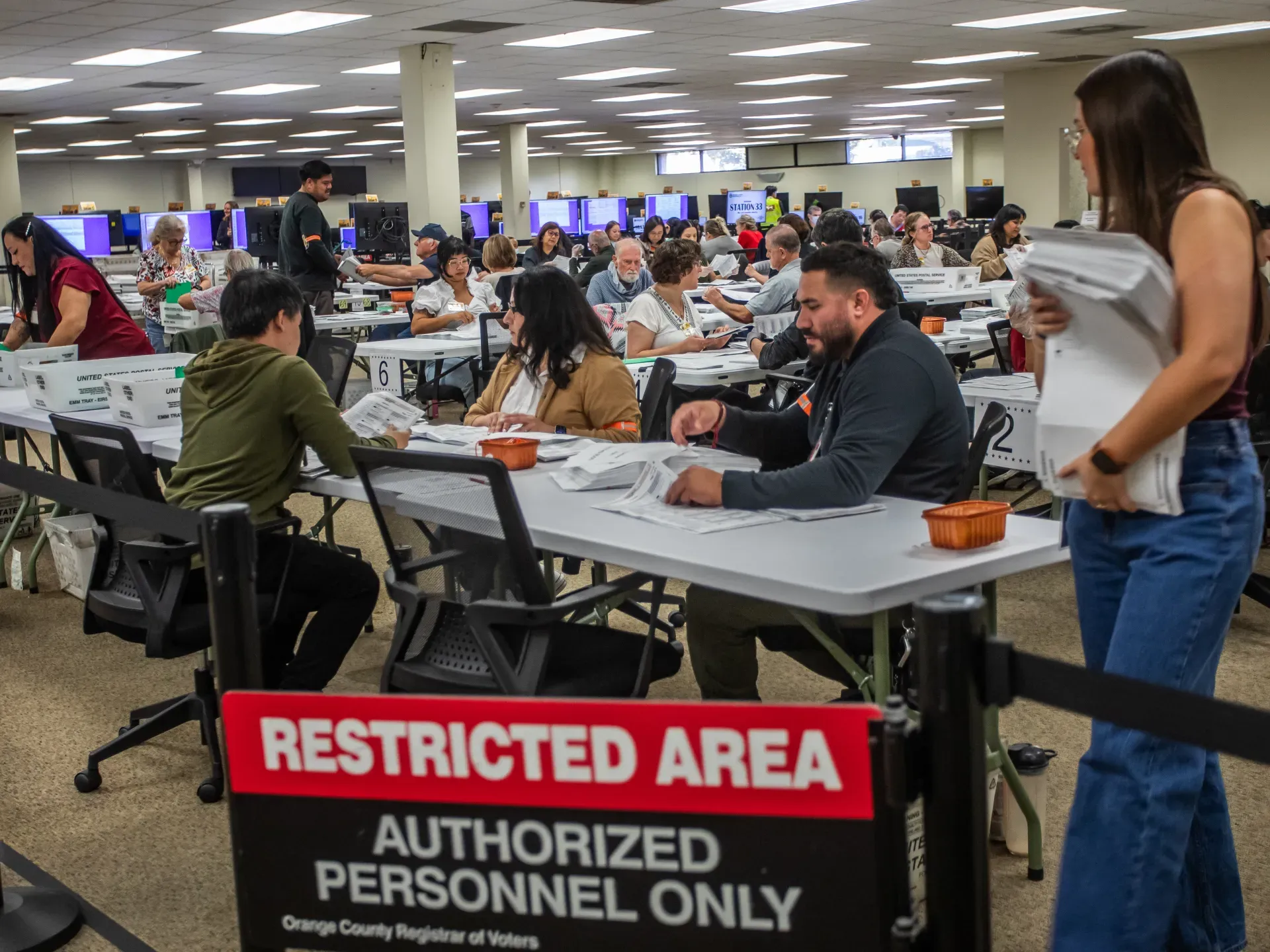
A significant portion of the debate surrounding the DOJ's lawsuit concerns the constitutional limits of federal power in election administration. Under the US Constitution, the authority to manage and certify elections is primarily reserved for the individual states, not the federal presidency or the Department of Justice.
Critics of the lawsuit, including former DOJ official Justin Levitt, have questioned the legal basis for federal involvement. Speaking to the Associated Press, Levitt expressed doubt regarding the specific federal violations the DOJ is investigating, suggesting that the investigation might be more about shaping the political narrative than addressing actual legal breaches. He noted, 'I don’t know what federal violations are implicated that DOJ would have jurisdiction over.'
This constitutional tension is compounded by the fact that Alaska's Governor, Mike Dunleavy, has ordered a separate criminal investigation into the 'spoiler candidate' allegations. This creates a dual-track investigation: a state-level criminal inquiry and a federal civil/regulatory push, both of which may clash over jurisdiction and the ultimate authority to certify the results.
Concerns regarding federal meddling and election integrity
The involvement of the DOJ has raised alarms among those concerned about 'federal meddling' in state affairs. While the administration frames its actions as a defense against voter deception, opponents argue that using the Department of Justice to challenge election outcomes sets a dangerous precedent. They suggest that such actions could be used to delegitimize results that do not favor the incumbent party.
The skepticism is rooted in the difficulty of proving 'voter intent.' Even if a candidate is recruited to confuse voters, critics argue that it is nearly impossible for a court to determine exactly how many votes were cast for the wrong candidate versus how many were cast based on genuine preference. This makes the DOJ's goal of decertifying a narrow loss a highly contentious and legally precarious endeavor.
FAQ: Alaska Election Lawsuit
What is the main accusation against the Democratic campaign?
The Department of Justice accuses Democratic operatives of recruiting a 'spoiler candidate,' Dan J Sullivan Jr., to run for the Senate. The goal, according to prosecutors, was to confuse voters by using a name similar to Republican incumbent Dan Sullivan, thereby splitting the Republican vote and helping Mary Peltola win.
Can the DOJ legally block Alaska from certifying its results?
The DOJ is seeking to block certification through a lawsuit, but the legal authority is heavily debated. While the DOJ claims a mandate to protect voters from deception, critics argue that election administration is a state responsibility under the Constitution, and federal intervention may lack a clear jurisdictional basis.
Who are the main candidates in the Alaska Senate race?
The race features Republican incumbent Dan Sullivan, a key ally of President Donald Trump, and Democratic challenger Mary Peltola. The outcome of this specific contest is considered one of the most important in the country, as it could decide which party controls the US Senate.
Has the Peltola campaign responded to these allegations?
Yes, Mary Peltola’s campaign has officially denied any involvement in the candidacy of Dan J Sullivan Jr. While the DOJ and Alaska Governor Mike Dunleavy are pursuing investigations into the matter, the campaign maintains that they did not orchestrate the 'spoiler' recruitment.
What is 'ballot stacking' in a political context?
Ballot stacking is the practice of recruiting or supporting a candidate specifically to split an opponent's voter base. While often viewed as a controversial or 'dirty' political tactic, it is generally considered legal in many jurisdictions, including Alaska, provided no specific election laws are violated.
Key takeaways
- The DOJ filed a revised lawsuit to prevent Alaska's Senate certification if Dan Sullivan loses.
- Allegations involve the recruitment of a 'spoiler candidate' with a similar name to the incumbent.
- The Alaska Senate race is a critical toss-up for control of the US Senate.
- Constitutional experts question the DOJ's jurisdiction over state-run election administration.
Conclusion
The legal challenge initiated by the Department of Justice represents a high-stakes intersection of election law, constitutional authority, and partisan strategy. By seeking to block the certification of the Alaska Senate results, the Trump administration has moved the battle for Congressional control from the ballot box to the courtroom. As the November 3 midterms approach, the outcome will depend not only on voter behavior in Alaska but also on whether federal courts recognize the DOJ's authority to intervene in what has traditionally been a state-governed process. The resolution of this case will likely set a significant precedent for future federal involvement in state elections.