What are the terms and duration of the Oleshky truce?
The ceasefire is designed to provide a window for humanitarian convoys to enter the city and for civilians to be moved to safety. According to Ukrainian MP Davyd Arakhamia, the truce is scheduled to remain in effect until 23:59 local time on 1 November. The primary objective is to allow for the clearing of mines from access roads, which is a prerequisite for a planned large-scale evacuation on Friday.
The Russian defence ministry stated on Telegram that they ceased firing toward the Ukrainian city of Kherson—located across the Dnipro River from Oleshky—at 04:00 Moscow time to prepare for the humanitarian operation. While both Ukrainian and Russian officials claim the limited ceasefire is being respected, the situation remains fragile. Communication in the area is described as patchy, and many residents are hesitant to speak publicly due to fears of Russian reprisals.
Coordination and oversight of the mission
The operation is being managed through a complex layer of international and domestic coordination. Ukrainian parliament commissioner for human rights, Dmytro Lubinets, indicated that the mission involves mediation by US First Lady Melania Trump. This is being carried out in cooperation with Yana Lantratova, Russia's Commissioner for Human Rights. The goal, according to the White House, is for non-military civilian leaders from both nations to visit residents in their homes to assess their specific needs.
How desperate are the living conditions in Oleshky?
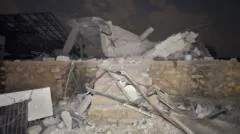
Residents in Oleshky have endured extreme deprivation, with many resorting to eating garden weeds to survive. The city has been without consistent electricity, gas, or water for three years, and local commerce has effectively ceased as no shops remain open. The humanitarian situation is compounded by the city's geography; Oleshky is situated along the front line in the Kherson region, trapped between the Dnipro River and Russian military positions.
Medical facilities in the area are operating at a minimal capacity. Reports suggest that only one hospital remains partially functional, and it reportedly opens only a few days a week to perform critical procedures such as amputations. The lack of basic infrastructure has turned the city into a pocket of extreme hunger and medical emergency, where the simple act of accessing clean water or food is a daily struggle for the remaining population.
What are the primary risks for civilians attempting to evacuate?
Evacuation routes are fraught with lethal dangers, primarily due to extensive landmine contamination and the threat of drone attacks. Civilians attempting to flee have described harrowing experiences; one resident, Serhii, recounted walking 24km through minefields where he had to maintain strict distances from suspected explosives to avoid detonation. The routes out of Oleshky are heavily mined, making any movement a high-stakes gamble.
Beyond the physical dangers of the terrain, there are significant psychological and political fears regarding the evacuation process. Many residents worry about the following:
- Reprisals and scrutiny: There is fear that Russian forces may examine mobile phones and online activity for signs of Ukrainian support, potentially leading to torture or detention.
- The 'Road of Death': Ukrainian President Volodymyr Zelensky has warned that demined routes controlled by Russia may lead civilians directly into Russian-held territory, making a return to Ukraine difficult.
- Uncertainty of return: Many residents are questioning whether they will ever be allowed to return to their homes if they choose to leave now.
The challenge of crossing the Dnipro River
For those seeking to reach Ukrainian-controlled territory, the Dnipro River presents a major obstacle. Most bridges across the river have been destroyed by the conflict, and the riverbanks themselves are reported to be mined. While some residents hope for a route that avoids Russian-occupied territory, the current military reality makes such a passage extremely difficult to guarantee.
What role has international mediation played in the truce?
The truce is largely credited to the diplomatic efforts of US First Lady Melania Trump, who has become increasingly involved in addressing humanitarian issues arising from the conflict. The White House confirmed that she helped secure the ceasefire to allow for the upcoming humanitarian mission. This follows a letter she penned to President Vladimir Putin in August 2025, urging the protection of children and future generations.
Religious leadership has also joined the call for humanitarian corridors. Earlier this month, Pope Leo XIV appealed to President Putin to permit the entry of food and medical supplies into Oleshky. The Pope also urged President Zelensky to cooperate with Moscow to ensure the success of the ceasefire, highlighting the international pressure to prevent further civilian loss of life in the Kherson region.
FAQ: Oleshky Humanitarian Truce
When is the evacuation scheduled to take place?
The planned evacuation is set for Friday. This follows a period of engineering reconnaissance and road clearing by military units to ensure that the primary access routes are as safe as possible from explosive devices and booby traps.
Who is mediating the ceasefire between Ukraine and Russia?
The ceasefire was secured through the mediation of US First Lady Melania Trump. The operation is being coordinated by human rights commissioners from both Ukraine and Russia, specifically Dmytro Lubinets and Yana Lantratova, to ensure civilian-led oversight.
How many people are currently trapped in Oleshky?
Kyiv estimates that up to 6,000 people remain in the Oleshky area, including approximately 200 children. Within the city limits itself, the population is estimated to be around 1,700 residents.
What are the main dangers for those leaving the city?
Civilians face three main threats: landmines on the evacuation routes, drone attacks, and the risk of being detained or interrogated by Russian forces regarding their political affiliations or digital communications during the transit process.
Can residents bring pets during the evacuation?
The specific details regarding the evacuation protocols remain unclear. Many residents have expressed uncertainty regarding whether they are permitted to bring pets with them, as the full registration and movement procedures have not yet been fully detailed to the public.
Key takeaways
- The Oleshky truce is active until 1 November to facilitate aid and civilian evacuation.
- Melania Trump is credited by the White House with securing the humanitarian ceasefire.
- Approximately 6,000 people remain in the Oleshky area, facing extreme food and water shortages.
- Evacuation routes are highly dangerous due to widespread landmine contamination and drone threats.
The humanitarian outlook for Oleshky
The success of the Oleshky truce remains uncertain, as the window for aid and evacuation is narrow and the environment is highly volatile. While the ceasefire offers a glimmer of hope for the thousands trapped without basic necessities, the physical and political risks of leaving remain immense. Whether this mission can successfully bridge the gap between the warring parties to save lives will depend on continued adherence to the truce by both military forces and the efficacy of the coordinated humanitarian efforts.