How has the Venezuelan political landscape changed since Machado's departure?
The political environment in Venezuela has undergone a radical restructuring since María Corina Machado fled the country in December 2025. The most significant shift was the forced removal of Nicolás Maduro by United States military forces on January 3, 2026. According to reports, Maduro was taken to New York, where he currently faces legal proceedings regarding allegations of drug trafficking, weapons charges, and torture, to which he has entered a plea of not guilty.
In the vacuum left by Maduro, his former vice-president, Delcy Rodríguez, assumed leadership. While the previous administration was defined by intense hostility toward Washington, the Rodríguez government has moved toward a pragmatic, albeit controversial, alignment with the Trump administration. This transition has fundamentally altered the domestic power dynamics, moving from a state of ideological warfare to one of transactional diplomacy.
The shift in governance and international relations
The transition from the Maduro era to the Rodríguez presidency has been characterized by a swift pivot in foreign policy. Where the previous regime was described by the US as being comprised of "narco-communists," the current administration has sought to repair bilateral ties to ensure political survival and economic stability. This shift has allowed for unprecedented cooperation between Caracas and Washington, particularly in the energy sector.
What are the implications of the US-Venezuela oil agreement?
A central pillar of the new relationship between Venezuela and the United States is a massive energy deal that has redefined the country's economic trajectory. The Trump administration recently secured a 100-year concession covering approximately 65 billion barrels of Venezuelan crude oil. This agreement was facilitated through a partnership with North American Blue Energy Partners (NABEP), a private Venezuelan entity managed by businessman Alejandro Betancourt.
This deal has become a point of contention for the domestic opposition. While Machado has expressed criticism regarding the terms of the agreement, she has strategically directed her opposition toward the Venezuelan government and Betancourt rather than President Trump. This approach reflects her need to maintain the trust and support of the US administration, which remains a critical factor in her political viability. The deal highlights a new reality where Venezuelan resources are being leveraged to satisfy US energy requirements under a framework of high-level bilateral cooperation.
Why is the María Corina Machado return significant for the opposition?
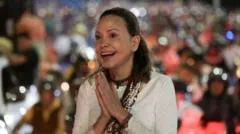
Political analyst Beningno Alarcón describes the return of Machado as the most consequential political event in Venezuela since the leadership change on January 3. Her presence on the ground provides the opposition with a tangible, localized leadership that was previously absent during her period of exile. For years, the movement was led from abroad, but her homecoming allows for direct mobilization and a visible connection to the electorate.
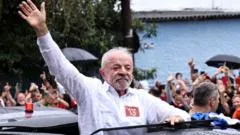
The reception of her caravan, which was widely shared via livestream, suggests that her ability to galvanize the population remains potent. Supporters in Caracas have expressed a sense of renewed hope, viewing her return as a necessary step in a long-awaited electoral process. This momentum is supported by broader trends in civil engagement within the country.
Rising trends in civic engagement and protest
Data suggests that the Venezuelan public has become increasingly emboldened in the months following the change in government. A joint study conducted by the think tanks Polis and Nexo indicates a sharp rise in civic activity. Specifically, Venezuela recorded three times as many street protests during the first nine months of 2026 compared to the entirety of 2025. These demonstrations have covered a diverse array of grievances, including political reform, labor conditions, and basic infrastructure needs such as water supply.
Crucially, the environment for such dissent appears to have shifted. The study also suggests that the level of state repression against these protests has decreased by more than 50%. This reduction in the fear of consequence provides a fertile ground for Machado to re-establish the opposition's influence and push for a negotiated political solution.
How is the Trump administration influencing Venezuelan domestic policy?
The influence of the United States on Venezuelan internal affairs is increasingly visible through diplomatic and economic channels. US Secretary of State Marco Rubio has framed Machado's safe return as a direct outcome of US-supported reconciliation talks. This suggests that while the US supports Machado's leadership, it also plays a central role in managing the terms under which she can operate within the country.
There are indications that the Rodríguez government operates under significant external pressure to maintain alignment with Washington's interests. Reports have suggested that major decision-making processes in Venezuela are heavily influenced by US officials, with some accounts claiming that Secretary Rubio directs policy via regular communications with the interim leadership. This level of influence is particularly evident in the energy sector, where Washington expects full cooperation regarding oil concessions.
The tension between the Rodríguez government and the opposition
Despite the rapprochement with the US, the relationship between the Rodríguez administration and Machado remains fraught. The interim government has dismissed the scale of Machado's homecoming as a mere "show" and has notably excluded her activities from state-run television broadcasts. However, the political reality suggests that Rodríguez may eventually be forced into dialogue with Machado to maintain domestic stability.
The Rodríguez administration faces a delicate balancing act: satisfying the demands of the Trump administration to ensure economic and political survival, while managing a highly mobilized and vocal opposition led by a Nobel Peace Prize winner. As Machado re-establishes her presence, the pressure on the interim government to incorporate opposition voices into the formal political process is likely to intensify.
Frequently asked questions
What happened to Nicolás Maduro?
Nicolás Maduro was forcibly removed from power by US troops on January 3, 2026. He was subsequently transported to New York, where he is currently facing legal charges related to weapons, drugs, and torture. He has pleaded not guilty to all allegations brought against him.
Who is currently leading the Venezuelan government?
Delcy Rodríguez, the former vice-president under the Maduro administration, is the current leader of Venezuela. Her presidency has been defined by a significant shift in foreign policy, moving toward a cooperative and transactional relationship with the United States government.
How does the US-Venezuela oil deal work?
The United States has secured a 100-year concession for 65 billion barrels of Venezuelan crude oil. This deal was brokered in conjunction with North American Blue Energy Partners (NABEP), a private company led by Alejandro Betancourt, as part of a broader bilateral agreement between the two nations.
Is María Corina Machado facing legal trouble in Venezuela?
Yes, despite her return, Machado still faces various legal charges within Venezuela, including allegations of conspiracy and treason. She and her supporters maintain that these charges are politically motivated and lack a factual basis, intended to undermine her leadership.
Has political repression in Venezuela decreased?
Evidence suggests that repression has declined significantly. According to a study by Polis and Nexo, the repression of street protests has fallen by more than half. This has contributed to a significant increase in public demonstrations across the country throughout 2026.
Key takeaways
- María Corina Machado has returned to Venezuela after ten months of exile following her Nobel Peace Prize win.
- Delcy Rodríguez replaced Nicolás Maduro, who was removed by US troops in January 2026.
- The US secured a 100-year concession for 65 billion barrels of Venezuelan oil via a deal with NABEP.
- Street protests in Venezuela increased threefold in early 2026 compared to the previous year.
- State repression of public demonstrations has reportedly decreased by over 50%.
Conclusion
The return of María Corina Machado marks an irreversible turning point in Venezuela's political evolution. The transition from the Maduro era to the Rodríguez presidency has replaced ideological confrontation with a complex, resource-driven diplomacy led by the United States. While the opposition has regained a visible leader on the ground, the interim government remains deeply tethered to Washington's strategic and economic interests. The coming months will determine whether this new landscape leads to a genuine negotiated political solution or a continued state of managed tension between a mobilized citizenry and a government shaped by external concessions.