How are the Israel and US elections interconnected?
The timing of these two major democratic exercises creates a unique period of geopolitical volatility where domestic political needs in one nation directly influence the foreign policy of the other. Although the voters are separated by approximately 6,000 miles, the political spheres of Israel and the United States are increasingly overlapping.
One significant physical connection is the electorate itself. According to the lobby group Republicans Overseas Israel, roughly 500,000 Israelis hold American passports and are eligible to participate in both electoral processes. Marc Zell, the chairman of the group, noted to the BBC that these voters could influence highly competitive American races. For instance, he estimated that 10,000 absentee ballots might be cast from Israel for the senatorial contest in Michigan, potentially acting as a tie-breaker in tight races.
Beyond the voters, the policy connection is centered on the volatile relationship between the US, Israel, and Iran. The decisions made by the incoming Israeli parliament and the new US Congress will dictate the level of military and economic engagement in a region already destabilized by previous aerial attacks on Iranian leadership and the subsequent seizure of the Strait of Hormuz.
What is the impact of the elections on the Iran conflict?
The elections are actively shaping military decision-making and rhetoric regarding a potential fresh offensive against Iran. In Israel, Prime Minister Benjamin Netanyahu has utilized his campaign to emphasize the Iranian nuclear threat, asserting that the Islamic regime must be overthrown, though he has not provided specific evidence to support these claims.
Political survival appears to be a driving force behind this escalation. Analysts suggest that Netanyahu may be attempting to bolster his image as a security leader following the failures of October 7. There is speculation in Israeli media that he could attempt to engineer a government of national unity by launching a military strike as a caretaker prime minister, thereby making himself indispensable to a broader coalition.
Political motivations vs. military necessity
The distinction between strategic necessity and political maneuvering is a central theme in the current Israeli landscape. While mainstream politicians like former military chief Gadi Eisenkot view Iran as an existential threat that requires military action, Eisenkot has explicitly cautioned against escalating the conflict merely to serve political ends. This tension highlights a divide between those who see war as a tool for national survival and those who fear it is being used as a tool for personal political preservation.
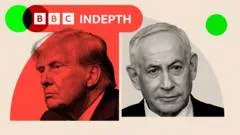
In the United States, the electoral cycle also influences the approach to Iran. President Donald Trump has endorsed Netanyahu’s re-election, suggesting both leaders should "soon finish the job" in Iran. However, reports suggest a more complex reality; some indicate that Trump has occasionally intervened to restrain Netanyahu to avoid a spike in energy prices that could harm his domestic standing ahead of the midterms.
How could the election outcomes shift US foreign policy?
The results of the US midterm elections could fundamentally alter the traditional bipartisan consensus regarding Middle Eastern involvement. For decades, support for Israel was a cornerstone of US foreign policy, but recent conflicts in Gaza and the West Bank have caused significant fractures within the Democratic Party.
Newer political voices are emerging that advocate for a more restrained approach. For example, Abdul El-Sayed, a Democratic candidate for the Senate in Michigan, has campaigned on the platform of reducing military aid to Israel, arguing that an ally that pushes the US into unwanted wars is not a true ally. Similarly, Democratic congressional candidate Brad Lander has used his engagement with Palestinian issues as a central part of his political identity.
The shift in US policy may also depend on who leads Israel. Donald Trump has indicated that his willingness to act against Iran is contingent on Israeli leadership, stating on social media that if the US is forced to act because Israel has the "wrong Leader" (meaning anyone other than Netanyahu), he would be less inclined to do so. This suggests that the US-Israeli "bromance" is heavily dependent on specific personalities rather than just institutional alliances.
What are the economic consequences of these electoral shifts?
Global economic stability is at risk due to the potential for renewed military escalation and the ongoing disruption of energy supplies. The conflict in the Middle East has already impacted the cost of living, a primary concern for voters in both the US and Israel.
The seizure of the Strait of Hormuz by Iran has created a bottleneck for global energy, driving up prices and complicating the economic landscape. In the US, President Trump has attempted to mitigate these costs through various means, such as lifting sanctions on Russia to encourage diesel imports, though these efforts have seen limited success. Senator Thom Tillis of North Carolina has criticized this approach, suggesting that the real solution to energy prices lies in resolving the Iran conflict rather than making concessions to Vladimir Putin.
Economic pressures on domestic populations
In Israel, the economy is under significant strain due to high defense spending necessitated by ongoing warfare, which compounds existing issues of low wages and high living costs. In the United States, the affordability of energy remains a decisive factor for midterm voters. Any post-electoral decision to launch strikes against Iran carries the heavy risk of triggering retaliatory actions by Tehran, which could target critical infrastructure including:
- Airports and energy facilities
- Undersea cables and desalination plants
- US military bases and warships
Iranian Foreign Minister Abbas Araghchi has warned that such escalations would place the global economy and civilian lives at extreme risk, a sentiment that underscores the high stakes of the upcoming electoral cycles.
Frequently asked questions
How do Israeli-Americans influence US elections?
Israeli-Americans can influence US elections by casting absentee ballots in key battleground states. According to Republicans Overseas Israel, approximately 500,000 Israelis hold US passports, and their votes could decide tight races, such as the senatorial contest in Michigan, where thousands of ballots are expected from Israel.
Why is the Strait of Hormuz important to the elections?
The Strait of Hormuz is a vital energy artery. Because Iran has seized control of this passage, energy prices have fluctuated, directly impacting the cost of living. Since inflation and energy costs are major issues for voters in both the US and Israel, the stability of this waterway is a political priority.
Will a change in Israeli leadership change US policy toward Iran?
A change in leadership could lead to a shift in how the US engages with Iran. Donald Trump has suggested that his willingness to take unilateral action against Iran might decrease if Israel elects a leader other than Benjamin Netanyahu, potentially shifting the burden of regional security.
Is there a consensus in Israel regarding Iran?
While there is a broad consensus that Iran poses an existential threat, there is significant disagreement on how to respond. Some leaders advocate for immediate military action to ensure survival, while others, like Gadi Eisenkot, warn against using military escalation for personal political gain.
What are the risks of post-election military strikes?
Post-election strikes carry the risk of massive regional retaliation. Iranian officials have threatened to target global economic infrastructure, including undersea cables, pipelines, and desalination plants, which could lead to widespread chaos and a significant global economic downturn.
Key takeaways
- Israeli-Americans with US passports may influence tight US congressional races.
- The Iran conflict remains a central, volatile issue for both electorates.
- Energy security in the Strait of Hormuz is a major economic driver for voters.
- US bipartisan support for Israel is fracturing due to recent regional conflicts.
- Political survival in Israel may drive decisions regarding military escalation.
The intersection of democratic mandates and global security
The dual elections in Israel and the United States represent more than just domestic political shifts; they are pivotal moments for global stability. The interplay between Netanyahu's political survival, Trump's electoral strategies, and the looming threat of conflict with Iran creates a high-stakes environment where a single vote can influence energy prices and regional peace. As the world watches these polls, the connection between local political outcomes and global economic and security realities has never been more apparent or more precarious.