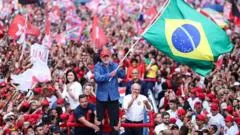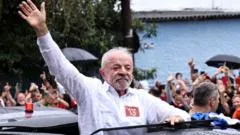
How did Luiz Inácio Lula da Silva rise from poverty to the presidency?
Luiz Inácio Lula da Silva's ascent is defined by a transition from extreme poverty to the highest office in Brazil. Born into an illiterate peasant family, he worked as a shoe-shine boy and a peanut seller during his childhood, only gaining literacy at the age of 10. His early adult life was shaped by industrial labor; he trained as a metalworker in a city near São Paulo, where he suffered the loss of a finger in a workplace accident during the 1960s.
His entry into politics was not immediate but grew out of grassroots labor activism. By 1975, he had been elected leader of the Metalworkers' Union, which represented approximately 100,000 members. He is credited with transforming Brazilian trade unionism by shifting these organizations away from government-aligned structures toward a more independent and powerful movement. This foundation eventually led to the 1980 establishment of the Workers' Party (PT), a coalition of unionists, intellectuals, and activists that introduced a major socialist presence to the country's political landscape.
The evolution of the Workers' Party
While the Workers' Party began with a revolutionary commitment to restructuring Brazil's power dynamics, it underwent a significant ideological shift over the decades. Under Lula's leadership, the PT moved toward a more pragmatic, social democratic platform. This transition allowed the party to govern within existing systems while still pursuing its core mission of social reform and economic redistribution.
What were the impacts of Lula's early economic and social policies?
Lula's first two terms, spanning from 2003 to 2010, were characterized by significant social investment and economic growth. He focused on eradicating hunger and reducing the nation's historic inequalities through massive state-led programs. One of his most successful initiatives was the Bolsa Familia program, a family grant system that provided aid to the most impoverished citizens. According to reports, this program helped approximately 44 million people and played a vital role in cementing his popularity among Brazil's poor.
To support these social goals, Lula implemented several key economic measures:
- Increasing the minimum wage at a rate that consistently outpaced inflation.
- Broadening the reach of state assistance to vulnerable populations.
- Presiding over the longest period of economic expansion in Brazil in three decades.
Despite these successes, his tenure faced criticism. Many commentators argued that while the Bolsa Familia program provided immediate relief, it failed to address the underlying structural causes of poverty, such as the deficiencies in the national education system. Nevertheless, he left office in 2010 with an exceptionally high approval rating of 83%.
Why was Lula imprisoned and how did he return to power?
The political stability of the era following Lula's first two terms was disrupted by economic recession and massive corruption scandals. The "Operation Car Wash" investigation uncovered deep-seated corruption within the political establishment, leading to the conviction of several high-profile figures, including Lula. In 2017, he was sentenced to over nine years in prison for allegedly accepting a beachside apartment as a bribe from the engineering firm OAS. A subsequent conviction related to money laundering and bribes from other construction firms saw his sentence increased to 12 years and 11 months.
Lula consistently maintained his innocence, asserting that the legal proceedings were politically motivated. His imprisonment lasted approximately 18 months before he was released in 2019 following a Supreme Court ruling. The court determined that his incarceration had been illegal because it occurred before all legal appeals had been exhausted. In 2021, his convictions were annulled, which cleared his path to run for office again. This legal reversal enabled his victory in the 2022 election against the right-wing candidate Jair Bolsonaro.
How does Lula manage environmental protection and the Amazon?
Environmental policy remains a polarizing aspect of Lula's leadership. During the 2022 campaign, supporters frequently referred to him as the "saviour of the Amazon" due to his promises to protect the rainforest. Recent data supports the effectiveness of some of these efforts; satellite imagery indicates that deforestation in the Amazon during the first half of 2026 reached its lowest level in a decade.
However, his administration has faced pushback from environmentalists regarding energy policy. Specifically, Lula has supported exploratory oil drilling in offshore waters near the Amazon's mouth. He defends this stance by arguing that oil revenues are essential for financing Brazil's eventual transition to clean energy and the phasing out of fossil fuels. This tension between immediate economic needs and long-term ecological preservation remains a central theme of his presidency.
What is the state of Lula's relationship with global powers?
Lula's foreign policy is characterized by a desire for a multipolar world, which often puts him at odds with Western powers, particularly the United States. His relationship with US President Donald Trump has been notably volatile. While the two leaders recently engaged in a meeting at the White House in May 2026 that resulted in mutual compliments, significant friction remains. Tensions were previously high due to US tariffs on Brazilian goods and Lula's vocal criticism of what he termed foreign interference in Brazilian affairs.
Lula's international strategy is heavily focused on the BRICS alliance, which includes Brazil, Russia, India, China, and South Africa. He views this grouping as a necessary counterweight to Western dominance. This alignment is evident in several key areas:
- Support for BRICS: He defends the group as a way to challenge the existing global power structure.
- Relations with China and Russia: Lula maintains strong ties with both nations, even defending the continued purchase of Russian oil during the conflict in Ukraine.
- UN Reform: He has criticized the veto power held by the five permanent members of the UN Security Council, arguing it excludes nations representing billions of people.
Ultimately, Lula's stance is best summarized by his rejection of the "Donroe doctrine," asserting that Brazil is an independent nation that "does not fit into anyone's backyard."
Frequently asked questions
What is the Bolsa Familia program?
Bolsa Familia is a social welfare program implemented during Lula's first presidency to assist Brazil's poorest citizens. By providing direct cash grants to families, the program aimed to reduce hunger and inequality. It successfully reached approximately 44 million people and remains a cornerstone of his social legacy.
Why were Lula's corruption convictions annulled?
The convictions were annulled by the Supreme Court because the initial imprisonment was deemed illegal. The court ruled that Lula had been jailed before all possible legal appeals had been completed. This decision effectively restored his political rights, allowing him to run for office in subsequent elections.
How has Lula's policy on the Amazon changed?
While Lula has committed to protecting the rainforest and has seen a significant reduction in deforestation rates, he has also supported offshore oil drilling near the Amazon. He argues that the revenue from oil is necessary to fund the country's transition to renewable energy sources.
What is the BRICS alliance?
BRICS is an intergovernmental organization comprising Brazil, Russia, India, China, and South Africa. Lula views this alliance as a critical tool for creating a multipolar world order that provides a counterweight to the traditional dominance of Western nations and the UN Security Council.
What is the current status of Brazil-US relations?
Relations between Brazil and the US under Lula and Trump have been a mix of tension and diplomatic effort. While recent meetings have shown signs of improved dialogue, the two nations continue to disagree on significant issues, particularly regarding international trade and economic tariffs.
Key takeaways
- Lula rose from a background of poverty and manual labor to lead the Workers' Party.
- His early presidency was marked by the successful Bolsa Familia social welfare program.
- Legal convictions for corruption were annulled, enabling his return to the presidency.
- He maintains a strong commitment to the BRICS alliance to balance Western influence.
- Amazon deforestation saw a significant decline in the first half of 2026.
Conclusion
Luiz Inácio Lula da Silva's political trajectory is one of the most complex in modern democratic history. From his beginnings as a union leader to his survival of legal battles and his return to the presidency, he remains a transformative figure in Brazil. His ability to navigate the contradictions of economic growth, social welfare, and environmental protection will define his legacy. As he continues to advocate for a multipolar world through BRICS, his influence will extend far beyond Brazil's borders, challenging existing global hierarchies and shaping the geopolitical landscape of the 21st century.