How does Lula's victory impact US influence in Latin America?
Lula's victory serves as a major setback for the Trump administration's efforts to consolidate a right-wing bloc across the continent. While several neighboring nations—including Argentina, Chile, Colombia, Ecuador, and Peru—have elected leaders aligned with Washington, Brazil remains a significant outlier. This divergence creates a geopolitical friction point in a region where the US has sought to expand its sphere of influence.
The Trump administration has pursued a strategy known as the 'Donroe Doctrine,' which aims to build a 'Shield of Americas' to combat regional issues like narco-trafficking. Brazil, as the largest economy in Latin America, was viewed as the most critical component for this vision. According to reports, the US administration considered Brazil the '10th and biggest prize' in its regional strategy, particularly after the initial stages of the election suggested a victory for the Bolsonaro faction.
The strategic value of Brazil
Brazil's importance to the US extends beyond mere political alignment. The country holds the world's second-largest reserves of rare earth minerals, trailing only China. For the United States, securing preferential access to these minerals is a matter of long-term economic and technological security. A presidency led by Flávio Bolsonaro would likely have integrated Brazil into US-led supply chains, whereas Lula's administration is more likely to pursue a multi-polar foreign policy that balances relations between Washington and Beijing.
What defines the complex relationship between Lula and Trump?
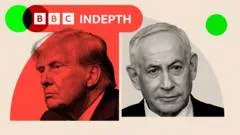
The relationship between Luiz Inácio Lula da Silva and Donald Trump is characterized by a paradox of personal respect and deep institutional friction. Despite their divergent ideologies, Trump has stated, "I like Lula, we get along well," even while describing the Brazilian election process as "terrible" and "rigged." This muddled sentiment reflects a relationship that has fluctuated between total breakdown and pragmatic engagement.
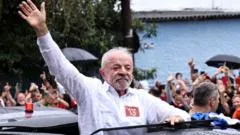
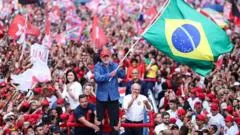
Historically, the two leaders have had little to no direct communication. In previous discussions, Lula noted he had "no relationship" with Trump and expressed no intention of initiating contact. Tensions peaked when the US imposed punitive tariffs on Brazilian goods, a move widely seen as a political response to the legal proceedings against former President Jair Bolsonaro. Lula responded not with diplomacy, but with a nationalist campaign, famously wearing a cap that declared "Brazil belongs to Brazilians."
Despite these clashes, the two have managed to hold high-level meetings. Previous discussions at the United Nations and a subsequent meeting in the Oval Office were described by both leaders as productive, with Lula expressing satisfaction with the talks. This suggests that while their political goals are often at odds, there is a baseline of mutual recognition between the two heads of state.
Why are trade and technology becoming new battlegrounds?
Beyond traditional diplomacy, the Brazil-US relationship is increasingly being tested by technological competition and economic sovereignty. The rise of domestic Brazilian financial tools and the influence of global social media platforms have created new layers of tension that transcend standard political disagreements.
One significant point of contention is the Brazilian instant payment system, Pix. While Pix has been credited with boosting the Brazilian economy by increasing financial inclusion, the US administration has expressed dissatisfaction. The concern stems from the fact that the system's success potentially diverts business away from American-based financial giants such as Visa and Mastercard.
Digital sovereignty and social media influence
The role of technology in the recent election also highlighted vulnerabilities in international digital governance. During the campaign, the Lula camp accused Meta of providing an unfair advantage to Flávio Bolsonaro. While Meta denied allegations of bias, the company admitted to technical errors and moderation issues that resulted in the incorrect removal or limitation of certain content. This prompted Lula's supporters to adopt decentralized communication strategies, utilizing a massive WhatsApp group of 10 million members to bypass algorithmic restrictions.
What are the primary sources of diplomatic tension?
Diplomatic fallout remains a constant risk due to disagreements over sovereignty, judicial independence, and regional military intervention. Brazil has shown a willingness to challenge US actions that it perceives as infringing upon its domestic or regional authority.
Recent friction points include:
- Electoral Integrity: Brazil accused the US of attempting to undermine confidence in its electoral system. This led to a reciprocal diplomatic spat where the US revoked the visa of the Brazilian ambassador after Brazil denied visas to two US State Department officials.
- Security and Terrorism Designations: Lula has vehemently opposed US efforts to designate Brazilian criminal organizations as terrorist entities, viewing such moves as an interference in internal security matters.
- Regional Military Intervention: The Brazilian presidency has criticized US military actions in the region, including the seizure of Nicolás Maduro in Venezuela and various naval operations against suspected drug-trafficking vessels.
For a political left that remains sensitive to the history of 20th-century interventions by the CIA in Latin America, these issues are not merely political—they are matters of national survival and sovereignty.
Key takeaways
- Lula's victory disrupts the US 'Donroe Doctrine' and the goal of a unified right-wing Latin American bloc.
- Brazil's rare earth mineral reserves make it a critical strategic asset for US technological security.
- Economic tensions are rising over Brazil's Pix payment system and its impact on US financial firms.
- Digital sovereignty is a growing issue, evidenced by the use of WhatsApp to bypass social media algorithms.
- Diplomatic relations remain volatile due to disagreements over electoral oversight and regional military actions.
Frequently asked questions
How does Brazil's economy affect its relationship with the US?
Brazil is the second-largest trading partner of the US in Latin America, after China. This economic weight means that trade policies, such as tariffs or the competition between Brazil's Pix system and US companies like Visa, have significant implications for both nations' economic stability and influence.
What is the 'Donroe Doctrine'?
The 'Donroe Doctrine' refers to a strategic framework aimed at establishing US dominance in the Western Hemisphere. It seeks to create a coalition of right-wing aligned nations, such as Argentina and Chile, to act as a collective 'Shield of Americas' against regional threats like narco-trafficking.
Why are rare earth minerals important to this conflict?
Brazil possesses the world's second-largest reserves of rare earth minerals. The US views access to these materials as vital for its technological and green energy transitions, making Brazil's political alignment a matter of high-stakes economic and national security for Washington.
Did the US support the Bolsonaro family?
Yes, Donald Trump was a close ally of former President Jair Bolsonaro. While Trump did not explicitly endorse his son Flávio Bolsonaro, the administration's policies, including punitive tariffs, were seen as being influenced by the political struggles of the Bolsonaro family in Brazil.
How did Lula use nationalism in his campaign?
Lula employed a strong patriotic narrative to counter US influence. By wearing a "Brazil belongs to Brazilians" cap and accusing opponents of being unpatriotic for lobbying for US tariffs, he successfully framed the election as a fight for national sovereignty against foreign interference.
Conclusion
The return of Lula to the Brazilian presidency introduces a complex layer of unpredictability to US foreign policy in the Americas. While a pragmatic working relationship between Lula and Trump may persist in the short term, the fundamental interests of the two nations are increasingly divergent. From the competition over digital financial systems to the strategic struggle for control over rare earth minerals and regional security doctrines, Brazil is asserting a brand of sovereignty that resists Washington's traditional influence. The future of the relationship will likely be defined by how much the US attempts to intervene in Brazil's domestic and regional affairs.