Why did the leaders of Finland and Norway initiate contact with Putin?
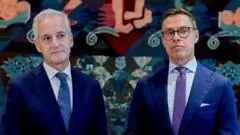
The leaders of Finland and Norway initiated a 90-minute telephone conversation with Russian President Vladimir Putin to address the ongoing war of aggression against Ukraine and explore diplomatic avenues for stability in Europe. Finnish President Alexander Stubb and Norwegian Prime Minister Jonas Gahr Støre framed the call as a necessary step toward peace, with Stubb asserting that an end to the conflict cannot be achieved through silence.
The dialogue, conducted from Helsinki, was intended to convey direct messages concerning future negotiations. Both leaders were careful to define the scope of their involvement. They explicitly stated that they were acting in their capacity as direct neighbors of Russia, rather than as spokespeople for the European Union or the broader European continent. Jonas Gahr Støre noted that the initiative was personal to their respective nations, stating, "We've not set out to speak on behalf of anyone other than ourselves."
This direct engagement comes at a time of significant shifts in international relations. Following a period where European leaders felt increasingly marginalized from the peace process, the Nordic leaders sought to re-establish a channel of communication. The call was not an isolated event but was prepared in consultation with both Ukraine and the United States, following a high-level meeting in Oslo involving Ukrainian President Volodymyr Zelensky and US special envoy Steve Witkoff.
What were the key outcomes and differing views from the discussion?
The discussion yielded no immediate breakthroughs in the peace process, as significant ideological gaps remain between the Nordic leaders and the Kremlin. While President Stubb described the conversation as "frank and substantive," Prime Minister Støre highlighted that there remain "big differences in views" between his administration and Putin's.
The Kremlin's position, as articulated by Vladimir Putin, remains centered on the recognition of Russian interests as a prerequisite for any settlement. According to the Kremlin, Putin maintained that a "just and lasting peace" is only possible if Russia's legal interests are addressed fully and unconditionally. This stance often aligns with Putin's stated concerns regarding Ukraine's sovereignty and its geopolitical orientation, which he refers to as the "root causes" of the conflict.
The divergent perspectives on peace terms
The fundamental tension in the dialogue lies in the definition of a "fair" settlement. For the Nordic leaders, the focus remains on the human and material costs of the war and the long-term stability of the European continent. For the Russian leadership, the focus is on securing territorial and strategic interests that they deem essential to their national security. This divergence suggests that while communication channels are open, the substantive requirements for a ceasefire remain at odds.
How does this call impact the upcoming trilateral peace talks?
The recent communication between the Nordic leaders and the Kremlin serves as a diplomatic prelude to the first trilateral US-Ukraine-Russia talks tentatively scheduled for early November in Abu Dhabi. The involvement of Finland and Norway provides a layer of regional expertise and proximity that may influence the atmosphere of these upcoming negotiations.
Ukrainian leadership has responded positively to the Nordic initiative. President Zelensky confirmed that he was debriefed by Stubb and Støre following their call and expressed gratitude for their "active support." Furthermore, Ukrainian Foreign Minister Andrii Sybiha characterized the direct contact as "the right approach," suggesting that Kyiv views regional mediation as a viable supplementary track to the primary US-led negotiations.
The upcoming talks in the United Arab Emirates represent a critical juncture. Polish Prime Minister Donald Tusk indicated that, based on briefings from President Stubb, there is a sense of "moderate optimism" regarding the position of European stakeholders in these discussions. However, the success of the Abu Dhabi talks will depend on whether the "root causes" cited by Putin can be reconciled with the sovereignty requirements of Ukraine and its allies.
What is the reaction from other European leaders and institutions?
The reaction from the broader European community has been characterized by a mixture of caution and criticism regarding the unilateral nature of the Nordic initiative. There was no official response from the European Union following the 90-minute call, reflecting the fact that the dialogue was not coordinated with other EU member states.
Some European leaders have expressed concerns that such direct engagement might fragment the European position. Swedish Prime Minister Ulf Kristersson remarked that Europe should prioritize unity, stating, "I think Europe should stick together rather than going solo." This sentiment highlights a tension within the EU between nations that wish to maintain a unified front and those that feel the need to act as individual regional actors to prevent being sidelined.
Despite these criticisms, there is evidence of a shifting pragmatic stance within the Kremlin. While Moscow has historically mocked European leadership, Kremlin spokesman Dmitry Peskov recently conceded that the talks between Stubb, Støre, and Putin were "very constructive and practical." Peskov acknowledged the importance of the Nordic leaders as representatives of two key neighboring states, even while maintaining that they do not speak for the entirety of Europe.
How has the changing US stance influenced European diplomacy?
The shift in European diplomatic behavior is closely linked to the evolving relationship between the United States and Russia under the current Trump administration. The softening of the US position, including the decision to lift certain sanctions and allow for Russian oil exports to the US, has prompted several European leaders to reconsider their own engagement strategies.
Since the summit between Putin and Trump in Alaska, European leaders have felt increasingly excluded from the primary decision-making processes regarding the war in Ukraine. This perceived marginalization, combined with the changing dynamics in Washington, has led to a renewed interest in re-establishing direct lines of communication with the Kremlin to ensure that European security interests are not overlooked in any eventual peace deal.
Frequently asked questions
Who participated in the 90-minute call with Vladimir Putin?
The call involved Russian President Vladimir Putin and the leaders of two neighboring Nordic countries: Finnish President Alexander Stubb and Norwegian Prime Minister Jonas Gahr Støre. The conversation was conducted from Helsinki and aimed to discuss the conflict in Ukraine and potential peace efforts.
Did Finland and Norway represent the European Union in these talks?
No, both Stubb and Støre explicitly stated that they were acting as representatives of their own nations due to their proximity to Russia. They clarified that they were not speaking on behalf of the European Union or the broader European community, a point noted by other leaders.
What is the Kremlin's condition for a peace settlement?
Vladimir Putin stated that a "just and lasting peace" can only be achieved if Russia's legal interests are taken into account fully and unconditionally. This position remains a central obstacle to negotiations, as it conflicts with the sovereignty requirements of Ukraine.
When are the next major peace talks scheduled to take place?
The first trilateral talks involving the United States, Ukraine, and Russia are tentatively planned for early November 2026. These high-level negotiations are expected to be held in Abu Dhabi, United Arab Emirates, following the recent regional diplomatic activity.
How did Ukraine respond to the Nordic-Russian dialogue?
Ukraine has expressed support for the initiative. President Zelensky confirmed he was debriefed on the call and thanked the Nordic leaders for their support, while Foreign Minister Andrii Sybiha described the direct communication as the "right approach" to the conflict.
Key takeaways
- Finland and Norway leaders held a 90-minute call with Putin to discuss Ukraine peace.
- The Nordic leaders acted as neighbors, not as official representatives of the European Union.
- Putin demanded that Russia's legal interests be met unconditionally for a lasting peace.
- Trilateral US-Ukraine-Russia talks are tentatively planned for early November in Abu Dhabi.
- The Kremlin described the talks with the Nordic leaders as "constructive and practical."
Conclusion
The direct communication between the leaders of Finland and Norway and Vladimir Putin marks a significant, albeit cautious, shift in the European diplomatic landscape. By acting as regional intermediaries, Stubb and Støre have attempted to reclaim a degree of influence in a peace process that has seen European voices increasingly sidelined. While the call did not resolve the fundamental disagreements regarding Ukraine's sovereignty and Russia's security interests, it has established a functional channel for the upcoming trilateral talks in Abu Dhabi. The success of these efforts will depend on whether regional proximity can bridge the widening gap between Moscow's demands and the security requirements of the European continent.