Why was the Ballon d'Or ceremony dedicated to Christophe Gleizes?
The Ballon d'Or ceremony, organized by France Football, used its global platform in London to draw attention to the imprisonment of Christophe Gleizes. Presenters Kate Scott and Thierry Henry officially dedicated the proceedings to the journalist, marking a significant moment where football's highest honors intersected with a human rights cause.
During the event, a large screen displayed Gleizes's photograph alongside a precise count of his time in detention: one year, three months, and 27 days. The use of the hashtag #FreeGleize served as a visual plea for his release to a worldwide audience of football enthusiasts and media professionals. This gesture by the France Football family and UEFA partners highlights the growing trend of using high-profile sporting events to address international political and journalistic freedom issues.
The symbolism of the dedication
By dedicating the ceremony, the organizers moved beyond the sporting achievements of winners like Harry Kane and Alexia Putellas to address a matter of international concern. The inclusion of Gleizes's specific detention duration provided a stark, factual counterpoint to the celebration of athletic excellence, forcing the audience to confront the reality of a journalist's struggle for freedom.
What are the legal circumstances surrounding Gleizes's arrest?
Christophe Gleizes was arrested in Algeria in May 2024 while traveling to the Kabylie region to report on the football club Jeunesse Sportive de Kabylie (JSK). The Algerian authorities subsequently accused him of possessing publications that were deemed a threat to national security and supporting terrorism.
The core of the prosecution's argument rested on Gleizes's interactions with a JSK official who maintained links to the Movement for the Self-Determination of Kabylie (MAK). The Algerian government designated the MAK as a terrorist organization in 2021. Prosecutors contended that Gleizes's presence in the country was not for legitimate journalistic purposes but was instead an attempt to commit a hostile act against the state.
Reporters Without Borders (RSF) has challenged these allegations, maintaining that Gleizes's communications were strictly within a professional journalistic context. RSF further noted that some of the contacts in question predated the official outlawing of the MAK. During his appeal in December, Gleizes admitted to procedural errors, specifically noting that he had entered the country on a tourist visa rather than applying for the appropriate journalist visa. He pleaded for mercy to be reunited with his family.
How does the Kabylie region factor into the legal dispute?
The Kabylie region, specifically the area around Tizi Ouzou, is a central element in the tension between Gleizes's journalistic mission and the Algerian state's security concerns. This mountainous region is primarily inhabited by the ethnic Amazigh people, historically known as Berbers, and serves as a focal point for movements seeking regional self-determination.
The presence of the MAK in this region has made it a sensitive area for the Algerian authorities. Because the MAK seeks autonomy or independence for Kabylie, any association with its members—even in a sporting or journalistic capacity—is viewed by the state through the lens of national security. For Gleizes, who was covering JSK, a prominent local club, the line between sports reporting and political engagement became the pivot upon which his legal case turned.
What is the impact on France-Algeria diplomatic relations?
The detention of Gleizes has occurred against a backdrop of significant diplomatic friction between France and Algeria. The relationship has been characterized by volatility, including the withdrawal of ambassadors and the reciprocal expulsion of diplomats, largely driven by diverging geopolitical stances in North Africa.
A major point of contention emerged in July 2024 when France recognized Moroccan sovereignty over Western Sahara. This move was viewed unfavorably by Algeria, which supports the pro-independence Polisario Front. The Gleizes case has added a human rights dimension to these existing political fractures. While diplomatic efforts have shown some signs of movement—such as the visit of French Justice Minister Gérald Darmanin to Algiers—the pressure to release the journalist remains a sensitive point of negotiation.
Diplomatic nuances and recent developments
The call for Gleizes's release has been framed by French officials not as a political demand, but as a humanitarian one. During his visit to Algiers, Darmanin emphasized that the goal was for Gleizes to reunite with his mother, rather than a broader political confrontation. This distinction is crucial as both nations attempt to navigate a path toward improved relations while managing the domestic pressures of the Gleizes case.
How are international organizations campaigning for his release?
Reporters Without Borders (RSF) is leading the international campaign to secure the freedom of Christophe Gleizes through both legal advocacy and public solidarity actions. The organization argues that his imprisonment is a direct violation of journalistic protections.
One significant upcoming event is a solidarity football match scheduled for November 11. This match is intended to mark Gleizes's 500th day in detention. The event has already attracted high-profile participants, including former French internationals Robert Pirès and Vikash Dhorasoo, as well as the Mayor of Paris, Emmanuel Grégoire. Such initiatives aim to maintain public visibility for the case and pressure the Algerian authorities through the medium of football, a language that resonates globally.
What other cases highlight the situation for writers in Algeria?
The case of Christophe Gleizes is not an isolated incident but part of a broader pattern of legal actions against writers and public figures in Algeria. The prosecution of individuals for "undermining national security" has been a recurring theme in the country's recent judicial history.
A notable precedent is the case of Franco-Algerian writer Boualem Sansal. Sansal was sentenced to five years in prison on similar national security charges. His eventual release was only made possible through high-level mediation, specifically involving the President of Germany, which led to a pardon from President Abdelmadjid Tebboune in 2025. This comparison underscores the complexity of the Algerian legal system and the high level of diplomatic intervention often required to resolve cases involving foreign nationals or prominent intellectuals.
Key takeaways
- Christophe Gleizes, a French journalist, is serving a seven-year sentence in Algeria for alleged terrorism support.
- The Ballon d'Or ceremony in London officially dedicated its honors to Gleizes to raise global awareness.
- RSF is organizing a solidarity football match on November 11 to mark his 500th day in prison.
- The case is complicated by the sensitive political status of the Kabylie region and the MAK.
- Diplomatic tensions between France and Algeria have intensified following France's stance on Western Sahara.
Frequently asked questions
Who is Christophe Gleizes?
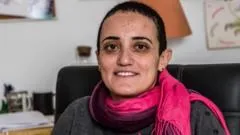
Christophe Gleizes is a 37-year-old French sports journalist who contributes to publications such as So Foot and Society. He was arrested in Algeria in May 2024 while attempting to report on the Jeunesse Sportive de Kabylie football club in the Kabylie region.
What are the specific charges against him?
Algerian authorities have accused Gleizes of supporting terrorism and possessing publications that threaten national security. These charges stem from his contacts with a football official linked to the Movement for the Self-Determination of Kabylie (MAK), a group designated as a terrorist organization by Algeria.
How did the Ballon d'Or ceremony respond to his case?
The Ballon d'Or ceremony, organized by France Football, dedicated the entire event to Gleizes. Presenters Kate Scott and Thierry Henry used the stage to display his photo and the hashtag #FreeGleize, highlighting his detention to a global audience during the awards.
What is the role of Reporters Without Borders in this case?
Reporters Without Borders (RSF) is actively campaigning for Gleizes's release, arguing his actions were purely journalistic. They are organizing a solidarity football match on November 11 to mark his 500th day in detention and to keep his case in the public eye.
How has this affected France-Algeria relations?
The case has added tension to an already strained relationship between France and Algeria. Diplomatic friction has been exacerbated by disagreements over Western Sahara, though recent ministerial visits suggest a cautious attempt to manage these issues through humanitarian appeals.
Conclusion
The dedication of the Ballon d'Or ceremony to Christophe Gleizes marks a significant intersection of global sport and international human rights advocacy. While the ceremony celebrated the pinnacle of footballing achievement, it simultaneously served as a platform for a pressing plea for journalistic freedom. The case of Gleizes remains deeply entangled with the complex political realities of the Kabylie region and the delicate diplomatic balance between France and Algeria. As international organizations like RSF continue their campaigns, the resolution of his detention will likely depend on both legal arguments and high-level diplomatic mediation.