Why has the Netherlands decided to withdraw from Eurovision 2027?
The Dutch public broadcaster NPO has officially decided to forgo participation in the 2027 Eurovision Song Contest, citing the intense social sensitivities surrounding Israel's presence in the competition. While the broadcaster had previously pledged to return to the contest next year, recent internal discussions led to a reversal of that position. Jurre Bosman, the media director at NPO, stated that Israel's involvement in the event triggers various reactions across society and serves as a catalyst for significant discussion and division.
This decision follows a period of uncertainty regarding the Dutch entry. Although the network Avrotros had initially signaled a withdrawal, NPO had attempted to steer a course toward a return in 2027. However, the broadcaster concluded that the current social climate makes a successful and harmonious participation impossible. NPO chair Jet de Ranitz explained that while there was initially sufficient support to return, the organisation was unable to establish a suitable format that could accommodate the prevailing tensions.
The shift in NPO's broadcasting strategy
The decision to 'take a step back' represents a strategic retreat by NPO to avoid being caught in the middle of geopolitical friction. By acknowledging that it is currently too early to participate, the broadcaster is attempting to protect its role as a neutral public service entity. Despite the withdrawal from the competition itself, NPO has confirmed that the Eurovision Song Contest will still be broadcast within the Netherlands, ensuring that viewers can still access the musical event even if their country is not competing.
How is the Eurovision boycott affecting other European nations?
The Netherlands is not acting in isolation; it is part of a growing trend of national broadcasters distancing themselves from the Eurovision Song Contest due to political friction. The 2026 edition of the contest saw a significant boycott by five countries: the Netherlands, Bulgaria, Iceland, Spain, and Slovenia. These nations withdrew primarily in response to Israel's participation, amid widespread international criticism regarding military actions in Gaza and the broader Middle East.
The ripple effects of these political tensions are visible in the confirmed lineup for 2027. Ireland has also confirmed it will not participate in the next edition. In Spain, the head of the public broadcaster has publicly voiced support for a boycott, suggesting that the sentiment is gaining traction among national media leaders. While some withdrawals are politically motivated, others are driven by domestic constraints; for example, the Czech public broadcaster cited significant spending cuts as the primary reason for its absence.
| Country | Reason for Absence/Boycott |
|---|---|
| Netherlands | Sensitivities regarding Israel's participation |
| Ireland | Political sensitivities/Boycott alignment |
| Spain | Broadcaster support for boycott |
| Czech Republic | Budgetary spending cuts |
| Bulgaria | Host of 2027 (Hosting after 2026 boycott) |
What is the Eurovision Organisation's response to the growing divisions?
Martin Green, the director of the Eurovision Song Contest, expressed deep regret over the Netherlands' decision to withdraw. While acknowledging the "strength of feeling" behind the move, Green maintained that the contest remains a vital platform for connection in a fractured world. The organisers have expressed an understanding of the diverse opinions held within and between participating nations, asserting that they do not dismiss any of these viewpoints.
To mitigate future conflicts and address the concerns of participating broadcasters, the Eurovision organisers have introduced several structural changes. These include:
- A new policy to exclude any country currently involved in an active armed conflict from hosting the competition.
- Revisions to the voting systems to address perceived imbalances or political influences.
- A commitment to protecting the "spirit of unity" that the contest traditionally represents.
The organisation remains optimistic about the future, stating they look forward to welcoming the Netherlands back when the timing is deemed appropriate by the broadcaster. The core mission remains focused on using music and creativity as a tool for shared experience, even as the geopolitical landscape becomes increasingly complex.
Where will the 2027 Eurovision Song Contest be held?
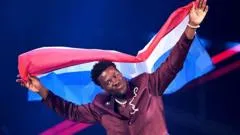
The 2027 Eurovision Song Contest is scheduled to take place in Burgas, Bulgaria, on May 15, 2027. This follows the 2026 contest in Vienna, which was won by the artist Dara with the dance track "Bangaranga." The selection of Bulgaria as the host city marks a significant moment for the country, which was among those that boycotted the previous year's event.
The transition from Vienna to Burgas highlights the contest's ability to move across the continent despite the logistical and political challenges posed by national withdrawals. As the contest prepares for its Bulgarian chapter, the focus will likely remain on whether the new rules regarding host nations and voting can successfully stabilize the event and encourage the return of boycotting nations like the Netherlands and Ireland.
FAQ: Eurovision and the Netherlands withdrawal
Why is the Netherlands boycotting Eurovision 2027?
The Netherlands is withdrawing due to the social division and sensitivities caused by Israel's participation in the contest. NPO, the Dutch public broadcaster, concluded that they could not find a suitable format to participate given the intense political discussions and societal reactions surrounding the event.
Which other countries are not participating in 2027?
Ireland has confirmed it will not participate in the 2027 contest. While other nations like Spain have expressed support for a boycott, their specific participation status for 2027 may vary, though the political tension remains a significant factor in European broadcasting decisions.
What changes has Eurovision made to address political tension?
Eurovision organisers have implemented changes to prevent countries involved in active armed conflicts from hosting the competition. They have also introduced changes to the voting procedures to better manage the diverse and often conflicting opinions held by participating nations and their audiences.
Will the Netherlands still show Eurovision on TV?
Yes, despite the decision to withdraw from the competition, NPO has acknowledged that the Eurovision Song Contest will continue to be aired in the Netherlands. This ensures that Dutch viewers can still watch the event even though there will be no Dutch entry.
Who won the Eurovision Song Contest in 2026?
Dara won the 2026 Eurovision Song Contest held in Vienna. The winning entry was a dance track titled "Bangaranga," which secured the victory and earned the right for the contest to move to Bulgaria for the 2027 edition.
Key takeaways
- NPO decided to withdraw the Netherlands from Eurovision 2027 due to societal divisions.
- The decision reverses a previous commitment by the Netherlands to return to the contest.
- Ireland and several other nations have also declined to participate in 2027.
- Eurovision 2027 will be hosted in Burgas, Bulgaria, on May 15.
- Organisers have introduced new rules to exclude countries in armed conflicts from hosting.
Conclusion
The withdrawal of the Netherlands from the 2027 Eurovision Song Contest underscores the growing difficulty of maintaining a unified cultural event in a politically polarized era. While NPO frames its decision as a necessary response to societal sensitivities regarding Israel's participation, the move highlights a broader trend of national broadcasters navigating complex geopolitical landscapes. As the contest moves to Burgas, Bulgaria, the success of new organisational reforms regarding hosting rights and voting will be critical. Ultimately, the contest faces the challenge of preserving its core message of unity while respecting the profound and diverse political convictions of its participating nations.