Why has the United States imposed sanctions on Rwanda?
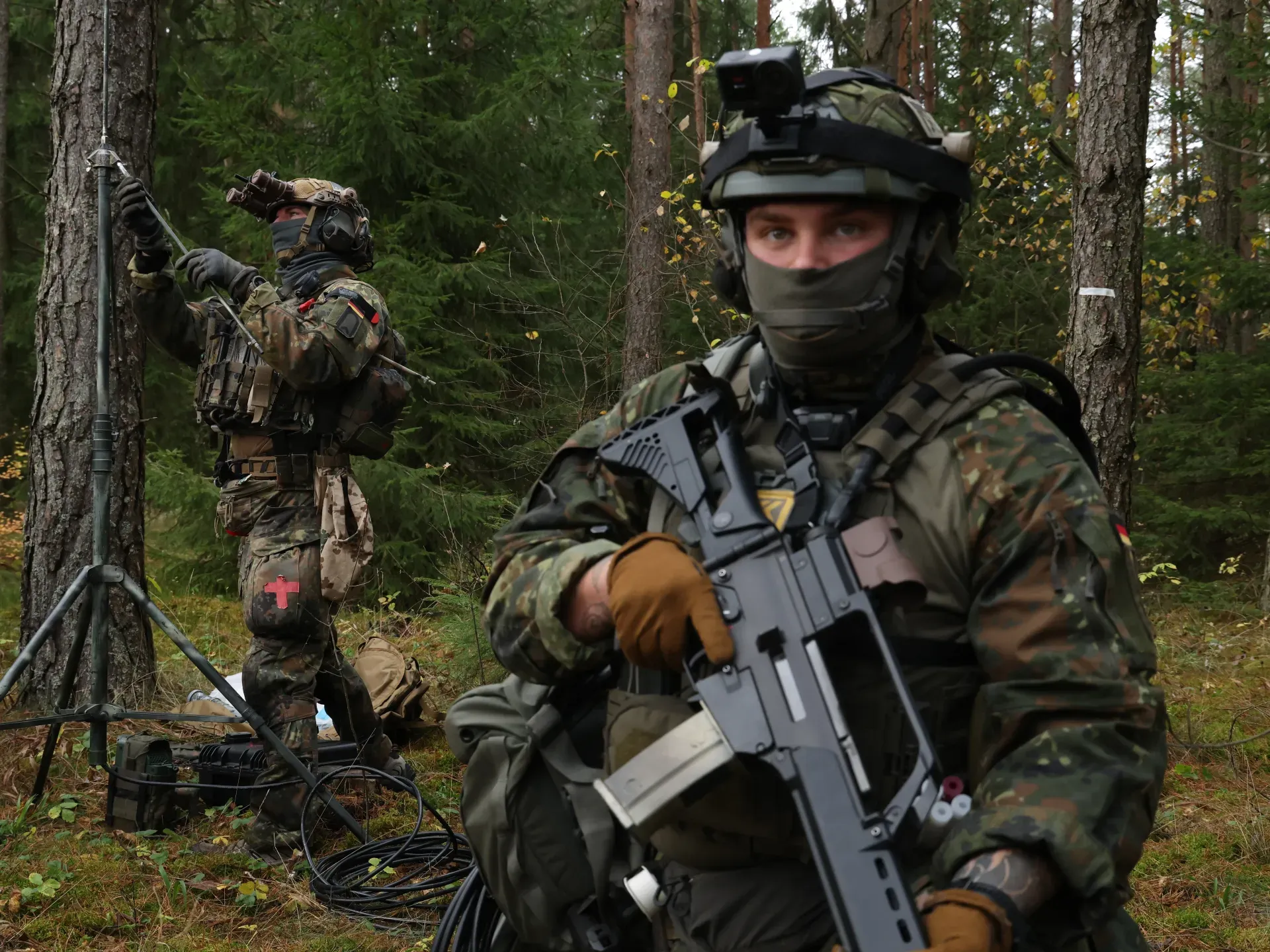
The United States has sanctioned Rwanda's defence ministry due to its alleged involvement in supporting the M23 rebel group within the eastern Democratic Republic of Congo (DRC). According to US Treasury Secretary Scott Bessent, Rwanda must cease its support for M23 and withdraw its military forces from Congolese territory. The US Treasury alleges that Rwanda's defence ministry has directed thousands of troops to operate alongside M23, providing essential logistics, equipment, training, and weaponry.
These sanctions are intended to reinforce the Washington Accords, a peace agreement signed in December 2025 under US mediation by the presidents of both the DRC and Rwanda. While the Accords were designed to foster regional trade and end hostilities, fighting has persisted since early 2025, when M23 forces seized the strategic cities of Goma and Bukavu. The US decision represents an escalation of diplomatic and economic pressure following the failure of these peace talks to stabilize the region.
The context of the Washington Accords
The Washington Accords were intended to serve as a roadmap for peace, yet the reality on the ground suggests a significant gap between diplomatic intent and military action. The agreement sought to create a framework for regional investment, but the continued presence of armed groups has undermined these goals. The US Treasury's recent move signals a lack of confidence in the current implementation of the deal.
What role do conflict minerals play in the sanctions?
The US government alleges that M23 rebels have seized control of vital mineral-rich territories in the DRC, which then feed into Rwandan supply chains. Specifically, the rebels have occupied gold-mining sites in South Kivu and the major coltan-producing region of Rubaya in North Kivu. Washington contends that Rwanda exports a volume of minerals that exceeds its own domestic production, suggesting a reliance on smuggled Congolese resources.
To combat this, the US has previously targeted the mineral trade through specific sanctions. In June 2026, the US imposed sanctions on the Gasabo gold refinery and three mining companies accused of smuggling conflict minerals. By targeting the financial and logistical pathways used to move these resources, the US aims to decouple the regional conflict from the global high-tech supply chain, particularly those involving coltan, which is essential for mobile phone production.
How does the targeting of financial institutions affect Rwanda?
A significant component of the new US measures involves the sanctioning of the Zigama Credit and Savings Society, a prominent financial institution that serves Rwanda's security services. The US Treasury alleges that this bank has facilitated tens of millions of dollars in transactions for M23 and its political affiliate, the Congo River Alliance. These funds are reportedly used to procure military equipment for Rwandan forces from China and to transport gold from rebel-held areas to Kigali.
The sanctions on Zigama Credit and Savings Society carry heavy implications for Rwandan military finance. Under these measures, the assets of the designated entities under US jurisdiction are frozen. Furthermore, US individuals and businesses are generally prohibited from conducting any transactions with these institutions. Violations of these restrictions can lead to significant penalties for both US and foreign parties involved, creating a barrier for international entities seeking to engage with Rwanda's military-linked financial sector.
What is Rwanda's official response to the allegations?
The Rwandan government has consistently denied providing support to the M23 rebel group. Yolande Makolo, a spokesperson for the Rwandan government, stated to the BBC that the Washington Accords contain specific commitments regarding Rwanda's security that remain unmet. Specifically, Kigali points to the need for the DRC to neutralize the FDLR, a militia linked to the perpetrators of the 1994 genocide, which Rwanda views as a direct security threat.
Makolo emphasized that Rwanda remains prepared to implement the Washington Accords, provided that the DRC fulfills its own obligations and the US-led mediation holds all involved parties accountable. This stance highlights the core of the dispute: Rwanda views its military posture in the DRC as a necessary defensive measure against the FDLR, while the US and the DRC view Rwandan military presence as an act of aggression and a violation of Congolese sovereignty.
The FDLR and the security dilemma
The presence of the FDLR remains a central pillar of Rwanda's security argument. Kigali maintains that the militia's existence in eastern DRC justifies its military involvement. However, the international community, led by the US, has focused on the humanitarian impact of the M23 insurgency and the violation of the Washington Accords, creating a deadlock between Rwanda's security concerns and the DRC's territorial integrity.
How are international partnerships and sports being affected?
The geopolitical tension is beginning to spill over into Rwanda's efforts to enhance its international profile through high-profile sports sponsorships. US senators Jeff Merkley and Marsha Blackburn have formally urged the National Basketball Association (NBA) to reconsider its commercial relationship with Kigali. In a letter to NBA commissioner Adam Silver, the senators questioned whether continuing such partnerships aligns with the league's commitment to human rights in light of the ongoing conflict.
This pressure follows a trend of declining commercial ties. While Rwanda recently secured a 10-year deal to host a Formula 1 African Grand Prix in the early 2030s, other major partnerships have concluded. The country's sponsorship of Arsenal FC ended in 2026, and Bayern Munich has also terminated its commercial partnership with 'Visit Rwanda'. These shifts suggest that the allegations of human rights abuses and involvement in the DRC conflict are increasingly influencing the decisions of global brands and sporting organizations.
FAQ: US Sanctions on Rwanda
What are the primary targets of the US sanctions?
The US has sanctioned Rwanda's defence ministry and the Zigama Credit and Savings Society. The ministry is accused of directing troops to support M23, while the bank is alleged to have facilitated millions of dollars in transactions for the rebels and the procurement of military equipment.
Why is the M23 rebel group involved in this dispute?
The M23 is an armed group operating in eastern DRC that the US alleges is supported by Rwanda. The group has seized significant territory, including mineral-rich areas in North and South Kivu, which the US claims fuels the conflict through the smuggling of gold and coltan.
What are the Washington Accords?
The Washington Accords are a peace agreement signed in December 2025 by the presidents of the DRC and Rwanda. Brokered by the United States, the deal aimed to end the fighting in eastern DRC and promote regional trade, though implementation has been unsuccessful.
How do these sanctions impact Rwandan businesses?
The sanctions freeze the assets of designated entities within US jurisdiction and prohibit US persons and companies from conducting business with them. This creates significant financial hurdles for institutions like Zigama Credit and Savings Society and can affect broader international trade relations.
What is Rwanda's justification for its military presence?
Rwanda argues that its military posture is a response to the presence of the FDLR, a militia linked to the 1994 genocide. Kigali maintains that the DRC has failed to fulfill its commitment under the Washington Accords to neutralize this security threat.
Key takeaways
- The US has sanctioned Rwanda's defence ministry for allegedly supporting M23 rebels.
- Zigama Credit and Savings Society is targeted for facilitating M23 financial transactions.
- Sanctions aim to enforce the 2025 Washington Accords and stop mineral smuggling.
- M23 control of gold and coltan mines is a central driver of the conflict.
- International sports partnerships, including the NBA, are facing pressure over Rwanda's human rights record.
Conclusion
The imposition of US sanctions on Rwanda marks a significant shift in the international approach to the conflict in eastern Democratic Republic of Congo. By targeting both military leadership and financial infrastructure, Washington is attempting to move beyond diplomatic rhetoric to address the economic drivers of the insurgency, specifically the illicit mineral trade. While Rwanda maintains its actions are defensive against the FDLR, the pressure from the US and the scrutiny of global commercial partners suggest that the era of using sports and trade to mask regional instability is facing intense challenges. The success of these measures will depend on whether they can force a genuine adherence to the Washington Accords.