How has the Turkiye Libya maritime agreement changed regional dynamics?
The approval of the 2019 maritime agreement by Libya's eastern-based parliament in Tobruk represents a major strategic shift in the Eastern Mediterranean. For years, the parliament had opposed the deal, which was originally signed between Turkiye and the Tripoli-based government. By reversing this stance, the eastern leadership has effectively validated the maritime jurisdiction areas claimed by Ankara and Tripoli, creating a unified front that challenges the existing Mediterranean status quo.
According to Galip Dalay, a senior research fellow at Chatham House, this development is more than just a tactical win; it is a strategic gain for Turkiye. The rapprochement makes it increasingly difficult for regional powers to establish energy and security frameworks that exclude Ankara. By engaging both the Tripoli-based government and the eastern camp, Turkiye has positioned itself as a central player that cannot be sidelined in Mediterranean resource management.
The shift from confrontation to cooperation
Ankara's approach has evolved from military intervention to diplomatic integration. During the 2019-2020 offensive on Tripoli, Turkiye played a decisive role in repelling forces loyal to Khalifa Haftar. However, rather than maintaining a strictly adversarial relationship with the east, Ankara has expanded its outreach. High-level meetings involving Turkish intelligence chief Ibrahim Kalin, Foreign Minister Hakan Fidan, and Defence Minister Yasar Guler with figures like Saddam Haftar and Abdulsalam al-Zoubi demonstrate a concerted effort to bridge the Libyan divide.
What are the political motivations behind the Libyan rapprochement?
The decision by eastern Libyan leaders to support the maritime deal is driven by complex internal political calculations. Within the Haftar camp, there is a sense that aligning with Ankara could bolster individual political prospects. Tarek Megerisi, a visiting fellow at the European Council on Foreign Relations, suggests that Saddam Haftar, son of Khalifa Haftar, may view Ankara's influence as a tool to strengthen his own potential path to leadership in Libya.
While the Turkish government maintains that it does not make specific political commitments to eastern officials, the practical results of this engagement are visible. Recent reports indicate that representatives from both Libyan camps met in Ankara to discuss the unification of their military structures. However, experts warn that these high-level shifts may not translate to a broader national consensus.
Anas El Gomati, director of the Sadeq Institute, cautions that an agreement between rival elites does not guarantee an inclusive political settlement. He notes that an "elite bargain" between the two main camps risks leaving the rest of the Libyan population excluded from the resulting political framework. Therefore, while the maritime agreement gains legal footing in the east, the underlying domestic instability remains a significant variable.
How is Egypt navigating the new Mediterranean reality?
Egypt finds itself in a delicate balancing act, attempting to maintain its traditional support for eastern Libya while opposing the maritime agreement that the eastern parliament has now endorsed. Cairo's position is complicated by its ongoing efforts to rebuild relations with Ankara, even as it aligns with Greece and Cyprus to reject the Turkiye-Libya accord.
The tension between Cairo's regional interests and its bilateral relationship with Turkiye is evident in recent diplomatic movements. On one hand, Egypt joined Greece, Cyprus, and the EU in a statement at the United Nations rejecting the accord. On the other hand, the two nations are actively pursuing military and economic cooperation. For instance, Turkiye’s land forces commander, General Metin Tokel, recently conducted an official visit to Egypt, and a joint naval exercise is scheduled in Alexandria for early November.
The role of maritime jurisdiction and energy interests
A central point of contention remains the potential for maritime jurisdiction. Turkiye’s Ministry of National Defence has suggested that a maritime boundary agreement with Cairo could benefit Egypt by granting it access to more than 15,000 square kilometers of maritime jurisdiction—a figure calculated by Ankara. This offer highlights Turkiye's attempt to use economic incentives to break the diplomatic deadlock.
Tarek Megerisi suggests that the relationship between Egypt and Turkiye has become too vital to be sacrificed entirely over maritime disputes. He points to the possibility of accommodation through third-party involvement, potentially involving Italy’s energy giant Eni, which holds significant interests in both Egypt and Libya. This indicates that while the dispute is intense, there are potential pathways for pragmatic, interest-based resolution.
What remains the primary obstacle to a Mediterranean settlement?
Despite the breakthrough in Libya, the fundamental dispute over maritime rights in the Eastern Mediterranean remains unresolved. The core of the conflict lies in how maritime boundaries and Exclusive Economic Zones (EEZs) are mapped, particularly concerning the rights of islands versus mainland coastlines.
Greece maintains that the Turkiye-Libya agreement ignores the sovereign rights of its islands, such as Crete. Conversely, Turkiye argues that islands should not be granted the same weight as continental landmasses when determining maritime boundaries. This "maximalist" stance from both sides, as described by Megerisi, means that even with Libyan support, the legal and political friction with Greece and Cyprus persists.
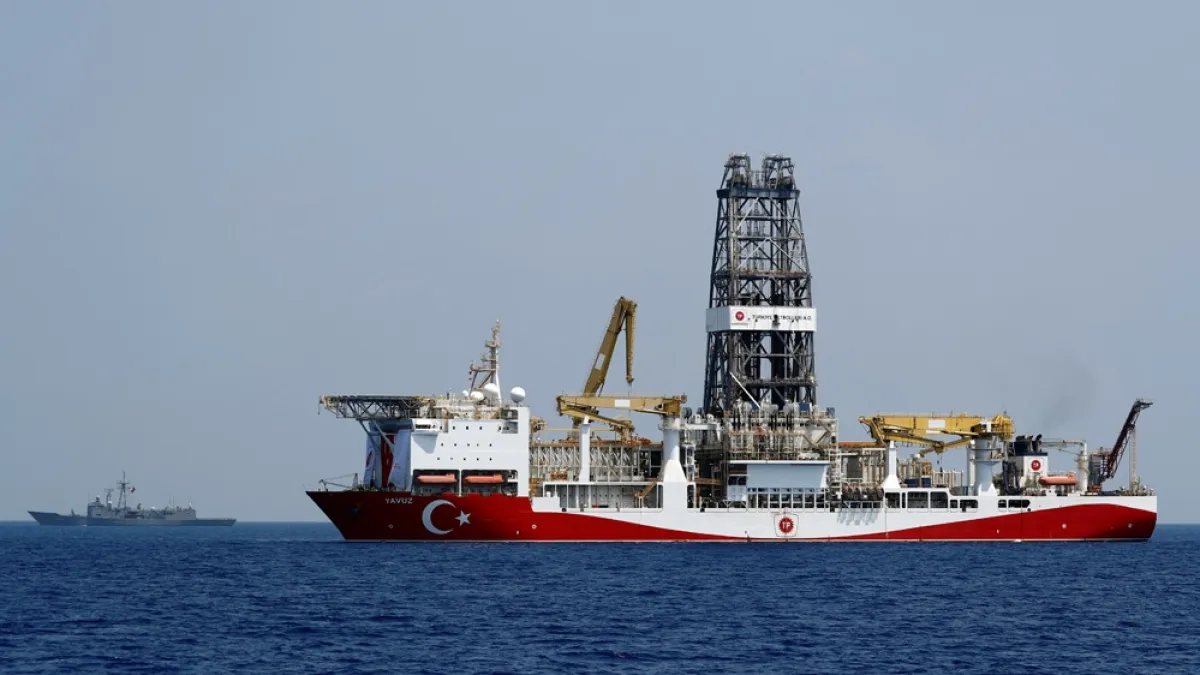
The current situation creates a landscape of competing claims rather than a settled legal order. While Ankara has gained significant political leverage and has successfully avoided being excluded from regional arrangements, the path to actual offshore energy exploration remains blocked by these unresolved territorial disagreements. The goal for Turkiye is now to transform this political leverage into a sustainable regional partnership model.
Frequently asked questions
What is the significance of the Libyan parliament's decision?
The decision is significant because it provides the 2019 Turkiye-Libya maritime agreement with legal legitimacy from Libya's eastern-based parliament. This reduces the diplomatic isolation of the deal and makes it harder for rival Mediterranean coalitions to exclude Turkiye from regional energy and security discussions.
How does this affect Egypt's relationship with Turkiye?
It creates a complex tension. While Egypt officially rejects the maritime accord alongside Greece and Cyprus, it is simultaneously rebuilding bilateral ties with Ankara through military exercises and high-level diplomatic visits, suggesting that economic and security interests may eventually outweigh the maritime dispute.
Will this agreement lead to energy exploration?
Not immediately. While the agreement provides a stronger legal basis for claims, the competing maritime boundaries asserted by Greece and Cyprus remain a major barrier. Until a broader regional consensus or a new negotiating mechanism is established, large-scale offshore energy exploration will likely remain stalled.
What role does Saddam Haftar play in this development?
Saddam Haftar is viewed as a key intermediary in the rapprochement between Ankara and eastern Libya. His engagement with Turkish officials suggests that the Haftar camp is using Turkish influence to bolster its political standing and potentially prepare for future leadership roles in Libya.
Does the agreement resolve the dispute with Greece?
No, the agreement does not resolve the dispute with Greece. Greece continues to argue that the deal infringes upon the maritime rights of its islands. The fundamental disagreement over whether islands should have full maritime zones remains the primary obstacle to a Mediterranean-wide settlement.
Key takeaways
- The Libyan eastern parliament's endorsement of the 2019 maritime deal provides Turkiye with significant strategic leverage.
- Ankara is successfully engaging both Tripoli and the eastern Libyan camps to avoid regional exclusion.
- Egypt is performing a balancing act, rejecting the maritime deal while maintaining growing military ties with Turkiye.
- The fundamental dispute regarding island maritime rights continues to block Mediterranean energy exploration.
Conclusion
The recent developments in Libya mark a pivot in Eastern Mediterranean diplomacy, shifting Turkiye from a position of confrontation to one of strategic inclusion. By securing the support of eastern Libya, Ankara has challenged the ability of its rivals to form exclusive regional blocs. However, this breakthrough is not a total resolution. The persistent legal disagreements with Greece and Cyprus, coupled with the internal political complexities of Libya, ensure that the Mediterranean remains a theater of competing interests. The future of the region will likely depend on whether these powers can move from maximalist positions toward pragmatic, interest-based cooperation.