What happened during the March 9 Tehran residential attack?
The attack occurred at approximately 1:00 pm on a Monday, beginning with a single missile strike that quickly escalated into a concentrated bombardment. Hamed Mirzaei, who was returning from work, described hearing a whistling sound followed by a massive explosion that shook the ground. Initially, he attempted to contact his wife, Mohadeseh, and other family members, but all communication lines were immediately unresponsive.
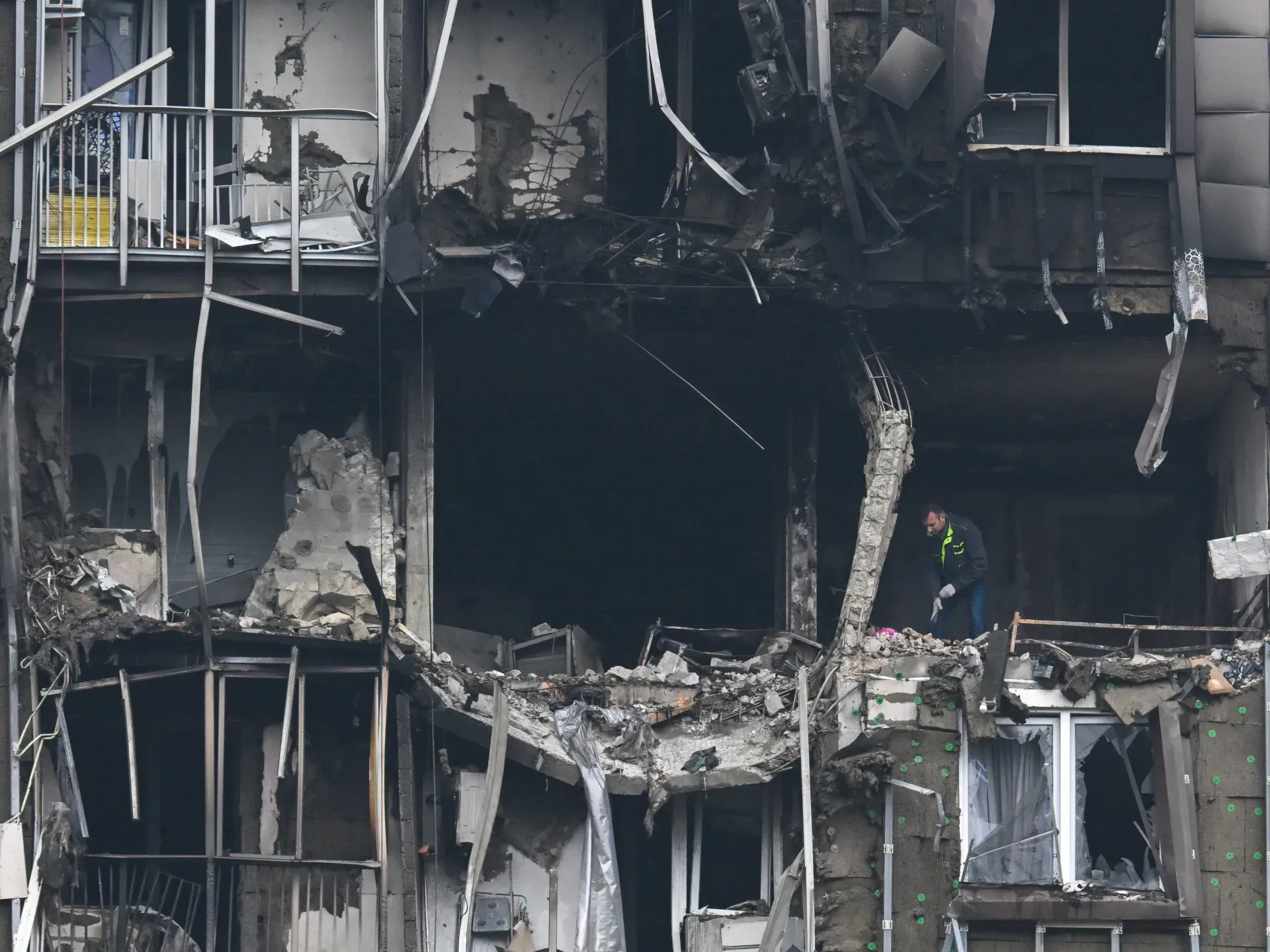
The destruction was not limited to a single impact. Within minutes of the first missile hitting the neighborhood, five additional missiles struck the specific residential building where Mirzaei’s family resided. The force of the strikes was so absolute that the building was reduced to a skeletal ruin, leaving little hope for those inside. While the Red Crescent managed to rescue some neighbors trapped on the lower floors, no survivors were found among Mirzaei's immediate family members.
The timeline of the bombardment
The sequence of events moved with devastating speed. At 2:30 pm, Mirzaei received a final message from his wife asking for medicine, a mundane interaction that would be his last connection to her. Shortly after, the first missile struck. The subsequent five missiles followed in rapid succession, ensuring the total collapse of the structure. This concentrated strike pattern left the building in a state of total combustion and structural failure.
Who were the victims of the building strike?
The strike claimed the lives of 12 members of Mirzaei's extended family, wiping out multiple generations within a single residential complex. The victims included his 26-year-old wife, Mohadeseh, and his sister-in-law, who was visiting at the time of the attack. The loss extended to his immediate parents, his grandparents, and several other relatives who lived in the shared family building.
The list of the deceased includes:
- Mirzaei's wife, Mohadeseh
- His father and mother
- His grandfather and grandmother
- His aunt's husband and daughter
- His uncle
- His father's cousin, his wife, and their child
For Mirzaei, the loss was not merely the death of individuals but the erasure of a collective history. The building had been a multi-generational asset, originally constructed by his grandfather and his father's uncle, with apartments divided among the family to allow them to live side by side.
How has the attack impacted the survivor's life?
Hamed Mirzaei describes a state of profound isolation and psychological trauma that has persisted for seven months following the event. As an only child, he had always viewed his large extended family as his primary social and emotional support system. With their disappearance, he describes himself as being "utterly alone," noting that the love and connections that defined his existence have vanished.
The trauma manifests in a repetitive cycle of grief and a sense of detachment from reality. Mirzaei reports that even months later, he frequently finds himself mentally returning to the destroyed home, searching for loved ones in his mind. He struggles to find a purpose for continuing his daily life, stating that everything he had previously done was intended for the happiness of a family that no longer exists.
The psychological weight of survival
Mirzaei expresses a unique form of survivor's guilt, comparing his existence to that of the deceased. He suggests that the only functional difference between himself and his family is that they were buried under the rubble while he remains mobile. This sentiment reflects a deep-seated belief that his life was effectively ended alongside the building, despite his physical survival.
Why does the survivor continue to visit the ruins?
Mirzaei returns to the site of the destroyed building every day, driven by a compulsion to stand among the remnants of his former life. He describes the ruins as the place where his life is "buried," and his daily visits are an attempt to find some connection to the past. The site represents the intersection of his birth, his family's history, and the future he had planned with his wife.
The site serves as a physical monument to his loss. He had hoped to raise a child in that building, a dream that was destroyed in a fraction of a second. For Mirzaei, the ruins are not just debris; they are the only tangible evidence left of the people and the life he once knew. He finds himself unable to move away from the location, even as the physical structure remains nothing more than a skeleton of stone and ash.
What is the broader message regarding the cost of war?
Through his testimony, Mirzaei offers a direct critique of the justifications for military conflict. He positions his experience as living proof against the notion that war can produce positive outcomes. His account challenges those who view escalation or military strikes as necessary or beneficial by highlighting the irreversible destruction of civilian lives and domestic stability.
His narrative shifts the focus from geopolitical calculations to the granular, human reality of warfare. By detailing the loss of a multi-generational home and the sudden erasure of a family tree, he argues that the collateral damage of such strikes is not merely statistical but a total annihilation of human identity and future potential. He poses a rhetorical question to those who support war, asking them to consider what, if anything, can be deemed "good" in the face of such total loss.
Key takeaways
- Twelve members of Hamed Mirzaei's family were killed in a US-Israeli missile strike on a Tehran residential building.
- The attack occurred on March 9, 2026, involving at least six missiles hitting a single family home.
- Victims included Mirzaei's wife, parents, grandparents, and several extended relatives.
- Mirzaei describes a state of total isolation and ongoing psychological trauma seven months after the strike.
- The survivor continues to visit the ruins daily, viewing the site as the place where his life was buried.
FAQ: Tehran residential attack
Who was targeted in the March 2026 strike?
The strike hit a residential building in Tehran that housed multiple members of Hamed Mirzaei's extended family. While the context involves the broader US-Israeli conflict with Iran, the immediate victims were civilians living in a multi-generational family apartment complex.
How many people died in the incident?
According to the account provided by Hamed Mirzaei, twelve members of his family were killed during the bombardment. This included his wife, his parents, his grandparents, and several other relatives including an uncle and a cousin's family.
What was the scale of the missile attack?
The attack began with a single missile strike, followed quickly by five more missiles that struck the same residential building. This rapid succession of strikes caused the total structural failure of the building, reducing it to a skeleton of rubble.
How has the survivor responded to the loss?
Hamed Mirzaei has experienced profound psychological distress and isolation. He reports feeling "dead" despite being alive and continues to visit the ruins of his home every day, struggling to find meaning or a reason to continue living without his family.
What is the significance of the building destroyed?
The building was a multi-generational home built by Mirzaei's grandfather and great-uncle. It represented the central hub for his extended family and was the place where Mirzaei and his wife had planned to start their own family.
Conclusion
The testimony of Hamed Mirzaei provides a stark illustration of the human toll inherent in the US-Israeli military actions in Iran. The destruction of a single residential building in Tehran resulted in the complete erasure of a family lineage, leaving one survivor to navigate a world devoid of his primary support system. His experience underscores the reality that for those on the ground, the consequences of war are not measured in political shifts or strategic gains, but in the permanent loss of homes, loved ones, and the very foundations of human life.