Why has the Armed Response Command been deployed in Sydney?
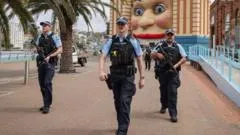
The deployment of the Armed Response Command (ARC) is a direct strategic response to the heightened threat levels identified following the Bondi Beach massacre. New South Wales police have designed this unit to provide a highly visible deterrent against serious violent threats, specifically targeting the prevention of active armed offender incidents. Unlike standard patrol units, the ARC is characterised by its use of specialist vehicles and officers carrying long-arm rifles, a sight that is largely unfamiliar to the general Sydney population.
According to a statement from New South Wales police, the primary objective of the ARC is the preservation of life. The unit is intended to be present in high-risk environments, including:
- Busy tourist destinations and coastal areas.
- Places of worship, particularly following the targeting of a Hanukkah event.
- Major sporting matches and large-scale public gatherings.
- High-density urban corridors.
Detective Superintendent Andrew Evans emphasized that the principle guiding the unit is simple: preventing loss of life through rapid response and visible presence. By placing these officers in areas where crowds gather, the state government intends to reduce the window of opportunity for attackers and provide immediate tactical intervention if an incident occurs.
What was the impact of the Bondi Beach shooting?
The shooting on 14 December served as a catalyst for profound legislative and social shifts across Australia. The attack, which occurred during a Hanukkah celebration at Bondi Beach, resulted in the deaths of 15 individuals, including a 10-year-old girl. This event is recorded as Australia's worst mass shooting in almost three decades, creating a period of intense national mourning and political pressure.
The immediate aftermath saw the federal government, led by Prime Minister Anthony Albanese, facing significant demands for action regarding rising antisemitism and public safety. The tragedy prompted several systemic changes, including:
- Sweeping reforms to national gun laws.
- Increased crackdowns on hate speech.
- Enhanced security protocols for religious and cultural celebrations.
The scale of the violence has fundamentally altered the Australian landscape. New South Wales Police Minister Yasmin Catley remarked to the ABC that the country has been changed forever by the event, noting that the nation will never be the same. This sentiment underscores the permanence of the security shifts currently being implemented through the ARC.
The legal proceedings against the perpetrators
The legal response to the Bondi attack has focused on the individuals identified as the gunmen. One of the alleged attackers, Naveed Akram, faces a substantial list of charges. According to reports, Akram has been charged with 78 offences, which include 15 counts of murder and 40 counts of attempted murder, alongside a charge for committing a terrorist act. The second individual involved, his 50-year-old father Sajid Akram, was killed by police at the scene after also opening fire on the crowd.
How has the public reacted to increased police visibility?
Public sentiment regarding the presence of heavily armed officers in civilian spaces is deeply divided, reflecting a tension between the desire for safety and the discomfort of militarised environments. For some residents, the sight of officers with long-arm rifles is described as "unnerving," with concerns raised about the sheer scale of the weaponry being carried through everyday streets.
Conversely, many members of the community view the increased presence as a necessary evolution of public safety. The reaction can be categorised into two primary perspectives:
| Perspective | Core Argument | Key Representative View |
|---|---|---|
| Security-Focused | Visible armed police provide a sense of safety and a deterrent to attackers. | Jewish communities have welcomed the operation as a protective measure. |
| Rights-Focused | Increased police weaponry leads to the "militarisation" of civil life. | Amnesty International expressed concerns regarding the suppression of protests. |
Alex Ryvchin, co-CEO of the Executive Council of Australian Jewry, noted that while no citizen desires to see military-grade weapons on their streets, the alternative—the loss of life seen in the Bondi attack—is far worse. This viewpoint highlights the pragmatic trade-off many are willing to make in exchange for heightened security.
What are the concerns regarding the militarisation of policing?
Human rights organisations have raised significant alarms regarding the long-term implications of deploying highly armed units like the ARC in civilian settings. The primary concern is that the presence of military-style weaponry and specialist tactical units could lead to a permanent shift in how policing is conducted in Australia, potentially infringing on civil liberties.
Amnesty International Australia has been a vocal critic of this trend, specifically warning against the "militarisation of policing." Their concerns are not merely about the presence of weapons, but about the potential for these enhanced capabilities to be used in ways that undermine democratic freedoms. Andrew Witheford of Amnesty International has called for specific assurances from the state government that the ARC will not be utilised as a tool to suppress peaceful protests or political dissent.
To mitigate these risks, rights advocates argue that any expansion of police power must be met with rigorous institutional safeguards. These include:
- Clear and publicly accessible rules of engagement for the ARC.
- Robust, independent oversight mechanisms to monitor officer conduct.
- Strict accountability frameworks to ensure the unit does not overstep its mandate.
As the ARC expands toward its eventual target of 250 officers, the debate over the balance between state-provided security and the preservation of an un-militarised public sphere is expected to intensify.
FAQ: Sydney armed police patrols
Why are police carrying rifles in Sydney?
Police are carrying rifles as part of the Armed Response Command (ARC) to provide a rapid response to active armed offender incidents. This highly visible presence is intended to deter attackers and protect high-risk areas like tourist hubs and places of worship.
What triggered the increase in armed patrols?
The increase in patrols follows the December Bondi Beach shooting, which killed 15 people. The tragedy, identified as Australia's worst mass shooting in nearly 30 years, necessitated enhanced security measures to prevent similar mass casualty events.
Is the Armed Response Command a permanent fixture?
The ARC is being implemented as a significant security measure following the Bondi attack. The unit is expected to eventually consist of 250 specially trained officers patrolling major events, religious sites, and busy public areas across Sydney.
Has the Bondi attack led to changes in law?
Yes, the attack prompted sweeping reforms to Australian gun laws and a crackdown on hate speech. The incident also placed significant pressure on the federal government to address antisemitism and public safety protocols.
What are the criticisms of the new police unit?
Critics, including Amnesty International, have raised concerns regarding the "militarisation of policing." They argue that there must be clear rules and independent oversight to ensure that increased police powers are not used to suppress peaceful protests or civil liberties.
Key takeaways
- The ARC will eventually consist of 250 specially trained officers in Sydney.
- The deployment follows the Bondi Beach shooting that killed 15 people.
- Officers will carry long-arm rifles in high-traffic and religious areas.
- The unit aims to deter and rapidly respond to active armed offenders.
- Human rights groups have called for oversight to prevent protest suppression.
Conclusion
The introduction of the Armed Response Command marks a pivotal shift in Sydney's approach to public safety. Driven by the trauma of the Bondi Beach massacre, the state has prioritised a highly visible, tactical deterrent to prevent further mass casualty incidents. While the initiative has gained support from communities seeking protection, it has simultaneously ignited a critical debate regarding the militarisation of civil spaces and the necessity of robust oversight. As the ARC scales up to 250 officers, the tension between ensuring immediate security and upholding long-standing civil liberties remains a central challenge for New South Wales authorities.