What do the leaked audio recordings reveal about the collision?
The leaked audio recordings published by Spanish media outlets, including El Pais and RTVE, suggest that control centre operators provided incorrect instructions to drivers immediately before the impact. According to the recordings, a control centre operator instructed the driver of the Renfe train—which was experiencing technical difficulties—to continue the journey using the Lateral Signalling Block at normal speed. When the driver questioned the instruction to maintain normal speed, the controller reportedly confirmed that the driver should proceed as usual.
Simultaneously, audio from the Iryo driver indicates a complete loss of communication with the train-control system. The Iryo driver informed the control centre that the train was stationary at the Urda entry signal and could not move because the security system would not allow control. Crucially, a subsequent recording suggests that the control centre had been notified that the Iryo train remained stuck on the tracks even as the Renfe train approached the site. This sequence of events points to a catastrophic failure in coordinating the movement of trains during a system-wide technical outage.
How did the technical failure lead to the disaster?
A reported failure in the automatic signalling system, specifically a computer-related malfunction, forced all trains on the affected stretch of track to halt. This system failure necessitated the use of the Lateral Signalling Block, a backup protocol designed to manage train movements when primary data transmission or automatic signalling is unavailable.
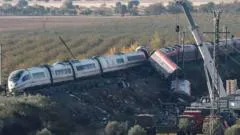
While the backup system is intended to maintain safety, the implementation in this instance appears to have failed. Spain's transport minister, Óscar Puente, described the decision to instruct the Renfe train to resume its journey without any speed restrictions as "inexplicable." The collision occurred when the Renfe train, carrying 397 passengers, struck the Iryo train from behind. The Iryo train, which was carrying 147 passengers, was stationary on the tracks due to the signalling error and its inability to engage its security systems.
The role of the Lateral Signalling Block
The Lateral Signalling Block serves as a critical fail-safe in modern rail networks. When the primary automated systems fail, this manual or alternative method allows for controlled movement. However, for this system to function safely, human oversight must strictly enforce speed limits and ensure that the path ahead is verified as clear. In this disaster, the failure was not necessarily the backup system itself, but the instruction given to the driver to ignore the potential presence of a stationary vehicle and maintain full operational speed.
What is the scale of the human and physical impact?
The collision resulted in 69 confirmed fatalities and left dozens of passengers injured, marking it as Spain's most significant rail accident since 2013. Survivors have described harrowing scenes of smoke-filled carriages, passengers trapped in their seats, and significant physical trauma caused by the impact. One carriage reportedly caught fire following the collision.
Emergency response efforts have been massive in scale. The Spanish Civil Guard has deployed more than 900 personnel from various specialist departments to the disaster site. Recovery operations have utilized drones and helicopters to navigate the wreckage and locate victims. Because many of the deceased have not yet been identified, authorities have established local centres to collect DNA samples from families of the missing. The work of emergency crews continues around the clock under floodlights to cut through metal wreckage and recover remains.
How has the crash impacted Spanish politics?
The disaster has triggered intense political turmoil and civil unrest across Spain. Prime Minister Pedro Sánchez has pledged to uncover every detail of the tragedy, and King Felipe VI and Queen Letizia visited injured passengers in Toledo to offer condolences. Most Spanish politicians have suspended all public campaigning and engagements in light of the national mourning period, which has lasted three days.
However, the political response has been deeply divided:
- The Government: Prime Minister Sánchez and Transport Minister Óscar Puente are facing intense scrutiny over infrastructure safety and the management of the rail sector.
- The Opposition: The People's Party, led by Alberto Núñez Feijóo, has demanded transparency regarding the country's rail infrastructure.
- The Far-Right: Vox leader Santiago Abascal has refused to join the national mourning, accusing others of using the tragedy to silence criticism of the state.
- Left-wing Parties: Members of Sumar and Podemos have criticized the leak of the audio and argued that the crash is a consequence of the ongoing liberalisation of the Spanish railway sector.
This political tension manifested in physical protests, where approximately 1,500 people gathered outside the transport ministry in Madrid. Demonstrators calling for the resignations of Sánchez and Puente were dispersed by police using tear gas after throwing bottles and flares. Additionally, the Spanish Union of Railway Drivers (Semaf) conducted a planned strike on Thursday, stating the action was necessary to defend railway safety.
Frequently asked questions
How many people were involved in the Spain train crash?
The collision involved two trains: a Renfe high-speed train with 397 passengers and an Iryo train with 147 passengers. The crash resulted in 69 deaths and left dozens of people injured, making it one of the worst rail disasters in modern European history.
What caused the Renfe train to hit the Iryo train?
The crash was caused by a combination of a computer failure in the automatic signalling system and incorrect instructions from the control centre. Despite the Iryo train being stationary due to technical issues, the Renfe train was ordered to proceed at normal speed.
What is the Lateral Signalling Block?
The Lateral Signalling Block is an alternative, backup train management system used when primary automatic signalling or data transmission systems fail. It is intended to maintain safety during technical outages, provided that speed restrictions and manual checks are strictly followed by drivers and controllers.
What are the political consequences in Spain?
The crash has led to calls for the resignation of top officials, including the Transport Minister. It has also sparked protests, a rail workers' strike, and significant debate regarding the liberalisation of the Spanish railway sector and the safety of national infrastructure.
How is the identification of victims being handled?
The Spanish Civil Guard has deployed over 900 specialists to the site. Because many victims remain unidentified, authorities have set up local centres where families can provide DNA samples to assist in the identification process during the recovery efforts.
Key takeaways
- The collision between Renfe and Iryo trains resulted in 69 confirmed fatalities.
- Leaked audio suggests control centre operators wrongly cleared a train to proceed at normal speed.
- A computer failure in the automatic signalling system triggered the initial technical crisis.
- The disaster has prompted national mourning and significant political unrest across Spain.
- Rail drivers conducted a strike to protest and defend railway safety standards.
Conclusion
The Spain train crash represents a profound failure of both technical systems and human oversight. While the initial trigger was a computer malfunction in the automatic signalling, the leaked audio recordings suggest that the subsequent human decisions made by control centre operators were the decisive factor in the collision. As the investigation continues, the nation faces not only the task of identifying the victims but also a period of intense political reckoning regarding the safety and management of its national rail infrastructure.