What happened during the drone strike in Dnipro?
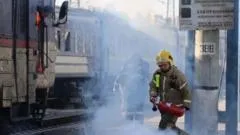
A jet-powered drone struck a crowded platform at the main railway station in the central Ukrainian city of Dnipro, killing at least 14 people. The attack occurred while a passenger train, destined for the southern city of Zaporizhzhia, was stationed at one of the platforms, according to the state railway operator, Ukrzaliznytsia.
Local authorities reported that the impact caused significant destruction. Dnipropetrovsk regional head Oleksandr Hanzha confirmed that at least 14 individuals sustained injuries, including an 11-year-old boy. Dnipro Mayor Borys Filatov described the event as a tragedy, noting that the drone also hit an electric civilian train.
Visual evidence from Ukrainian rescue services depicted a large breach in the platform, with debris and casualties scattered near a blast-damaged train featuring shattered windows. Despite an elevated threat level being announced by railway operator chief Oleksandr Pertsovsky prior to the strike, a significant number of civilians remained on the platform at the time of the impact.
The impact on civilian transport infrastructure
The strike specifically targeted a hub where both regular commuter and passenger trains were operational. President Volodymyr Zelensky highlighted that the drone was used to attack a platform occupied by these civilian services, emphasizing the direct impact on non-combatant movement.
How widespread are the recent Russian strikes across Ukraine?
Multiple cities across Ukraine suffered casualties from different types of aerial attacks on the same day. While Dnipro faced a drone strike, Chernihiv was hit by a missile, and Kremenchuk experienced a drone attack on residential areas.
In the northern city of Chernihiv, regional head Vyacheslav Chaus reported that a missile strike on the city centre killed two 15-year-old girls. The attack also injured at least 25 others, four of whom were children. In the central Poltava region, the city of Kremenchuk saw three fatalities and 28 injuries following a drone strike that hit a school and residential buildings, according to regional head Vitaliy Diakivnych.
These incidents have led to the declaration of a day of mourning in both Chernihiv and Dnipro on Friday. The coordinated nature of these strikes suggests a sustained effort to disrupt civilian life and urban stability across various regions of the country.
Why is the targeting of railway infrastructure increasing?
Attacks on Ukraine's railway facilities have risen sharply, with total attacks increasing from 1,206 in 2025 to 1,700 so far this year. This trend is supported by data from Ukrzaliznytsia, which indicates a significant escalation in the intensity of strikes against locomotives.
According to statistics released by Ukrzaliznytsia to the AFP news agency, of the 521 locomotives hit since the start of the full-scale invasion in February 2022, almost 60% of those strikes occurred within this year. This data points to a concentrated effort to degrade the country's logistical capabilities.
The Russian defence ministry maintains that its strikes target infrastructure used for the transport of military personnel and equipment, denying the deliberate targeting of civilians. However, the practical reality for the population involves high-risk exposure, as seen in recent hits on bridges in Kyiv and a metro train during broader strikes.
Statistical overview of railway infrastructure strikes
The following table illustrates the documented increase in attacks on Ukrainian railway assets:
| Metric | Data/Figure | Source |
|---|---|---|
| Total railway facility attacks (2025) | 1,206 | Ukrzaliznytsia |
| Total railway facility attacks (2026 YTD) | 1,700 | Ukrzaliznytsia |
| Total locomotives hit since Feb 2022 | 521 | Ukrzaliznytsia |
| Percentage of locomotive hits in 2026 | ~60% | Ukrzaliznytsia |
What is the political and diplomatic reaction to these attacks?
President Volodymyr Zelensky has used the Dnipro tragedy to call for intensified international pressure, specifically requesting further sanctions from the US, Europe, and the G7. He has also voiced criticism regarding a recent agreement between Donald Trump and Vladimir Putin that eased certain sanctions, such as those allowing US imports of Russian diesel.
The strikes come at a time of complex diplomatic activity. While Ukraine faces increased aerial bombardment, the Kremlin has condemned Ukrainian drone strikes on Moscow. These tensions coincide with the Russia-Africa Summit in Moscow, an event attended by government delegations from 48 countries. During this period, the mayor of Moscow reported that 613 Ukrainian drones were launched toward the region overnight, though most were intercepted.
In a different context, a fragile ceasefire has been observed in the occupied city of Oleshky. Ukrainian human rights ombudsman Dmytro Lubinets noted that the truce has held into its third day, despite the city having been deprived of essential services like water, electricity, and medicine for years under Russian occupation.
Frequently asked questions
How many people were killed in the Dnipro attack?
At least 14 people were killed during the drone strike on the Dnipro railway station. Local officials, including Dnipropetrovsk regional head Oleksandr Hanzha, confirmed the death toll and noted that at least 14 others were wounded, including a child.
What type of weapon was used in the Dnipro strike?
The attack in Dnipro was carried out using a jet-powered drone. This weapon hit a crowded platform at the main railway station while civilian passenger and commuter trains were stationary at the site.
Is there an increase in attacks on Ukrainian trains?
Yes, attacks on railway infrastructure have risen significantly. According to Ukrzaliznytsia, total attacks on railway facilities rose from 1,206 in 2025 to 1,700 so far in 2026, with nearly 60% of all locomotives hit since 2022 being struck this year.
What was the impact of the missile strike in Chernihiv?
The missile strike in Chernihiv targeted the city centre and resulted in the deaths of two 15-year-old girls. Regional head Vyacheslav Chaus reported that at least 25 people were injured, including four children, in the attack.
How has Russia responded to the accusations of targeting civilians?
Russia's military and defence ministry have consistently denied deliberately targeting civilians. They maintain that strikes on railway infrastructure are intended to disrupt the movement of military personnel and equipment rather than civilian passengers.
Key takeaways
- A jet-powered drone strike in Dnipro killed at least 14 people and injured 14 others.
- Railway facility attacks in Ukraine rose from 1,206 in 2025 to 1,700 in 2026.
- Nearly 60% of all locomotives hit since February 2022 have been targeted this year.
- President Zelensky is calling for expanded G7 and US sanctions against Russia.
The evolving landscape of infrastructure warfare
The strike in Dnipro represents a critical point in the ongoing escalation of attacks against Ukraine's civilian logistics. The data provided by Ukrzaliznytsia demonstrates that the railway network is no longer just a secondary target but a primary focus of kinetic operations. As the frequency of strikes on locomotives and stations increases, the distinction between military logistics and civilian transport becomes increasingly blurred in practice. The international community now faces renewed pressure to address the humanitarian consequences of these infrastructure-focused campaigns through tightened sanctions and increased support for civilian protection.