Why is Pope Leo XIV's vote in the US election considered historic?
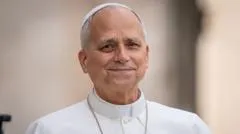
Pope Leo XIV has become the first individual to hold the office of the papacy and simultaneously cast a ballot in a United States election. While the Pope holds supreme authority over the Catholic Church, he retains his citizenship from his country of origin. As a native of Chicago, his ability to participate in the US midterm elections represents a unique intersection of religious leadership and secular civic duty.
The Holy See Press Office clarified the nature of this action, stating that the Holy Father views the participation of citizens in democratic systems as both a right and a responsibility. This move highlights the dual identity of the pontiff: a global spiritual leader and a private citizen of the United States. According to the Holy See Press Office, the Pope has consistently exercised his voting rights as a US citizen throughout his life, including during his tenure in Peru.
The legal status of the Pope as a US citizen
Despite residing in the Vatican, the Pope's legal status as a US citizen remains intact. This allows him to engage with the political machinery of his home nation, such as requesting mail-in ballots through local administrative offices. In this instance, the Pope utilized the Will County Clerk's Office in Illinois to secure his ballot for the 2026 midterms.
How has the relationship between Pope Leo XIV and Donald Trump evolved?
The relationship between the Vatican and the Trump administration has been characterized by significant diplomatic friction. Since his election in May 2025, Pope Leo XIV has frequently found himself at odds with the US presidency on critical international and domestic policy issues. These disagreements have moved beyond mere policy differences into the realm of public criticism from both sides.
Key areas of contention include immigration enforcement policies within the United States and the ongoing conflict involving Israel, Iran, and US military involvement. The tension reached a peak in April when the Pope issued calls for peace following US-Israeli military strikes on Iran. This intervention prompted a sharp rebuke from President Donald Trump, who expressed disapproval of the Pope's stance on international security and nuclear capabilities.
Public exchanges and diplomatic fallout
The rhetoric between the two leaders has become increasingly personal. President Trump publicly stated his lack of support for the Pope, specifically targeting the Holy See's position on nuclear weapons. In response, Pope Leo XIV defended his role, noting that the primary mission of the Church is the preaching of the Gospel and the promotion of peace. He emphasized that his words should be valued for their spiritual substance rather than judged as political maneuvering.
What is the context of the 2026 US midterm elections?
The midterm elections, scheduled for nationwide voting on 3 November, serve as a critical barometer for the current administration's standing. These elections will determine the political composition of the US Congress, specifically the House of Representatives and the Senate. The results are expected to have a profound influence on the remaining years of Donald Trump's presidency.
Current political trends suggest a challenging landscape for the Republican Party. According to polling data, Democrats are currently favored to seize control of the House of Representatives. Notably, Democratic momentum appears to be building in regions that traditionally align with the Republican platform, including areas that provided overwhelming support for Trump during the 2024 presidential election. This shift has forced Republican leadership to intensify campaigning, even in states where victories are typically considered certain.
The impact of congressional control on policy
The outcome of these elections will dictate the legislative capacity of the White House. If Democrats secure control of the House, the administration may face significant hurdles in passing its core agenda, particularly regarding immigration and foreign aid. Conversely, a Republican hold on the Senate could provide a strategic counterbalance to any Democratic gains in the lower chamber.
What is the current health status of Pope Leo XIV?
The Pope's recent health challenges have added a layer of complexity to his international schedule and public duties. Shortly after requesting his mail-in ballot on 3 October, the Vatican announced that the 71-year-old pontiff had undergone surgery to remove a portion of his right lung following a diagnosis of lung cancer.
Despite this medical procedure, the Vatican has maintained that the Pope's planned international itinerary remains unchanged. He is scheduled to undertake a significant trip to South America in early November, with planned visits to Uruguay, Argentina, and Peru. This tour is seen as a vital component of his mission to engage with the global Catholic community, particularly in regions where he has previously resided.
Frequently asked questions
Is the Pope allowed to vote in US elections?
Yes, Pope Leo XIV is permitted to vote because he maintains his status as a United States citizen. While his role as Pope is international, his citizenship allows him to participate in the democratic processes of his home country, including the use of mail-in ballots in Illinois.
Why did President Trump criticize the Pope?
President Trump's criticism stemmed from the Pope's calls for peace following US-Israeli strikes on Iran. The President expressed dissatisfaction with the Pope's stance, specifically suggesting that the Holy See's position regarding nuclear weapons was not aligned with US interests or security perspectives.
What are the midterm elections deciding?
The 2026 midterm elections are determining which political party will hold control of the US Congress. This includes the House of Representatives and the Senate. The results will significantly impact the legislative power available to the Trump administration during the rest of his term.
What is the Pope's recent medical history?
Pope Leo XIV recently underwent surgery to remove a lower lobe of his right lung. This procedure followed a diagnosis of lung cancer. Despite this, the Vatican has confirmed that he is fit enough to proceed with his upcoming scheduled travels to South America.
Where is the Pope traveling in November?
In early November, the Pope is scheduled to travel to Uruguay, Argentina, and Peru. This international tour is proceeding as planned, despite his recent lung surgery and the ongoing political tensions surrounding his recent activities in the United States.
Key takeaways
- Pope Leo XIV is the first pontiff to ever cast a vote in a US election.
- The Pope's vote was submitted via mail-in ballot in Will County, Illinois.
- Tensions exist between the Pope and President Trump over immigration and Iran.
- Democrats are currently favored to win control of the House of Representatives.
- The Pope is recovering from lung cancer surgery but will travel to South America.
The intersection of faith and civic duty
The act of Pope Leo XIV voting in the US midterm elections represents more than a mere exercise of citizenship; it is a symbolic moment where the spiritual authority of the Vatican meets the democratic reality of the United States. As the world watches the results of the 2026 midterms, the Pope's involvement serves as a reminder of the complex, often overlapping identities held by global leaders. Whether his vote is seen as a political statement or a simple civic duty, it has undeniably set a new precedent for the intersection of the papacy and modern democracy.