Why is Pope Leo XIV's US election vote considered a historic first?
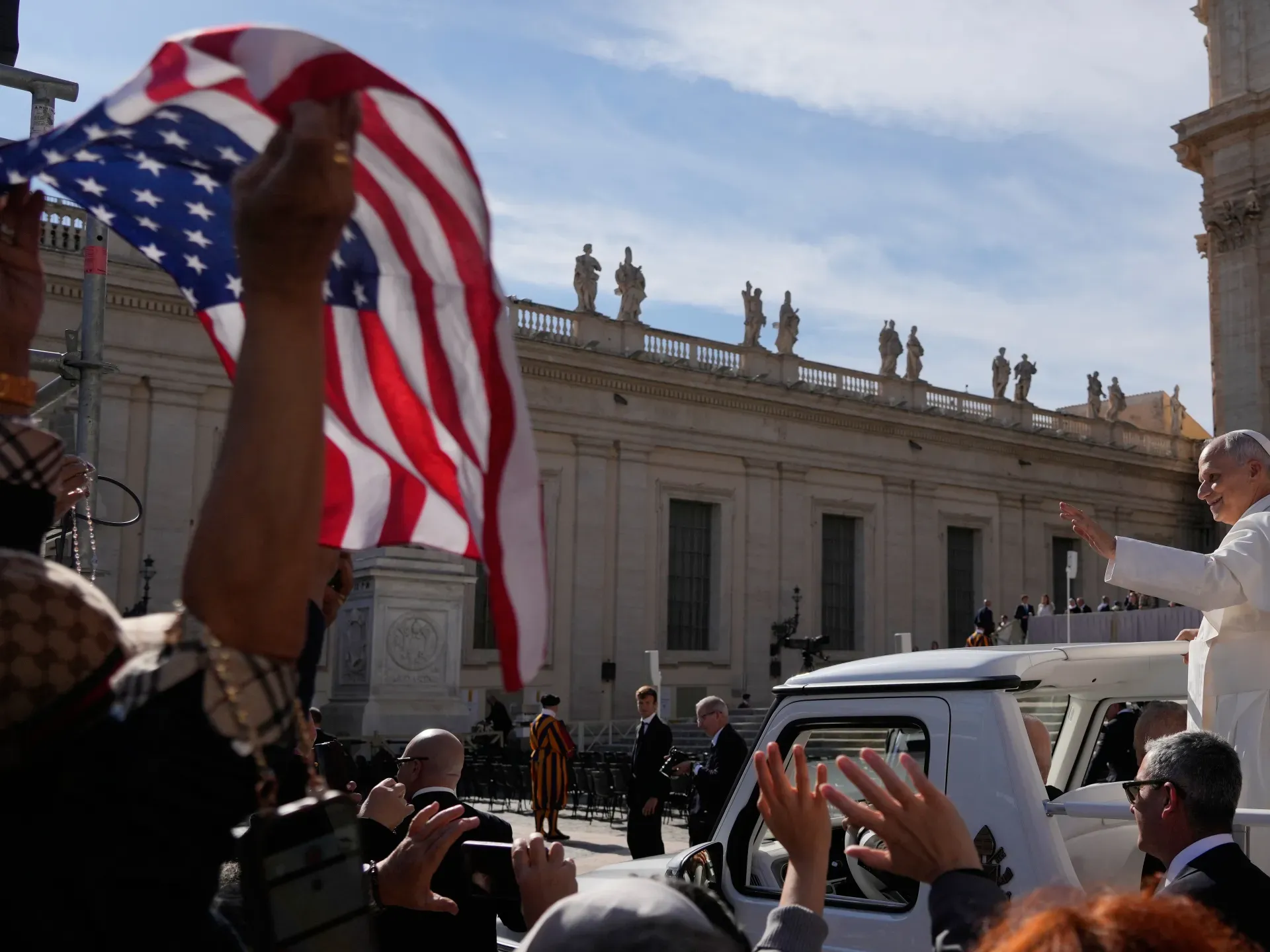
Pope Leo XIV's decision to participate in the United States midterm elections marks the first time a reigning pontiff has cast a ballot in a US general election. While previous popes have held various citizenships or connections to the West, the active exercise of voting rights in a US national election by a sitting head of the Holy See is unprecedented. The Vatican's press office clarified that Leo, born Robert Prevost, acted as a United States citizen exercising a fundamental right.
The Vatican framed the move not as a political endorsement, but as a demonstration of civic responsibility. According to the Vatican’s press office, the Holy Father believes in the 'right and the duty of citizens to participate in democratic processes.' By casting his ballot, Leo has signaled that religious leadership and civic engagement are not mutually exclusive, provided the participation is rooted in the concept of the common good.
The intersection of faith and citizenship
The move has prompted significant commentary from religious bodies. The US Conference of Catholic Bishops (USCCB) responded by urging the faithful to maintain a distinction between religious conviction and partisan politics. Chieko Noguchi, the conference’s director of public affairs, noted that while the Pope's actions encourage civic responsibility, Catholics should prioritize 'human dignity and the common good' over specific political affiliations.
How does the Pope's voting history in Illinois look?
Before ascending to the papacy in May 2025, Robert Prevost was a regular participant in the American electoral process. Records held by the Illinois State Board of Elections reveal a history of voting in five different primary elections, demonstrating a pattern of engagement that spans different political landscapes within the state.
His voting history shows a shift in party preference that aligns with his residential moves within Illinois. In 2008 and 2010, while registered in the heavily Democratic Cook County, he requested Democratic primary ballots. However, after moving to the more conservative Will County, he requested Republican primary ballots for the 2012, 2014, and 2016 election cycles. It is important to note that while these records confirm his party preference for primaries, they do not disclose which specific candidates he supported in general elections.
| Election Year | County | Party Preference |
|---|---|---|
| 2008 | Cook | Democratic |
| 2010 | Cook | Democratic |
| 2012 | Will | Republican |
| 2014 | Will | Republican |
| 2016 | Will | Republican |
The current mail-in ballot for the November 3 midterms follows a period of personal health challenges. Leo requested his ballot on October 3, shortly before undergoing surgery to remove a cancerous tumor from his right lung. He has since been gradually returning to his duties at the Vatican following his release from the hospital on October 17.
What are the legal implications of his multiple citizenships?
The Pope holds a complex web of citizenships that complicates the legal standing of his civic actions. In addition to his United States citizenship, Leo is a citizen of Peru, where he served as a priest and bishop for over two decades, and he is the head of state of the Vatican City.
Under US federal law, citizens living abroad are permitted to vote via absentee or mail-in ballots. This right remains intact even for individuals working for foreign entities. However, the legal status of a foreign head of state remains a nuanced area. The US State Department notes on its website that it may 'actively review' the citizenship status of Americans who serve in high-level foreign roles, such as a foreign head of state, head of government, or foreign minister.
Navigating international law and sovereignty
While the Vatican has not expressed concern regarding the legality of his vote, the intersection of being a sovereign head of state and a US citizen creates a unique diplomatic profile. The act of voting as a private citizen of the US while simultaneously serving as a global religious leader highlights the dual identity Leo maintains between his American roots and his international responsibilities.
How has the Pope's vote impacted his relationship with the Trump administration?
The Pope's decision to engage in US politics comes amid a period of heightened tension between the Vatican and the administration of US President Donald Trump. Since Leo took office in May 2025, the two leaders have engaged in several public disagreements regarding international and domestic policy.
President Trump has been a vocal critic of the Pope, specifically targeting his stances on the US-Israel war in Iran and his criticisms of US immigration policies. In an earlier confrontation, Trump described the Pope as 'weak' and suggested he was a captive to the 'radical left.' Leo has not shied away from these criticisms, previously stating to reporters that he is not afraid of the Trump administration and remains committed to speaking out on the 'message of the Gospel.'
The timing of the vote, occurring during a midterm election cycle where Illinois voters are deciding on successors for Senator Dick Durbin and the re-election of Governor JB Pritzker, adds a layer of political scrutiny to the Pope's actions. While the Vatican has not disclosed his specific candidate choices, the act itself remains a focal point in the ongoing dialogue between the Holy See and Washington.
Frequently asked questions
Which US state is Pope Leo XIV voting in?
Pope Leo XIV is voting in the state of Illinois. He submitted a mail-in ballot in his birthplace of Chicago to participate in the November 3 midterm elections. This action follows his long-standing history as a resident and voter in various Illinois counties.
Is it legal for a foreign head of state to vote in the US?
Yes, US federal law allows citizens living abroad to vote via absentee ballots. While the US State Department may review the citizenship of Americans serving as foreign heads of state, there is no automatic loss of citizenship, and Leo is exercising his right as a US citizen.
What was the Pope's previous voting record in the US?
As Robert Prevost, he voted in five primary elections in Illinois. He requested Democratic ballots in 2008 and 2010 while living in Cook County, and requested Republican ballots in 2012, 2014, and 2016 after moving to Will County.
Has the Vatican disclosed who the Pope voted for?
No, the Vatican has not disclosed which candidates Pope Leo XIV supported in the current midterm elections. The Holy See's communications have focused on the principle of civic duty rather than specific political endorsements or candidate preferences.
Why has there been tension between the Pope and Donald Trump?
Tensions stem from differing views on the US-Israel war and immigration policy. President Trump has criticized the Pope's stances, calling him "weak," while the Pope has maintained that his primary duty is to the message of the Gospel, regardless of political administration.
Key takeaways
- Pope Leo XIV is the first pontiff to cast a vote in a US general election.
- The Pope submitted a mail-in ballot in Chicago for the November 3 midterms.
- His previous voting history in Illinois shows shifts between Democratic and Republican primaries.
- The Vatican emphasizes that the vote is an exercise of civic duty, not political endorsement.
Conclusion
The decision by Pope Leo XIV to cast a mail-in ballot in Chicago represents a significant moment in the intersection of religious leadership and national civic engagement. By exercising his rights as a US citizen, the Pope has reinforced the Vatican's stance on the importance of democratic participation. While this move has intensified existing political frictions with the Trump administration and prompted calls for religious neutrality from the US Conference of Catholic Bishops, it remains a landmark instance of a reigning pontiff engaging directly with the electoral processes of a sovereign nation.