How did the Oleshky evacuation take place?
The evacuation was facilitated by a humanitarian ceasefire in the Kherson frontline region that took effect on Tuesday, providing a brief window of peace after four years of continuous conflict. This ceasefire allowed for the clearing of mines from exit routes and the delivery of essential humanitarian aid to the city. The operation centered on a Friday afternoon window, during which a convoy of 25 buses—with a total capacity for 750 people—departed the town. Because many residents suffered from limited mobility due to the war, the convoy also included a significant number of ambulances.
The journey was geographically complex and required traversing multiple borders. Although Ukrainian military positions are located only 5km (3.1 miles) from Oleshky, the evacuees could not move directly to Ukrainian-controlled territory. Instead, they had to travel through Russian-occupied zones into southern Russia, fly to Belarus, and finally be driven across Ukraine's northern border into the Chernihiv region on Saturday. This circuitous route was necessary due to the high danger of the frontline, where bridges across the River Dnipro have been destroyed and the riverbanks remain heavily mined.
The logistical challenges of the route
The evacuation route highlights the extreme difficulty of movement in the Kherson region. With the Dnipro River acting as a major barrier and various escape routes being subject to drone attacks and minefields, the path through Russia and Belarus was a strategic necessity. One resident reported having to navigate 24km (15 miles) of minefields just to reach safety previously, underscoring why a coordinated, protected convoy was essential for the elderly and the infirm.
What were the living conditions in Oleshky?
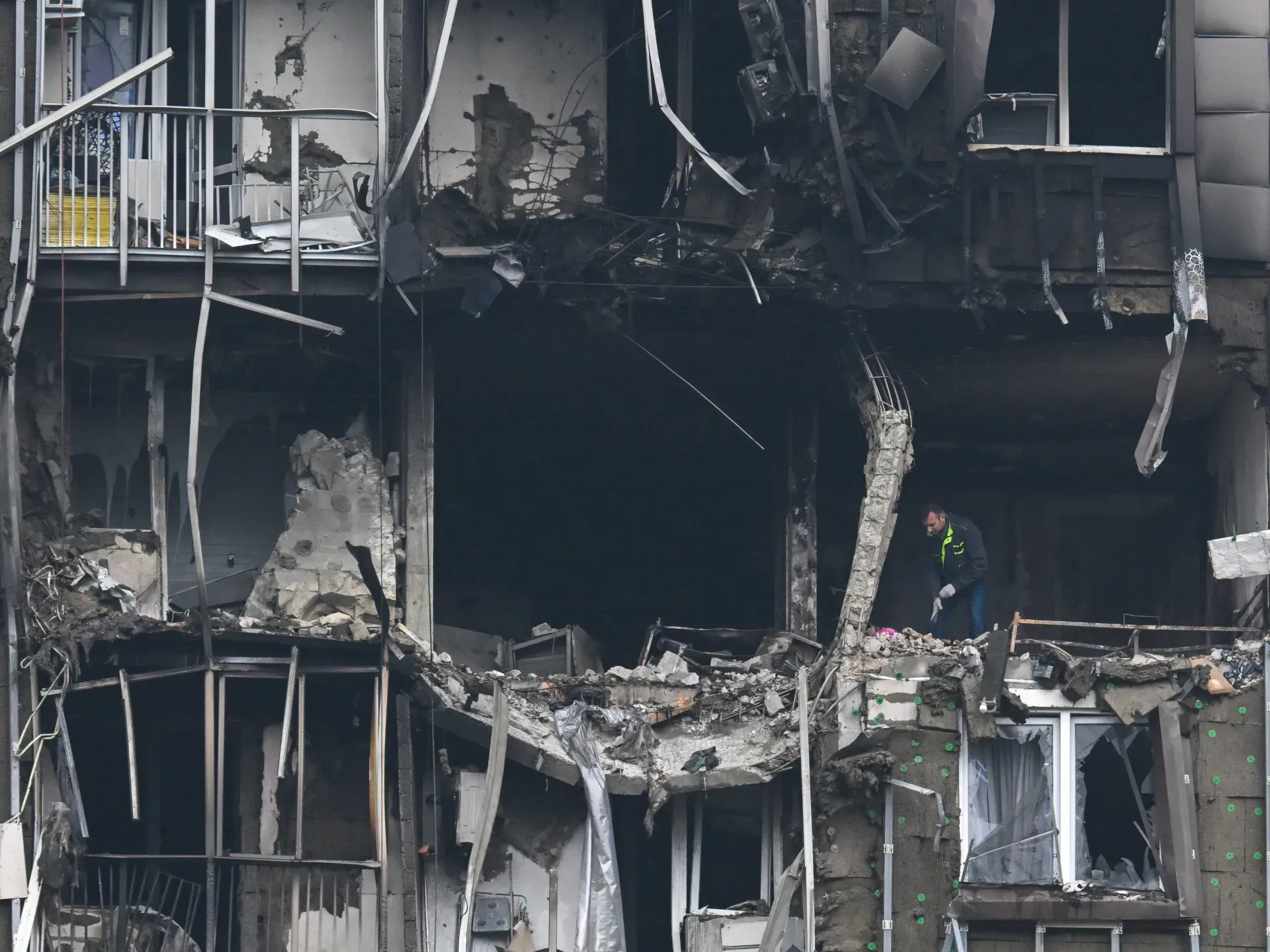
Residents of Oleshky faced a severe humanitarian catastrophe characterized by a total lack of basic utilities and food security. Before the full-scale invasion in February 2022, the city was home to approximately 24,000 people, but the ongoing occupation has left the infrastructure in ruins. Many inhabitants survived without access to running water, gas, electricity, or consistent food supplies. In the most desperate instances, residents resorted to cooking garden weeds to avoid starvation.
The physical and psychological toll on the population is evident in the condition of the evacuees. The convoy included many individuals requiring wheelchairs, crutches, or stretchers, particularly elderly residents who had been weakened by years of deprivation. For many, the war has meant the total loss of property; some evacuees reported living in abandoned neighbor's houses after their own homes were destroyed by fire during the initial years of the conflict. While the 750-person capacity convoy moved many to safety, several hundred residents chose to remain in the city despite the lack of essential services.
Who brokered the humanitarian ceasefire?
The ceasefire that enabled the evacuation was the result of high-level diplomatic efforts and direct cooperation between Ukrainian and Russian officials. Ukrainian President Volodymyr Zelensky credited US First Lady Melania Trump with efforts to broker the local ceasefire that allowed the Friday evacuation to proceed. Additionally, the mission was led on the ground by Dmytro Lubinets, Ukraine's human rights ombudsman, who traveled to Oleshky from the Russian-occupied Crimean peninsula to oversee the process.
Lubinets worked in coordination with his Russian counterpart, Yana Lantratova, to ensure the safety of the movement. While Lubinets stated that this cooperation was conducted strictly in the interest of saving lives, the collaboration has been a point of contention within Ukraine. Some citizens expressed discomfort at seeing a Ukrainian official working alongside a representative of the Russian occupying power. Despite these tensions, the mission successfully facilitated the movement of vulnerable civilians out of the high-risk zone.
What is the current status of the conflict in the region?
Despite the localized ceasefire in Oleshky, the broader war in Ukraine continues with significant intensity. The ceasefire measures in the Kherson region are scheduled to remain in place only until the end of Sunday, 1 November. While the humanitarian window provided relief for Oleshky, President Zelensky noted that Russian forces continued to target Ukrainian energy infrastructure, including electricity substations, thermal power plants, and gas facilities. Simultaneously, the Ukrainian military reported strikes against Russian missile fuel production in the Rostov region.
Looking forward, international diplomatic efforts are attempting to find a path toward wider stability. Negotiators representing Ukraine, Russia, and the United States are scheduled to resume ceasefire discussions in Abu Dhabi in early November. These talks follow a suspension of previous discussions caused by the outbreak of war in Iran. For the residents of Oleshky, the immediate concern remains the transition to safety and the long-term challenge of rebuilding lives that have been fractured by years of occupation.
Frequently asked questions
How many people were able to evacuate Oleshky?
A convoy of 25 buses was deployed with a capacity to transport 750 people. This convoy, which also included several ambulances for those with limited mobility, departed on Friday afternoon to move residents from the Russian-occupied city to the Chernihiv region of Ukraine.
What was the primary cause of the ceasefire?
The humanitarian ceasefire was intended to allow for the clearing of minefields and the delivery of aid to Oleshky. President Zelensky attributed the brokering of this local ceasefire to the efforts of US First Lady Melania Trump, facilitating the safe passage of civilians.
What conditions did the residents face in the city?
Residents lived through a humanitarian catastrophe without access to electricity, running water, or gas. Many faced extreme food shortages, with some forced to eat garden weeds to survive. The city's infrastructure was devastated, and escape routes were frequently targeted by drones or obstructed by minefields.
Who is leading the humanitarian efforts in Ukraine?
Dmytro Lubinets, Ukraine's human rights ombudsman, has been a central figure in the evacuation. He worked alongside Russian counterpart Yana Lantratova to coordinate the movement of civilians, emphasizing that such cooperation was necessary to save lives during the humanitarian window.
Will the ceasefire remain in place indefinitely?
No, the ceasefire measures are temporary. According to the current arrangements, the measures providing peace in the Kherson frontline region are set to remain in effect only until the end of Sunday, 1 November, after which the security situation remains uncertain.
Key takeaways
- The Oleshky evacuation used a 25-bus convoy to transport up to 750 people.
- Evacuees traveled via southern Russia and Belarus to reach northern Ukraine.
- A humanitarian ceasefire enabled the clearing of mines and aid delivery.
- Residents faced severe shortages of food, water, and electricity for years.
- The evacuation was supported by diplomatic efforts involving US and Ukrainian officials.
Conclusion
The evacuation of Oleshky represents a critical, albeit temporary, humanitarian success amidst a prolonged and devastating conflict. While the movement of hundreds of civilians—including the very young and the elderly—provides immediate relief to families separated by years of occupation, the underlying instability remains. The complex logistics of the journey through Russia and Belarus highlight the extreme constraints placed on movement in occupied territories. As the localized ceasefire nears its end, the focus shifts from immediate survival to the long-term challenges of reconstruction and the hope for broader diplomatic breakthroughs in the coming months.