How did the Oleshky ceasefire facilitate the evacuation?
The Oleshky ceasefire provided a critical window for residents to flee the city by allowing the necessary roads to be demined. This truce, which has been in force across the entire Kherson frontline region since Tuesday, created a rare period of stability in a zone that has seen continuous combat since February 2022. On Friday, a specific four-hour window was established to allow residents to depart the town safely.
To manage the movement of people, a significant logistical operation was deployed. A convoy consisting of 25 buses was utilized to transport up to 750 individuals. In addition to standard transport, ambulances were included in the convoy to assist those with limited mobility who required medical support during the transit. According to Russian human rights ombudsman Yana Lantratova, the entire process was conducted without incident, with both sides noting a high level of organizational efficiency.
The logistics of the humanitarian window
The evacuation window on Friday concluded at 14:00 (12:00 GMT). During this time, the primary goal was to move civilians out of a zone characterized by severe infrastructure collapse. The demining of the exit routes was a prerequisite for the convoy's movement, a task made possible only by the mutual agreement between the warring parties under the auspices of the ceasefire.
What is the evacuation route for those leaving Oleshky?
The evacuation route for those fleeing Oleshky is highly circuitous, requiring civilians to pass through Russian-controlled territories before returning to Ukraine. Because Ukrainian military positions are located only 5km (3.1 miles) from the city, the immediate surroundings remain a combat zone. Consequently, evacuees must first travel into Russian-occupied territory to reach safety.
The journey follows a specific multi-stage path:
- Initial Transit: Evacuees move from Oleshky into Russian-occupied territory.
- Russian Transit: They travel to the southern Russian city of Anapa.
- Air Travel: From Anapa, they board a Russian government plane destined for Gomel in Belarus.
- Final Leg: From Belarus, they drive across the border into Ukraine's Chernihiv region.
This complex route highlights the geopolitical constraints of the current conflict, where even humanitarian movements are subject to the control of the occupying powers and the mediation of international figures.
Who brokered the truce and what was their role?
US First Lady Melania Trump played a central role in brokering the humanitarian ceasefire. According to Melania Trump, the establishment of the safe passageways and the movement of the convoys were made possible through mutual agreements between the leadership of Russia and Ukraine. Her involvement provided the diplomatic framework necessary for the two sides to coordinate on a localized level.
The implementation of the truce on the ground involved direct cooperation between high-level human rights officials from both nations. Yana Lantratova, Russia's human rights ombudsman, and Dmytro Lubinets, Ukraine's human rights ombudsman, traveled together to Oleshky from Armiansk in the occupied Crimean peninsula. This cooperation was unprecedented; Lubinets is the first Ukrainian official to visit Russian-occupied areas of Ukraine since the invasion began, and he is also set to become the first to enter Russia to escort evacuees back to Ukraine.
Following the success of this mission, Lantratova and Lubinets issued a joint request to the US First Lady. They proposed that similar humanitarian missions, focused on delivering essential aid to residents in need, be conducted on a regular basis under her coordination.
Why are many residents choosing to stay in Oleshky?
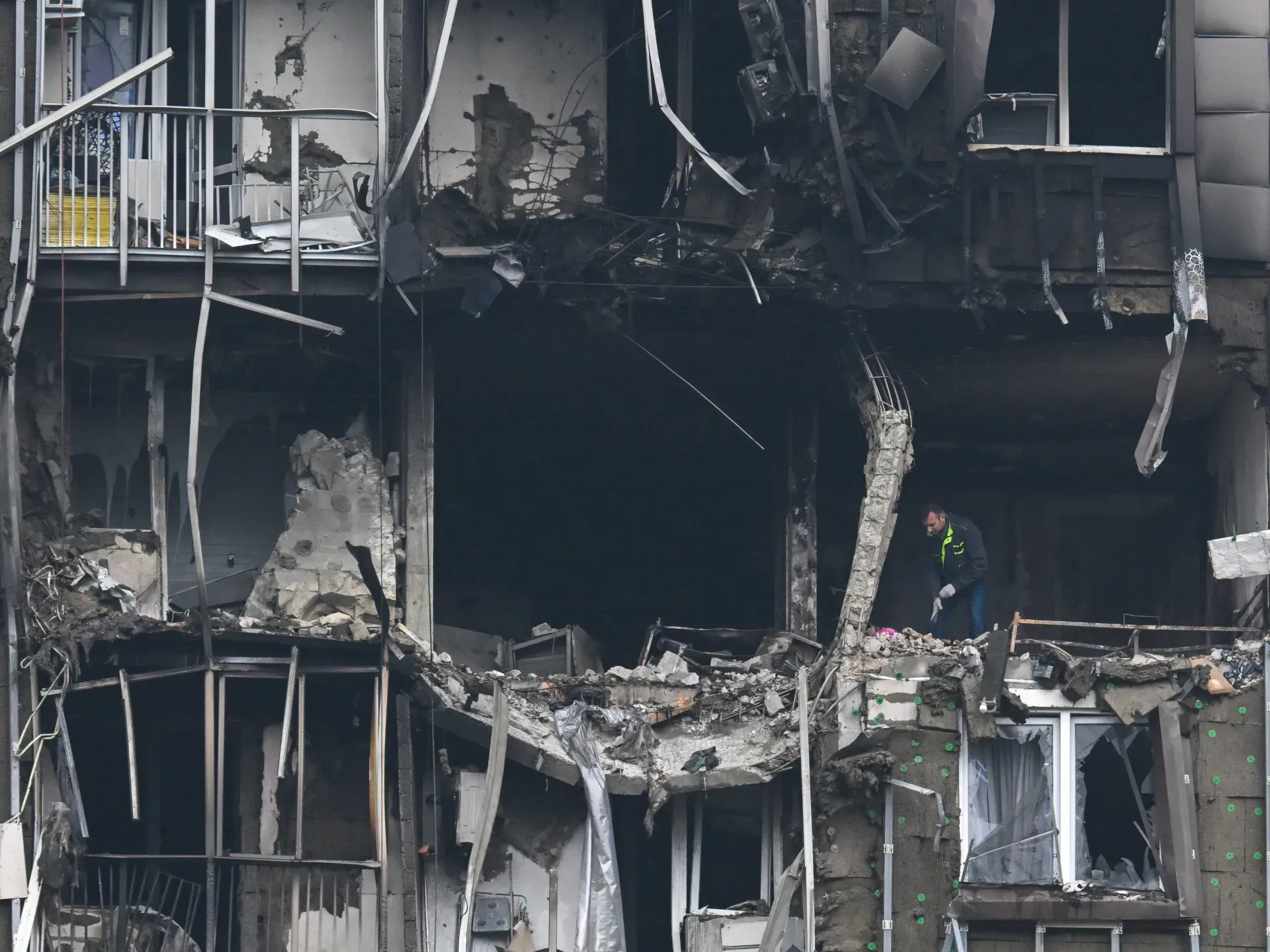
Despite the widespread devastation and the absence of gas, electricity, and running water, several hundred residents have decided to remain in Oleshky. The decision to stay is often driven by personal circumstances, such as the inability to move livestock or the reluctance of the older generation to abandon their homes.
The living conditions in the city remain dire. Local accounts describe a landscape of extreme hardship, where the lack of medical infrastructure has forced residents to use garden wheelbarrows to transport the wounded and the deceased to hospitals. One resident, Olena, noted that her grandmother and wider family remained behind, highlighting a common trend where the elderly are hesitant to leave their ancestral lands.
The challenges of remaining in a conflict zone
For those who do not leave, the Russian authorities have stated they have prepared "dozens of tonnes" of aid. This includes food, medicine, hygiene products, and fuel for generators. However, for many, the choice to stay is not a preference for the conditions, but a necessity born of the inability to relocate their entire lives and livelihoods, including animals, in a single window of time.
What are the political implications and local fears?
The ceasefire, which is scheduled to remain in effect until the end of Sunday, 1 November, has generated a mixture of relief and suspicion. While residents in the Kherson region expressed being "overjoyed" by the pause in fighting, there is significant concern regarding the strategic implications of the truce. Some residents fear that the pause allows Russian forces to consolidate their military presence along the banks of the Dnipro river, potentially preparing for a renewed assault once the ceasefire expires.
On a political level, the Kremlin has explicitly stated that the success of the Oleshky mission should not be viewed as an intention to extend the truce to the rest of Ukraine. Observers and some Ukrainian voices have suggested that the humanitarian mission may serve a dual purpose. There is suspicion that the move is intended to build diplomatic credit with the White House and provide a political boost to US President Donald Trump ahead of the upcoming midterm elections.
FAQ: Oleshky ceasefire and evacuation
How many people were involved in the Oleshky evacuation?
The evacuation involved a convoy of 25 buses designed to transport up to 750 people. While many took advantage of the four-hour window on Friday, several hundred residents chose to remain in the city despite the lack of essential services like water and electricity.
What is the purpose of the Melania Trump mediation?
Melania Trump acted as a mediator to broker the humanitarian ceasefire between Russian and Ukrainian leaders. Her role was to establish the mutual agreements required to create safe passageways, allowing for the demining of roads and the movement of aid and civilians.
How long is the current ceasefire expected to last?
The ceasefire in the Kherson frontline region is scheduled to remain in force until the end of Sunday, 1 November. This provides a temporary respite from the hostilities that have characterized the region since the full-scale invasion began in February 2022.
Where are the evacuees traveling to?
Evacuees follow a specific route through Russian-occupied territory to the city of Anapa, then fly to Gomel in Belarus, before finally crossing the border into Ukraine's Chernihiv region. This route is necessary due to the proximity of Ukrainian military positions to Oleshky.
What aid is being provided to those staying in Oleshky?
Russian authorities have stated they have prepared dozens of tonnes of humanitarian aid for residents who remain. This supplies includes essential items such as food, medicine, hygiene products, and fuel intended for use in generators to combat the lack of electricity.
Key takeaways
- The Oleshky ceasefire, brokered by Melania Trump, enabled a humanitarian evacuation of up to 750 people.
- Evacuees must travel through Russian territory and Belarus to reach Ukraine's Chernihiv region.
- Ukrainian ombudsman Dmytro Lubinets made an unprecedented visit to Russian-occupied territory.
- The ceasefire is set to expire at the end of Sunday, 1 November.
- Residents fear the truce may allow Russian forces to strengthen positions along the Dnipro river.
Conclusion
The Oleshky ceasefire represents a rare, localized moment of humanitarian cooperation in an otherwise unrelenting conflict. While the evacuation of hundreds of civilians provides immediate relief, the complexities of the transit route and the dire conditions for those remaining underscore the ongoing humanitarian crisis. As the truce nears its expiration on 1 November, the tension between temporary relief and strategic military maneuvering remains high. The success of this mission, mediated by international figures, offers a potential model for future aid, yet the underlying political motivations and the fears of a renewed assault continue to cast a shadow over the region's fragile peace.