Why is the Kishangarh marble slurry dumping yard attracting tourists?
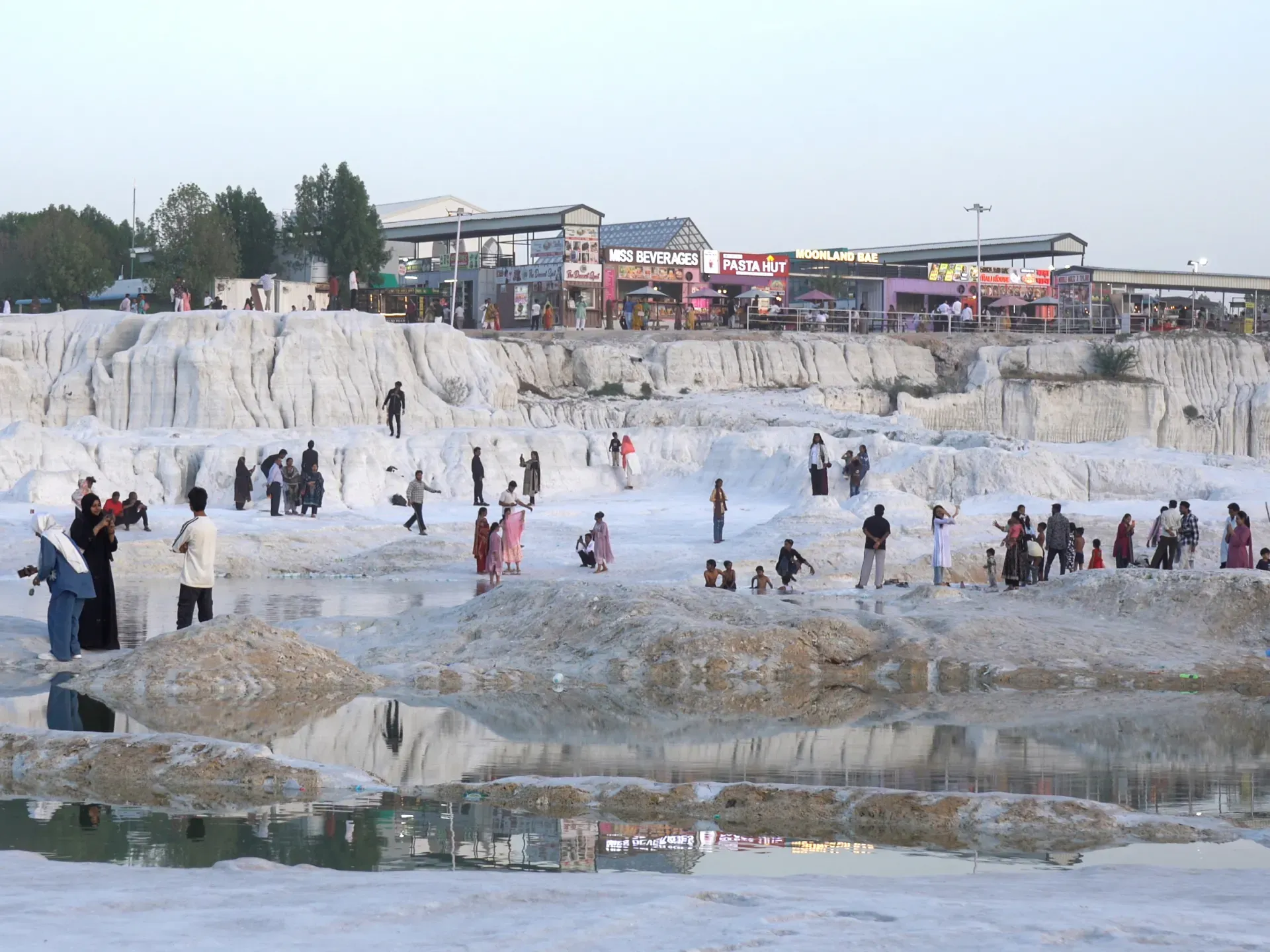
The visual transformation of an arid Rajasthan landscape into a white, mountainous terrain has turned a massive industrial landfill into a viral sensation. Known locally as the "Snow Yard," the 300-acre site consists of accumulated marble and granite waste that creates a striking resemblance to snow-covered hills. This aesthetic appeal has made it a popular location for pre-wedding photoshoots, music video filming, and social media influencers seeking unique backdrops for digital content.
Visitors are often drawn by the contrast between the white sludge and the blue, water-filled pits that resemble artificial lakes. For many tourists, the site offers a free and surreal experience that mimics more temperate regions of India. However, this fascination often comes with a lack of awareness regarding the industrial origins of the landscape and the toxic nature of the material being photographed.
The social media effect on industrial sites
The rise of short-form video content has accelerated the popularity of the Kishangarh site. Influencers frequently visit to capture "reels" against the white slopes, unintentionally promoting a hazardous industrial zone as a scenic getaway. This creates a disconnect between the aesthetic value perceived by visitors and the biological reality experienced by the local population.
How does marble waste impact the health of local residents?
Residents in the vicinity of the dumping yard, including those in the village of Bhogiyawas, report a wide array of chronic health issues linked to industrial dust. The proximity of the 300-acre site to residential areas means that fine particulate matter is a constant presence in the air and soil. Local inhabitants, including children and the elderly, suffer from persistent respiratory infections, skin allergies, and dental complications.
Medical professionals in the region have noted a significant rise in respiratory ailments over recent years. Dr. Aditi Goyal, a physician at Ajmer’s Ganga Narayan Hospital, stated that residents face severe risks from dust exposure. While workers in the 1,200 local processing units are at the highest risk due to prolonged exposure, the surrounding farming communities are also heavily impacted by the airborne waste.
The threat of silicosis and respiratory disease
The fine nature of the marble dust poses a specific biological threat. According to research led by Professor Laxmi Kant Sharma of the Central University of Rajasthan, the particles are often smaller than 75 micrometres, allowing them to penetrate deep into the lungs. This increases the likelihood of residents developing silicosis, a debilitating and potentially fatal lung disease caused by inhaling crystalline silica dust.
What is the environmental impact on agriculture and water?
The continuous deposition of marble slurry is fundamentally altering the ecology of the Ajmer district. Beyond the immediate air quality concerns, the waste is settling on agricultural lands, hardening the soil and rendering it increasingly infertile. This makes it difficult for local farmers to maintain traditional crops, threatening the livelihoods of those who depend on the land.
Water contamination is another critical consequence of the dumping practices. Residents have reported that the groundwater has become unfit for human consumption, with some noting a high fluoride content that makes the water taste salty. This chemical imbalance in the water supply has been linked to physical symptoms in the community, such as tooth decay and weakened bone structure.
Soil contamination and chemical levels
Scientific studies have confirmed the severity of the environmental degradation. Research conducted by the Central University of Rajasthan found that lead silicate concentrations in the Kishangarh soil are several times higher than normal levels. Furthermore, the concentration of PM2.5—fine particulate matter that can enter the bloodstream—frequently exceeds established ambient air quality standards, creating a toxic environment for both humans and vegetation.
How much marble waste is produced in Kishangarh daily?
Kishangarh functions as a massive industrial hub for marble and granite processing, with approximately 1,200 units operating in the area. The scale of waste production is immense, contributing to the rapid growth of the "Snow Yard." According to the Federation of Indian Granite and Stone Industry, the daily business in this sector is estimated at over 160 million rupees ($1.7 million), supporting roughly 25,000 jobs.
To manage the byproduct of this industry, nearly 1,000 tankers transport marble slurry to the government-allotted dumping site every single day. This results in the discharge of approximately 5,500 tonnes of waste onto the landfill daily. While this process supports the economic vitality of the region, the sheer volume of waste has outpaced the environment's ability to absorb the impact, leading to the current crisis of contamination and land degradation.
FAQ: Kishangarh Marble Slurry Dumping Yard
What is the Kishangarh "Snow Yard"?
The "Snow Yard" is a 300-acre marble slurry dumping site in Rajasthan, India. It is composed of white industrial waste from marble and granite processing, which creates a landscape that resembles a snowy region, attracting tourists and photographers.
What are the main health risks for locals?
Local residents face significant respiratory problems, such as asthma and potential silicosis, due to fine dust inhalation. Additionally, the community reports high rates of skin allergies, dental issues, and infections caused by contaminated water and airborne particles.
How does the waste affect local farming?
Marble dust settles on nearby agricultural fields, causing the soil to harden and lose fertility. This makes it increasingly difficult for farmers to grow crops, directly threatening the economic stability of the surrounding villages.
Is the groundwater safe to drink in Kishangarh?
Many residents report that the groundwater is no longer fit for consumption. High levels of fluoride and other contaminants have been noted, leading to issues such as salty-tasting water and physical ailments like bone and tooth decay.
Has any legal action been taken against the pollution?
Yes, an environmentalist filed a case with the National Green Tribunal. The tribunal observed that unregulated dumping was contaminating air and water and directed the Rajasthan State Pollution Control Board to enforce stricter monitoring and penalize violators.
Key takeaways
- The Kishangarh site is Asia's largest marble slurry landfill, covering 300 acres.
- Daily waste discharge reaches approximately 5,500 tonnes via 1,000 tankers.
- Residents face severe health risks, including respiratory issues and potential silicosis.
- Lead silicate levels in the soil are significantly higher than normal concentrations.
- The "Snow Yard" has become a popular, though hazardous, tourist destination.
Conclusion
The Kishangarh marble slurry dumping yard represents a profound conflict between industrial economic growth and environmental preservation. While the site provides significant employment and serves as a unique, albeit accidental, tourist attraction, the cost to local human health and ecological stability is extreme. The contamination of air, soil, and groundwater suggests that the current scale of waste management is unsustainable. Without rigorous enforcement of environmental norms and a shift toward more responsible industrial practices, the residents of Kishangarh will continue to bear the physical and economic burden of the region's marble prosperity.