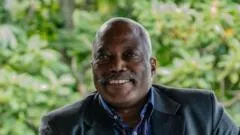
How did Joseph Kabila become a rebel leader?
Joseph Kabila’s emergence as the leader of the Front for the Refoundation of the Nation (FRN) earlier this month confirms long-standing suspicions regarding his ties to insurgent groups. His new alliance includes the M23 rebels, a group that significantly expanded its control over eastern DR Congo in 2025 by capturing major urban centers such as Goma and Bukavu. For Kabila, this move represents a strategic attempt to regain political influence after years of marginalization.
The transition from head of state to insurgent leader is a stark reversal of his previous role. Kabila originally rose to prominence as a commander in the rebel alliance that brought his father, Laurent-Désiré Kabila, to power in 1997. After his father's assassination in 2001, Joseph Kabila assumed the presidency, a position he held until 2019. His current trajectory suggests that the former president sees military partnership as his only viable path back to the political center.
The strategic logic of the FRN-M23 alliance
Policy analyst Henry-Pacifique Mayala suggests that Kabila's decision to lead the FRN was not a random choice but a necessity born of political isolation. According to Mayala, Kabila may have felt he had no other viable options to maintain relevance. The partnership with the M23 provides Kabila with immediate military leverage, which could be used as a bargaining chip in future negotiations with the central government in Kinshasa. Furthermore, the M23 brings territorial control, while Kabila brings the institutional experience and political networks of a former president, potentially providing the movement with a level of national legitimacy it has previously lacked.
What is the nature of the conflict between Kabila and Tshisekedi?
The rivalry between Joseph Kabila and President Félix Tshisekedi is deeply personal and rooted in the disputed 2018 elections. While Kabila once facilitated Tshisekedi’s rise to power through a coalition government, the relationship disintegrated in December 2020 when Tshisekedi moved to dismantle Kabila's parliamentary influence. This political fallout eventually drove Kabila into self-imposed exile in South Africa, a period that ended with his return to the country in 2025.
The tension has escalated from political maneuvering to legal and military confrontation. In September 2025, a Congolese military court sentenced Kabila to death in absentia on charges of treason and financing violence in the eastern provinces. Kabila has vehemently rejected these accusations, framing the legal actions as a tool of intimidation used by an authoritarian regime. He has characterized Tshisekedi as a tyrant who disregards the constitution to maintain power, specifically citing rumors that the President intends to amend the constitution to allow for a third term in office.
The disputed 2018 election and the broken deal
Central to the animosity is the allegation that the 2018 election results were manipulated. Corneille Nangaa, the former head of the electoral commission and a current deputy to Kabila in the FRN, has claimed that a secret political agreement existed between the two men to ensure Tshisekedi's victory. Nangaa told France 24 in September 2023 that he personally helped draft this deal, accusing Tshisekedi of being a "liar" regarding the terms of their cooperation. While Tshisekedi maintains his victory was legitimate, the shadow of this alleged pact continues to fuel the current instability.
Can the rebellion expand beyond the eastern provinces?
The geographical scope of the current unrest remains a critical question for the stability of the Democratic Republic of Congo. Currently, the M23's military gains are concentrated in the eastern provinces, located approximately 1,500km from the capital, Kinshasa. While Kabila’s involvement provides the rebellion with broader political networks, it does not inherently guarantee the military capacity to launch a successful campaign across the entire country.
Kabila’s political identity has historically been tied to the east. Unlike the Lingala-speaking political elite in Kinshasa, Kabila is more aligned with the Swahili-speaking populations of the eastern regions and East Africa. This cultural and linguistic connection may bolster the rebellion's local support, but it also highlights the potential for a deep-seated regional divide within the country. The risk remains that the conflict could evolve from a localized insurgency into a broader national crisis if Kabila's networks can successfully mobilize support in the west.
What are the regional and international implications?
The involvement of Joseph Kabila in an armed rebellion complicates the already delicate geopolitical landscape of the Great Lakes region. The conflict in eastern DR Congo has long been intertwined with the interests of neighboring Rwanda. While Rwanda has historically denied allegations of backing the M23, the group's stated mission to protect ethnic Tutsi interests often draws regional attention. The shifting alliances—where Kabila, who once worked with Rwanda against Hutu militias, now aligns with a group that Rwanda is frequently accused of supporting—add a layer of unpredictability to regional security.
Furthermore, the stability of the DR Congo is a matter of global economic interest due to the country's immense mineral wealth. The eastern regions contain vast deposits of gold, diamonds, and critical minerals essential for the production of mobile phones and electric vehicle batteries. Any prolonged instability or expansion of the conflict threatens the global supply chains for these essential resources. However, the international community remains divided on how to approach the crisis, with President Tshisekedi enjoying significant support from the United States, which provides him with a distinct advantage over the insurgent forces.
Frequently asked questions
Why was Joseph Kabila sentenced to death?
Joseph Kabila was sentenced to death in absentia by a Congolese military court in September 2025. The charges brought against him include treason and the financing of violent activities in the eastern parts of the Democratic Republic of Congo, though Kabila maintains these charges are politically motivated.
What is the M23 rebel group?
The M23 is a rebel movement that emerged in 2012, primarily operating in eastern DR Congo. The group claims to protect the rights of ethnic Tutsis in the region. In 2025, they achieved significant territorial gains, including the capture of the major cities of Goma and Bukavu.
How did Kabila and Tshisekedi's relationship change?
Originally, Kabila and Tshisekedi were political allies who shared power in a coalition following the 2018 elections. The relationship broke down in 2020 when Tshisekedi sought to reduce Kabila's influence in parliament, leading to political rivalry, Kabila's exile, and eventually his return as a rebel leader.
Does the C64 coalition support Kabila's rebellion?
No, the C64 coalition of opposition parties has refused to back Kabila's military rebellion. While they oppose President Tshisekedi's potential constitutional changes, the coalition has stated that Congo's security crises cannot be solved through military means and instead advocates for inclusive national dialogue.
What minerals are at risk due to the conflict?
The conflict threatens the extraction and stability of critical minerals used in global technology. These include gold and diamonds, as well as essential minerals required for manufacturing mobile phones and batteries for electric vehicles, which are largely found in the DR Congo.
Key takeaways
- Joseph Kabila has transitioned from the DR Congo presidency to leading the FRN rebel movement.
- The FRN is allied with the M23 rebels, who control key eastern cities like Goma.
- Kabila faces a death sentence in absentia for treason and financing violence.
- The conflict threatens global supply chains for minerals used in electric vehicle batteries.
Conclusion
The return of Joseph Kabila to the sphere of armed conflict represents a profound destabilization of the Democratic Republic of Congo. By aligning with the M23, the former president has transformed a political rivalry with Félix Tshisekedi into a direct military challenge to the state. While the current fighting is concentrated in the east, the combination of Kabila's political networks and the M23's territorial control creates a volatile environment. As the nation grapples with questions of constitutional legitimacy and regional influence, the potential for a wider, more destructive conflict remains a significant concern for both Congolese citizens and the international community.