What do the current Israel election results show for the Knesset?
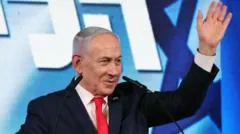
Partial counts indicate that Benjamin Netanyahu's right-wing bloc is currently leading, but remains short of the 61 seats required for a governing majority. As of the latest updates, with 85% of the votes processed, Netanyahu’s Likud party and its allies—comprising far-right and ultra-Orthodox Jewish factions—are projected to secure 53 seats. In contrast, the opposition bloc led by former military chief Gadi Eisenkot and his Yashar party is expected to capture 48 seats.
The uncertainty is compounded by the remaining uncounted votes. Between 430,000 and 480,000 absentee ballots from diplomats and soldiers have yet to be tallied, meaning the final distribution of the 120 seats in the Knesset may shift slightly over the coming days. While initial exit polls from three Israeli broadcasters suggested a potential lead for Eisenkot's 'Change Bloc' with 52 to 53 seats against Netanyahu's 50, subsequent updates showed a much tighter race, with some projecting a tie at 51 seats each and others giving Netanyahu a slim three-seat advantage.
The impact of uncounted absentee ballots
The significant volume of outstanding absentee ballots, estimated between 430,000 and 480,000, introduces a margin of error that could alter the narrow leads currently reported. Because these votes come from specific demographics—namely soldiers and diplomats—their impact on the final tally could be decisive in a race where the primary blocs are separated by only a few seats.
How could the Arab-led parties influence the formation of a government?
Arab-led parties are positioned to become critical kingmakers in the upcoming coalition negotiations, as they are on course to win an unprecedented 19 seats. This surge in representation is attributed to a high turnout among Arab Israelis, who constitute approximately one-fifth of the nation's population. However, their ability to influence the government is severely limited by the ideological stances of the major Jewish blocs.
The political landscape regarding Arab participation is deeply divided:
- The Netanyahu Approach: Prime Minister Netanyahu has explicitly rejected cooperation with Arab factions, stating it is "forbidden" to form a government that relies on what he terms anti-Zionist Arab parties.
- The Change Bloc Strategy: Some members of the opposition see a path to power through partnership. Yair Golan, leader of the left-wing Democrats party, suggested that an opportunity exists to form a change government by partnering with Arab parties to end systemic racism.
- The Arab Party Stance: Yousef Jabareen, chairman of the Joint List, has expressed readiness to facilitate the removal of the Netanyahu government through a "Jewish-Arab partnership." Meanwhile, Mansour Abbas, leader of the United Arab List (UAL), has indicated hope that a combination of the Change Bloc and the UAL could reach the 61-seat threshold.
What are the primary challenges to breaking the political deadlock?
The primary challenge lies in the inability of either major bloc to reach the 61-seat threshold independently, combined with the refusal of most Jewish parties to collaborate with Arab-led factions. This creates a mathematical impasse where the most viable path to a majority—a Jewish-Arab coalition—is ideologically blocked by the very parties that would need to participate in it.
President Isaac Herzog is tasked with navigating this impasse. Following the confirmation of official results, the President will initiate a period of consultations with all political factions. His objective is to identify the leader with the highest probability of successfully forming a stable government. This process is expected to take several weeks. If no leader can assemble a viable coalition, Israel faces the prospect of another general election, a scenario that both the President and political leaders are keen to avoid.
The role of President Isaac Herzog
President Herzog has emphasized the need for political maturity to prevent further electoral cycles. Following the high turnout of 77.7%—the highest in over two decades—he has called on all factions to approach the consultation process with an "open mind" to preserve democratic stability.
Why was this election considered a turning point for Israel?
This election is viewed as one of the most consequential in Israeli history due to its timing and the fundamental questions it poses regarding the nation's future direction. It is the first general election held since the devastating Hamas-led attacks on October 7, 2023, and the subsequent military conflicts in Gaza, Lebanon, and Iran.
The electorate was forced to weigh several critical and polarizing issues, including:
- Security and Accountability: Debates centered on the failures that allowed the October 7 attacks to occur and the management of subsequent regional wars.
- Social and Religious Policy: The tension between secular and religious sectors, specifically regarding the conscription of ultra-Orthodox Jewish men into the military.
- Governance and Law: Ongoing disputes regarding judicial reforms and the country's international legal and diplomatic standing.
The outcome will likely determine whether Israel maintains its current religious-nationalist trajectory or shifts toward a different political paradigm.
FAQ: Israel election results
Who is leading in the current Israeli election results?
Benjamin Netanyahu's Likud party and its right-wing and ultra-Orthodox allies are currently leading with a projected 53 seats. However, they have not reached the 61-seat majority required to govern alone. Gadi Eisenkot's opposition bloc is currently projected to hold 48 seats.
Can the Arab-led parties help form a government?
Arab-led parties could act as kingmakers with an expected 19 seats, but most Jewish parties have pledged not to work with them. While some opposition leaders suggest a Jewish-Arab partnership could oust Netanyahu, the Prime Minister has explicitly rejected any coalition involving Arab parties.
What happens if no leader can form a coalition?
If President Isaac Herzog's consultations with political factions fail to produce a leader capable of forming a stable government, Israel will be forced to hold another general election. The President is actively working to avoid this outcome to maintain political stability.
Why was the voter turnout so high in this election?
The turnout reached 77.7%, the highest in more than twenty years. President Isaac Herzog described this as a "badge of honour," suggesting it reflects a deep public desire for democratic engagement following a period of intense regional conflict and domestic tension.
What issues were most important to voters?
Voters focused on accountability for the October 7 security failures, the conduct of wars in Gaza and Lebanon, judicial reforms, the conscription of ultra-Orthodox men, and Israel's international standing. These issues represent the core ideological divides in the country.
Key takeaways
- Netanyahu's bloc leads with 53 projected seats but falls short of the 61-seat majority.
- Gadi Eisenkot's opposition bloc is on track to secure approximately 48 seats.
- Arab-led parties are projected to win a record 19 seats, potentially acting as kingmakers.
- Voter turnout reached 77.7%, marking the highest level in over two decades.
- The final results depend on the counting of 430,000 to 480,000 absentee ballots.
Conclusion
The 2026 Israeli election has resulted in a fragmented Knesset that mirrors the deep divisions within the country. While Benjamin Netanyahu maintains a lead, the lack of a clear majority and the ideological deadlock regarding Arab-led parties create a complex path toward governance. The high voter turnout signals a robust democratic engagement, yet the immediate future remains uncertain. As President Herzog begins formal consultations, the central question is whether the political factions can find a pragmatic way to form a government or if Israel will be forced into another cycle of electoral uncertainty.