What is the basis for a proposed Gulf non-aggression pact?
The proposal for a non-aggression pact centers on creating a formal security arrangement among the eight states bordering the Gulf. According to a recent lecture by Oman’s Foreign Minister, Sayyid Badr Albusaidi, at Cambridge University, this pact would encompass the six Gulf Cooperation Council (GCC) nations, Iraq, and Iran. The primary objective is to establish an inclusive regional security architecture that addresses the deep-seated distrust currently paralyzing the region.
The necessity of such a pact is underscored by the current geopolitical volatility, particularly the ongoing conflict involving the United States, Israel, and Iran. For decades, regional security has been characterized by exclusion and a heavy reliance on external military powers. Proponents argue that any stable architecture must include Iran, given that the country controls approximately half of the Gulf coastline. Without its participation, any security framework remains structurally incomplete and vulnerable to disruption.
The historical precedent of 1976
The concept is not entirely unprecedented. In November 1976, the foreign ministers of all eight littoral states gathered in Muscat to discuss collective security following the British withdrawal from the region. This remains the only instance where all eight nations sat at the same negotiating table. However, subsequent events—including the Iranian Revolution, the Soviet invasion of Afghanistan, and the Iran-Iraq war—fragmented the region into defensive, exclusionary blocs rather than cooperative ones.
How has the pursuit of regional security evolved since 1976?
Efforts to revive regional security arrangements have seen intermittent attempts, though most have faced significant resistance. In 2019, then-Iranian Foreign Minister Javad Zarif proposed a non-aggression pact during a visit to Baghdad, an idea that received endorsement from Russia’s Foreign Minister Sergey Lavrov. Shortly after, Iranian President Hassan Rouhani introduced the Hormuz Peace Endeavour (HOPE) at the UN General Assembly, aiming to create a similar framework for Hormuz states.
Despite these diplomatic overtures, Gulf nations have largely remained skeptical. The primary reason for this dismissal has been the perceived role of Iran in supporting armed groups that threaten the stability of neighboring states. However, the landscape is shifting. Recent reports from the Financial Times in May suggested that Saudi Arabia was exploring a non-aggression framework with Iran, potentially modeled after the Helsinki process used between the US and the Soviet Union during the Cold War. This shift is further evidenced by recent calls from Qatar’s defence minister for a broader dialogue involving the GCC, Iran, Turkiye, and Pakistan.
Why is Oman uniquely positioned to lead these negotiations?
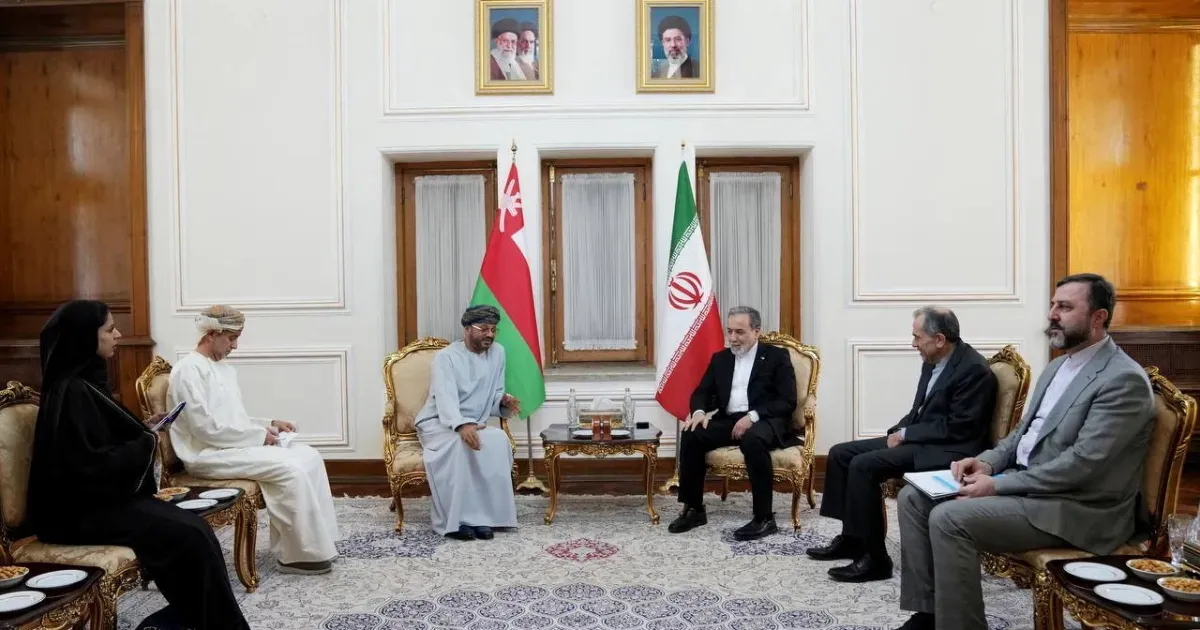
Oman’s historical role as a neutral mediator gives it a level of diplomatic access that few other regional players possess. Muscat has a long-standing reputation for facilitating dialogue between conflicting parties, a role it has recently reinforced by hosting US-Iran talks in both 2025 and early 2026. This unique positioning allows Oman to act as a bridge between the GCC and Tehran without the immediate baggage of direct regional rivalries.
However, Oman’s role is strictly facilitative. While Muscat can open channels and host discussions, it does not hold a mandate to negotiate on behalf of its neighbors. The success of Omani mediation depends on the willingness of individual states to represent their own interests while adhering to a shared set of rules. The challenge for Oman is to transition from hosting talks to fostering an environment where binding obligations can be established.
What are the necessary components of a functional pact?
A successful non-aggression pact must move beyond mere reassurance and toward enforceable obligations. Critics often point to the lack of trust in Iran as the primary barrier; however, proponents argue that inclusion must mandate reciprocal restraint. For a pact to be credible, it must include specific commitments against the use of force, interference in the internal affairs of member states, and attacks on civilian infrastructure.
To ensure the agreement is workable, a gradual approach is recommended. This involves identifying minimum shared interests that all eight states can agree upon, such as:
- The protection of territorial security and sovereign borders.
- The maintenance of functioning ports and maritime navigation rights.
- The security of reliable energy exports and commercial shipping lanes.
- The protection of civilian populations and critical infrastructure, such as desalination plants.
Addressing the challenge of non-state actors
One of the most difficult hurdles for any Gulf pact is the issue of armed groups. A robust agreement would require signatory governments to undertake that they will neither direct nor materially support cross-border attacks by such actors. Because control over these groups is often contested, the pact would need to establish clear procedures for gathering evidence of violations and requiring corrective actions from the state in question.
What are the potential outcomes and limitations of such an agreement?
While a non-aggression pact would not resolve every conflict in the Middle East, its value lies in its ability to prevent local disputes from escalating into regional wars. It would not bind external actors like the United States or Israel, nor would it easily address the complexities of the war in Yemen. Nevertheless, the framework's primary goal is to establish that disagreement does not grant a state the right to endanger the security of its neighbors.
The ultimate credibility of the pact will not be found in the signatures of diplomats, but in observable changes in conduct. Success would be measured by the establishment of military hotlines, the implementation of rules for maritime encounters, and the demonstrable respect for sovereignty. If the pact can achieve even modest successes—such as protecting the Hormuz Strait or securing energy facilities—it could provide the stability necessary for deeper regional cooperation.
FAQ: Gulf Non-Aggression Pact
What states would participate in the proposed pact?
The proposed pact would include eight littoral states: the six members of the Gulf Cooperation Council (GCC), Iraq, and Iran. This inclusive approach aims to cover the entire coastline of the Gulf to ensure a comprehensive security architecture.
What is Oman's specific role in these negotiations?
Oman acts as a neutral mediator and facilitator. Because of its history of hosting talks between the US and Iran, Muscat provides the diplomatic space and channels necessary for dialogue, though it does not negotiate on behalf of other nations.
Can a pact address the issue of armed groups?
A pact could address armed groups by requiring signatories to commit to not supporting cross-border attacks. However, this is a difficult issue that would require verifiable steps and clear procedures for investigating evidence of support or involvement.
How does the 1976 meeting relate to this proposal?
The 1976 meeting in Muscat is a historical precedent where all eight littoral states met to discuss collective security. It serves as the only time in history that all eight nations have participated in a single security dialogue.
What are the primary risks to the pact's success?
The primary risks include deep-seated mutual distrust, the ongoing conflict between Iran and Western powers, and the difficulty of enforcing obligations regarding non-state actors and maritime security in contested waters.
Key takeaways
- The proposed pact involves eight states: the six GCC members, Iraq, and Iran.
- Oman serves as a critical neutral mediator with unique diplomatic access to Tehran.
- A functional pact requires binding obligations against interference and attacks on civilian infrastructure.
- Success depends on observable changes in conduct rather than just formal signatures.
Conclusion
A Gulf non-aggression pact represents a significant shift from external reliance toward regional self-regulation. While the challenges of distrust and non-state actors are formidable, the cost of maintaining the status quo is increasingly high. By focusing on shared interests—such as maritime safety, energy security, and territorial integrity—the eight littoral states could create a framework that mitigates the risk of large-scale conflict. Even if the pact cannot end every regional war, its ability to constrain the behavior of its signatories would mark a vital step toward a more stable and predictable Middle East.