What are the confirmed casualties from the recent Syrian floods?
The Ministry of Emergency and Disaster Management confirmed that five people have died as a direct result of the intense rainfall and subsequent flooding. The casualties are notably concentrated among vulnerable populations, with four children drowning in various bodies of water located within the Raqqa and Deir Az Zor governorates.
In addition to the drownings, a fatal car accident occurred in the western countryside of Raqqa. A man lost his life when his vehicle became trapped by rising floodwaters near the al-Salmani Bridge. Emergency responders have also reported that the situation remains critical, as five individuals, including two children, are currently listed as missing following the storms.
Search and rescue efforts
Emergency teams have been actively working to mitigate the impact of the rising waters. Beyond the fatalities, responders successfully rescued 15 civilians whose vehicles were caught in the floodwaters. These rescue operations highlight the immediate danger posed by sudden water surges in rural and semi-urban areas.
How has the flooding impacted Syrian infrastructure?
Widespread infrastructure damage and significant transport disruptions have been reported across several key provinces, including Aleppo, Raqqa, Deir Az Zor, Hasakah, and Homs. The flooding has compromised the structural integrity of various bridges, hindering movement and aid delivery in the affected regions.
A major blow to the regional transport network was the collapse of the al-Salmani Bridge, located west of Tabqa. According to the state news agency SANA, this collapse has effectively severed the primary road connection between Raqqa and Aleppo. This disruption complicates logistics for both civilian movement and potential humanitarian assistance in a region already facing instability.
What are the humanitarian consequences for displaced populations?
The flooding has disproportionately affected displaced communities, forcing emergency services to conduct large-scale evacuations. The Ministry of Emergency and Disaster Management reported that approximately 375 families were evacuated from three different camps situated on the rural outskirts of Raqqa to ensure their safety from the encroaching waters.
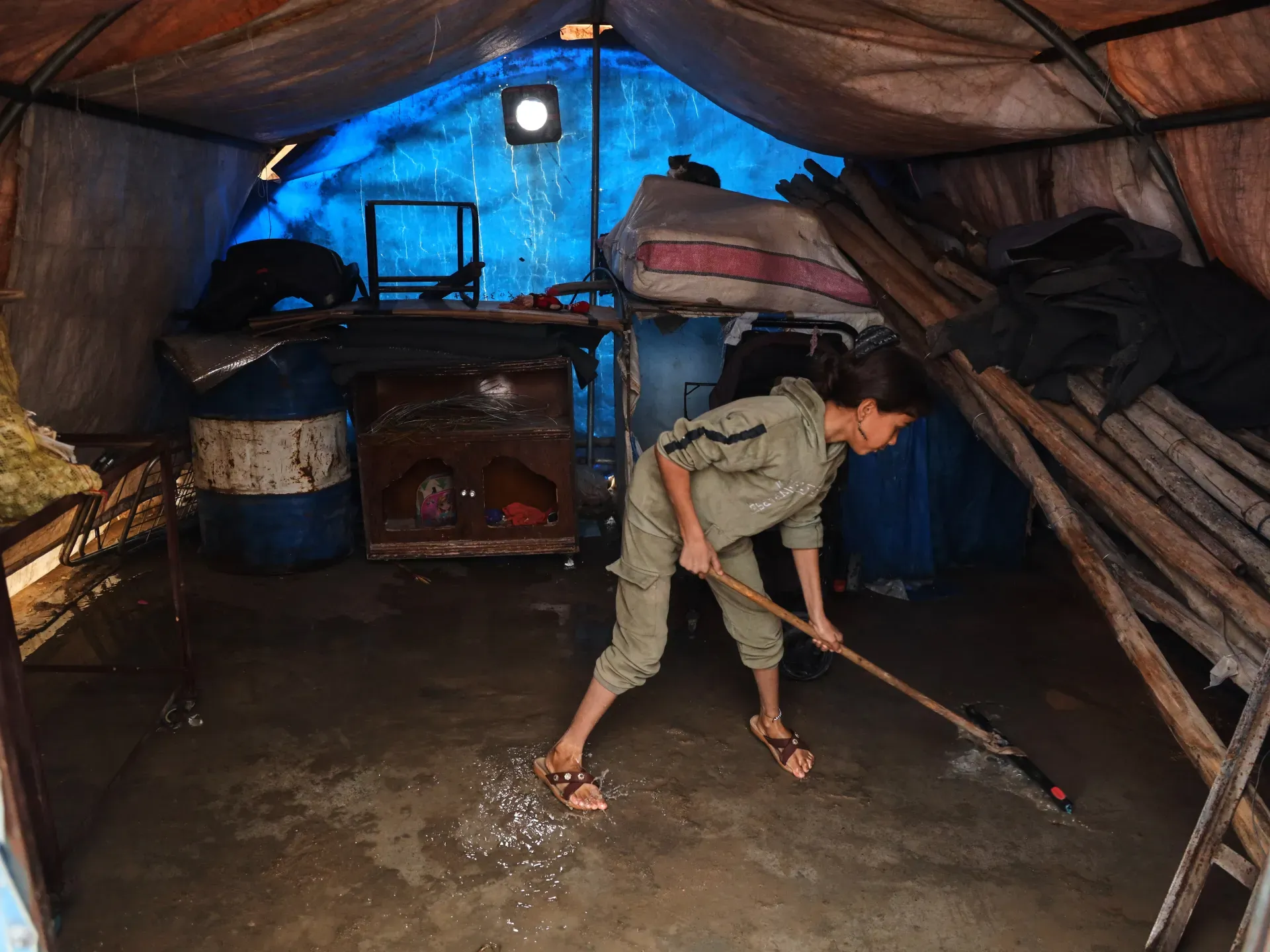
The vulnerability of these populations is exacerbated by the living conditions in displacement camps. Recent photographic evidence from the al-Talae displacement camp in Hasakah shows displaced individuals struggling to manage rainwater entering their shelters, illustrating the precarious nature of life for those already uprooted by conflict.
Displacement and camp conditions
For families living in temporary shelters, even moderate rainfall can lead to significant hardship. In camps like al-Talae, the influx of rainwater necessitates constant manual labor to clear floors and prevent the total loss of belongings, adding a layer of daily struggle to the existing challenges of displacement.
What is the broader context of flooding in Syria?
The recent surge in rainfall is part of a larger, recurring pattern of weather-related crises that have plagued the country throughout 2026. This is not an isolated incident, as the Syrian landscape continues to struggle with the increasing volatility of weather patterns linked to the global climate crisis.
Data provided by UNICEF highlights the cumulative impact of these weather events. In June 2026, the agency reported that 17,000 people had already been adversely affected by flooding earlier in the year. This cumulative toll underscores a systemic vulnerability to extreme weather events that persists regardless of the specific season.
Long-term impacts on water and sanitation
The flooding does more than cause immediate physical damage; it compromises essential services. According to UNICEF, earlier in the year, 49 water treatment plants in the Deir Az Zor and Raqqa governorates had been forced out of service due to flooding. Such disruptions pose severe long-term health risks, including the potential spread of waterborne diseases among the population.
Frequently asked questions
How many people have died in the recent Syrian floods?
At least five people have died in the recent flooding. This includes four children who drowned in the Raqqa and Deir Az Zor governorates, and one man who died in a car accident near the al-Salmani Bridge in the Raqqa countryside.
Which Syrian provinces are most affected by the current flooding?
The most significant impacts have been recorded in Aleppo, Raqqa, Deir Az Zor, Hasakah, and Homs. These provinces have reported various levels of infrastructure damage, including bridge failures and disruptions to local road networks.
What happened to the al-Salmani Bridge?
The al-Salmani Bridge, located west of Tabqa, collapsed due to the force of the flooding. This collapse has resulted in the closure of the road that connects the cities of Raqqa and Aleppo, impacting regional transit.
How many people have been displaced by floods in Syria this year?
According to UNICEF, flooding earlier in 2026 had already affected 17,000 people. This included the displacement of 700 families, approximately 2,000 of whom were children, highlighting the recurring nature of this humanitarian crisis.
Are there still people missing following the storms?
Yes, emergency officials report that five people remain missing following the recent heavy rains. Among those missing are two children, adding to the urgency of ongoing search and rescue operations in the affected areas.
Key takeaways
- Five people have died in recent Syrian floods, including four children in Raqqa and Deir Az Zor.
- The collapse of al-Salmani Bridge has severed the road link between Raqqa and Aleppo.
- Approximately 375 families were evacuated from displacement camps near Raqqa.
- UNICEF reported 17,000 people were affected by flooding earlier in 2026.
- Flooding previously caused 49 water treatment plants to cease operations in northern Syria.
Conclusion
The recent flash floods in Syria represent a devastating intersection of natural disaster and existing humanitarian vulnerability. With five lives lost and critical infrastructure like the al-Salmani Bridge destroyed, the immediate impact is felt most acutely by displaced populations and those in the Raqqa and Deir Az Zor regions. As the country continues to deal with the cumulative effects of weather-driven crises—including the loss of vital water treatment facilities—the necessity for robust emergency response and long-term climate resilience becomes increasingly evident for the stability of the region.