Why is the Egypt press crackdown being linked to US military aid?
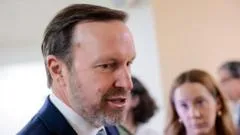
Senator Chris Murphy, a member of the Senate Foreign Relations Committee, argues that the recent surge in media repression is a direct consequence of the US government lifting human rights-related restrictions on military assistance. According to Murphy, who spoke at the Middle East Institute in Washington, the timing of the crackdown closely follows the release of funds that were previously conditioned on democratic standards.
The central tension lies in the use of the waiver authority. Under US law, a portion of the annual military aid to Egypt—which totals approximately $1.73bn (£1.3bn) per year—can be withheld if the recipient nation fails to meet specific democracy and human rights benchmarks. However, the US administration maintains the power to waive these conditions if national security interests are deemed more pressing.
Murphy contends that by removing these financial levers, the United States has effectively removed the incentive for Cairo to maintain even a semblance of political pluralism. He stated that the decision to remove all conditions on funding has shattered any hope for a meaningful political opposition to resurface within the country.
What specific actions have targeted journalists in Egypt?
The crackdown has manifested through both judicial orders and direct arrests of personnel working for the few remaining independent media entities. These actions target platforms that provide fact-checking and investigative reporting, which are increasingly rare in a landscape dominated by state-controlled outlets.
Legal repercussions for independent media
In a recent development, a court in Cairo ordered the immediate closure of the news website Madr Masa. This ruling was accompanied by a fine imposed on its editor-in-chief, Lina Attalah. Amnesty International described this legal maneuver as a "crushing blow to press freedom," highlighting the shrinking space for independent voices.
Beyond the closure of specific outlets, the Egyptian authorities have also targeted digital fact-checking platforms. Earlier this month, six journalists associated with the independent platform Matsda2sh were arrested. These individuals face serious legal charges, including allegations of belonging to the outlawed Muslim Brotherhood, a move that human rights advocates view as a method to criminalize independent journalism.
How does the US justify waiving human rights conditions?
The US State Department maintains that the decision to waive conditions on $320m of military aid in September was necessitated by Egypt's vital role in regional security. The administration argues that the strategic benefits of maintaining a close partnership with Cairo outweigh the concerns regarding domestic human rights practices.
According to a memo signed by Secretary of State Marco Rubio, the waiver was essential due to Egypt's contributions to US interests following "Operation Epic Fury." The document notes that Egypt played a helpful role in negotiations between the United States and Iran, demonstrating its value as a regional intermediary.
The State Department further explained that the waiver was driven by:
- The importance of Egypt to US national security interests.
- The concrete security cooperation provided by Cairo to the United States.
- The necessity of maintaining cooperation to address broader regional security challenges.
While the US maintains that it continues to engage in dialogue with Egypt on a "full range of issues," officials have declined to comment on private diplomatic conversations regarding the specific arrests of journalists.
What is the historical context of US-Egypt military relations?
The continuous flow of US military assistance to Egypt is rooted in the 1978 Camp David Accords and the subsequent peace treaty between Egypt and Israel. Since that era, successive US administrations have treated Egypt as a cornerstone of Middle Eastern stability, regardless of the internal political climate.
This relationship has seen periodic fluctuations in how human rights are addressed. For instance, the Biden administration in 2024 also utilized a waiver to grant full military aid, seeking to leverage Egypt's influence in mediating the conflict between Israel and Hamas in Gaza. This pattern suggests that the use of aid as a tool for human rights enforcement is frequently superseded by immediate geopolitical requirements.
Despite these strategic ties, international observers remain critical. Reporters Without Borders continues to categorize Egypt as one of the world's most significant jailers of journalists, highlighting a long-standing gap between US strategic goals and the promotion of democratic values in the region.
What are the long-term implications for the rule of law?
Experts suggest that the pattern of waiving aid conditions may be fostering a sense of impunity within the Egyptian government. By repeatedly prioritizing strategic stability over human rights, Western powers may be inadvertently signaling that domestic repression will not carry significant international costs.
Timothy E Kaldas, Deputy Director of The Tahrir Institute for Middle East Policy, noted that Egypt is receiving signals from both the United States and the European Union that human rights and the rule of law are no longer top priorities. He argued that the lack of robust pushback from the international community reinforces a message that the Egyptian authorities can test the limits of repression without consequence.
This dynamic creates a challenging environment for any domestic movement seeking reform. When international allies prioritize security cooperation above all else, the institutional mechanisms intended to protect civil liberties—such as an independent press—are often the first to be dismantled by the state.
FAQ: Egypt press crackdown and US aid
Why was the $320m military aid waiver granted?
The waiver was granted by Secretary of State Marco Rubio due to Egypt's critical role in US national security. Specifically, the administration cited Egypt's assistance in negotiations with Iran and its importance in addressing regional security challenges following Operation Epic Fury.
Who are the journalists currently facing legal action in Egypt?
Lina Attalah, the editor-in-chief of Madr Masa, was fined following a court order to close her news website. Additionally, six journalists from the fact-checking platform Matsda2sh were arrested and charged with ties to the outlawed Muslim Brotherhood.
What is the total amount of US military aid to Egypt?
The United States sends approximately $1.73bn (£1.3bn) in military assistance to Egypt annually. Under current laws, up to $320m of this funding can be withheld based on human rights and democracy requirements, unless a waiver is issued.
How does Senator Chris Murphy view the US policy?
Senator Chris Murphy criticizes the policy, claiming the US has "abandoned" the Egyptian people. He argues that lifting the conditions on military funding has directly enabled the devastating crackdown on independent journalism and destroyed hopes for political opposition.
Has the US always waived these conditions?
No, previous US administrations have withheld portions of the annual military allocation due to Egypt's human rights record. However, both the Biden and Trump administrations have utilized waivers when strategic interests, such as Gaza mediation or Iranian negotiations, required closer cooperation with Cairo.
Key takeaways
- The US waived $320m in military aid to Egypt based on national security interests.
- Senator Chris Murphy links this waiver to a recent surge in journalist arrests.
- The news website Madr Masa was ordered to close by a Cairo court.
- Egypt receives roughly $1.73bn in annual US military assistance.
- Human rights groups warn that aid waivers signal impunity to Egyptian authorities.
Conclusion
The intersection of US foreign policy and Egyptian domestic repression highlights a profound tension between strategic necessity and human rights advocacy. While the United States views Egypt as an indispensable regional partner—particularly in navigating conflicts involving Iran and Gaza—the decision to waive aid conditions appears to have provided a vacuum in which press freedoms are rapidly eroding. As independent journalists face increasing legal and physical risks, the international community faces a growing debate over whether security cooperation can be maintained without undermining the very democratic values that Western foreign policy is intended to uphold.