What were the specific charges and sentences handed down?
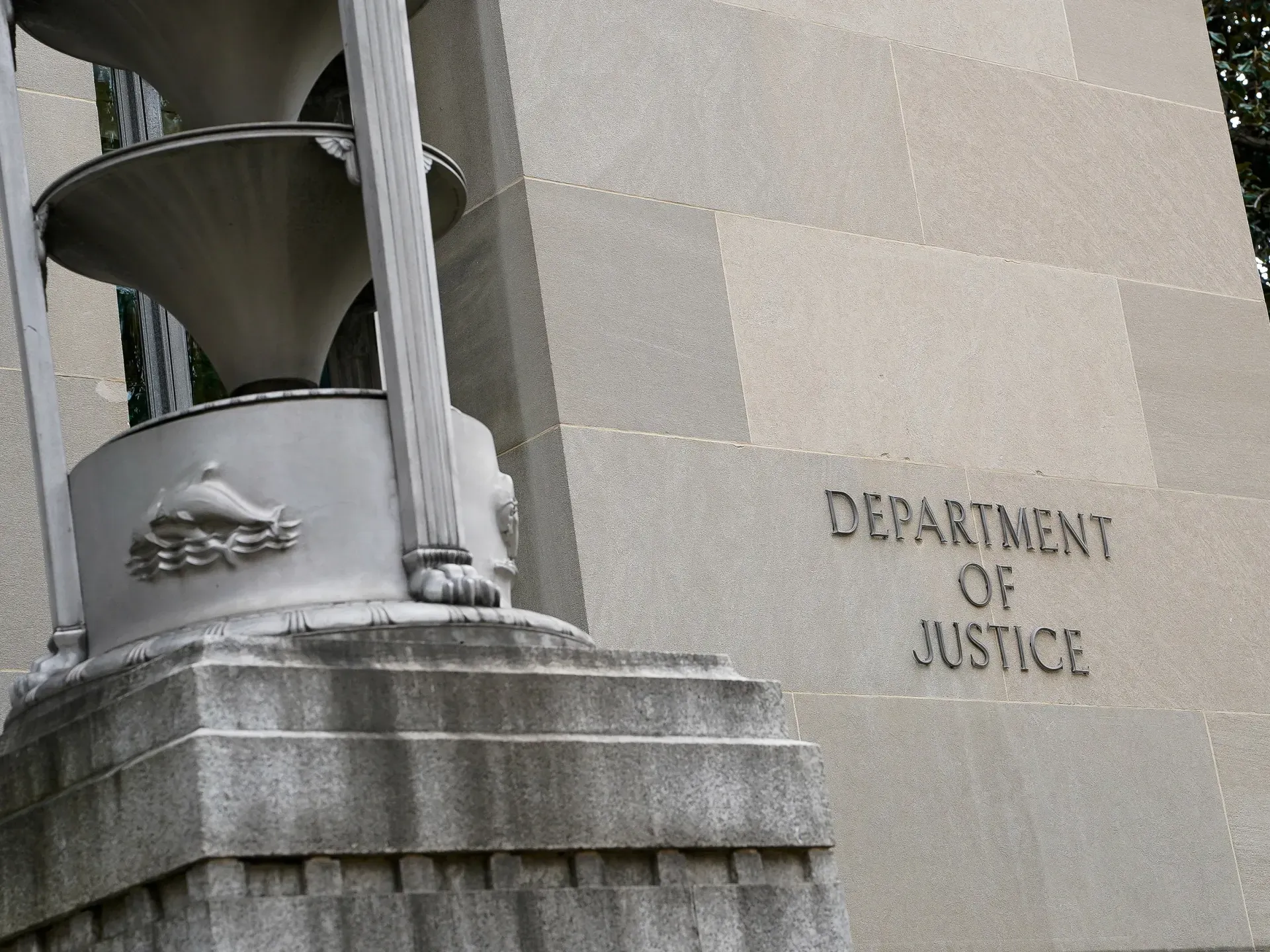
Liren Lai and Yuance Chen were each sentenced to 30 months in prison and three years of supervised release after pleading guilty to acting as unregistered agents of a foreign government. According to the US Department of Justice (DOJ), the pair were found guilty of conspiracy to act as agents of a foreign government without notifying the Attorney General, as well as acting as agents without prior notification.
The legal proceedings concluded a case that began with the duo's arrest in June 2025. Their activities were described by Assistant Attorney General for National Security John A. Eisenberg as a "long-running", "extensive", and "brazen" effort designed to undermine American national security while supporting the intelligence-gathering objectives of the Chinese government.
The legal framework of the conviction
The convictions center on the failure to disclose foreign agency status to the US government. Under US law, individuals acting on behalf of foreign powers must register with the Department of Justice. By bypassing this requirement, Lai and Chen operated in the shadows, attempting to build networks of influence and information gathering that could directly benefit the Ministry of State Security (MSS).
How did the espionage scheme operate?
The espionage operation relied on a combination of interpersonal recruitment and clandestine financial transactions known as "dead drops." Court documents indicate that the scheme was active no later than May 2021, with the two men working to establish a pipeline between US-based targets and Chinese intelligence handlers.
The operational structure evolved over time. Liren Lai, who entered the United States on a tourist visa, initially acted as an intermediary. He recruited Yuance Chen, a permanent resident, into the operation. While Lai originally served as the bridge between Chen and Chinese intelligence officers, the arrangement eventually matured to the point where Chen could receive direct orders from his handlers.
The mechanics of "dead drop" payments
A central component of their illicit activity involved the movement of funds to compensate informants or facilitate operations. The DOJ detailed two specific instances of these "dead drop" arrangements:
- In May 2022, the pair facilitated a $10,000 cash payment from China.
- A subsequent operation involved the facilitation of an additional $20,000 payment.
In these transactions, US-based individuals were instructed to leave cash at specific, predetermined locations to be collected later by another party, thereby avoiding direct contact between the payer and the recipient.
What types of information were targeted?
The espionage efforts focused heavily on the US military, targeting both personnel and sensitive facilities. The duo engaged in activities designed to gather intelligence on the US Navy and the broader military infrastructure of the United States.
The scope of their intelligence gathering included several distinct categories of information:
- Visual Intelligence: The pair obtained photographs of naval facilities and active-duty sailors.
- Personnel Data: Chen was responsible for collecting personal information regarding a US Navy employee.
- Target Profiling: Chen maintained detailed biographical files on military personnel who were identified as potential intelligence targets.
- Recruitment Targets: The pair actively sought to recruit US military service members to provide information related to national security.
While the DOJ confirmed the existence of these activities, the total number of successful recruitments or the full frequency of these intelligence-gathering missions remains undisclosed in the official statements.
What is the broader context of US-China espionage tensions?
The sentencing of Lai and Chen occurs amidst a period of heightened friction between Washington and Beijing regarding intelligence activities. This case is part of a wider pattern of accusations and retaliatory actions involving espionage and the detention of citizens.
Political leaders have frequently commented on these security concerns. US President Donald Trump noted in late August that while China conducts espionage against the US, the US also engages in similar activities. This sentiment reflects a broader geopolitical reality where intelligence gathering is a central pillar of the competition between the two superpowers.
Reciprocal accusations and detentions
The tension is further evidenced by recent actions taken by the Chinese government. In June, China announced the arrest of a US citizen, Min Zin, on espionage charges. This arrest followed media reports that Zin, a scholar with dual US and Myanmar citizenship, had been detained earlier that month. Zin's work had included political commentary critical of the Myanmar military government, highlighting how the lines between political dissent and espionage are often contested in international relations.
Frequently asked questions
Who are the individuals sentenced in this case?
The individuals are Liren "Ryan" Lai, aged 40, and Yuance Chen, aged 39. Lai entered the US on a tourist visa, while Chen is a permanent resident. Both were acting as agents for China's Ministry of State Security.
What was the primary method of payment used by the spies?
The spies used a method called "dead drops." This involved ordering US-based individuals to leave cash at specific, secret locations so that it could be collected by others, minimizing the risk of direct contact between parties.
What kind of military information did they collect?
They collected photographs of naval facilities, images of active-duty sailors, and personal biographical data on military personnel. Their goal was to identify and recruit US military members for intelligence purposes.
How long were the sentences for the two Chinese nationals?
Both Liren Lai and Yuance Chen received sentences of 30 months in prison. Additionally, they were both sentenced to three years of supervised release following their incarceration.
When were the individuals arrested?
The two men were arrested and officially charged in June 2025. Their legal process culminated in the guilty pleas and sentencing reported in late October 2026.
Key takeaways
- Liren Lai and Yuance Chen were each sentenced to 30 months in prison for spying.
- The duo facilitated at least $30,000 in "dead drop" cash payments for Chinese intelligence.
- Targeted information included naval facility photos and US military personnel biographies.
- The operations were conducted on behalf of China's Ministry of State Security.
Conclusion
The sentencing of Liren Lai and Yuance Chen underscores the persistent challenge of foreign intelligence operations within the United States. By leveraging "dead drop" financial tactics and targeting military personnel, the pair managed to conduct extensive espionage activities for the Ministry of State Security over several years. As the US and China continue to navigate complex security and political landscapes, cases like this highlight the ongoing vulnerability of national security assets and the increasing frequency of reciprocal espionage accusations between the two global powers.