Who was Ranji Smile and how did he reach New York?
Ranji Smile was an Indian chef whose true origins and legal name remain a mystery to historians. He arrived in New York in the summer of 1899, having sailed from London, where he had previously worked as a curry cook at the prestigious Cecil and Savoy hotels. His moniker 'Ranji' likely served as a tribute to the famous Indian cricketer KS Ranjitsinhji, while 'Smile' may have been an anglicised version of the name Ismail.
Upon his arrival at Ellis Island, Smile adopted the more egalitarian American name 'Joe,' a move that reflected his talent for reinvention. His entry into the high-society culinary scene was facilitated by Louis Sherry, the owner of the famed Sherry's Restaurant on Fifth Avenue. According to an 1899 profile in Harper's, Sherry had personally observed Smile's skills in London and invited him to bring his expertise across the Atlantic to satisfy the growing curiosity of Manhattan's elite.
How did Smile impact the dining scene at Sherry's Restaurant?
At Sherry's Restaurant, Smile became a central figure in one of the most extravagant dining institutions of the American Gilded Age. The establishment was a direct rival to Delmonico's and was known for hosting the city's wealthiest plutocrats, including the Astor family. Smile's role was as much about performance as it was about cooking, a necessity in an era where dining was often a theatrical spectacle.
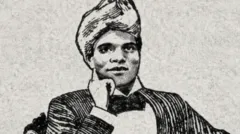
He gained notoriety for preparing exotic dishes such as Bombay duck—a type of lizardfish delicacy from the western Indian coast—and creative novelties like 'Lettuce Ceylon.' His presentation was meticulously choreographed; dressed in a satin coat and a blue silk turban, he would perform a salaam to guests before asking, 'Will you have the curry hot or mild, sahib?' This flair for the dramatic captured the public imagination, leading newspapers to report that New York women were captivated by him.
The Gilded Age dining environment
The environment at Sherry's provided the perfect stage for Smile's persona. During this period, fine dining in New York often crossed the line into the surreal. Patrons were known to ride horses into ballrooms to dine while saddled. In this atmosphere of excess, Smile's ability to blend culinary skill with cultural performance allowed him to thrive and build the reputation necessary to launch his own venture.
What was the rise and fall of the Omar Khayyam restaurant?
In late 1901, Smile transitioned from a celebrity chef to a restaurateur by opening Omar Khayyam at 325 Fifth Avenue. Backed by financier Roland R. Conklin, the restaurant was situated in prime Manhattan real estate, near the site where the Empire State Building would eventually be constructed. The establishment was designed to be a sensory immersion into Indian culture, featuring Indian draperies, hanging lanterns, and a staff of Indian musicians and waiters wearing voluminous turbans.
Despite the high-profile launch, the restaurant failed to sustain its momentum. Within a single year, Omar Khayyam was forced to close its doors. The New York Sun attributed the failure to a loss of interest among the public, suggesting that the appetite for Indian fare was merely a passing fad. However, the decline of the restaurant was also tied to the growing scrutiny of Smile's increasingly erratic and deceptive behavior.
How did Smile's persona lead to legal troubles?
As his professional fortunes waned, Smile's penchant for reinvention took a darker, more fraudulent turn. He began claiming to be a prince and the son of the emir of Baluchistan, a title that was entirely fabricated. This deception extended to his recruitment of staff; he had traveled to Bombay claiming to be an official guest of the upcoming coronation of King Edward VII to recruit a retinue of valets, musicians, and even elephant drivers.
This elaborate ruse led to significant legal consequences. A subsequent federal case alleged that Smile had illegally trafficked these individuals into the United States to work at his restaurant. While Smile managed to evade deportation, many members of his retinue were not as fortunate. His reputation continued to suffer as he engaged in various legal battles, ranging from accusations of forcible confinement to simple disputes over restaurant bills.
The evolution of the 'Prince' persona
Smile's attempts to maintain his aristocratic facade became increasingly desperate and far-fetched. As he traveled across the country performing cooking demonstrations, he changed his lineage to suit his audience. In Washington D.C., he presented himself as a royal, while in the American West, he claimed to be the brother of the 'great Beglerberg of Baluchistan.' These fabrications eventually alienated the public and the law alike.
What is the legacy of Indian cuisine in America following Smile?
Although Ranji Smile's personal story ended in obscurity and legal disgrace, he served as a catalyst for the broader acceptance of Indian flavors in the United States. His efforts, though flawed by deception, broke the ground for subsequent immigrants who approached the market with different strategies. For instance, in 1909, journalist Saint Nihal Singh used the Chicago Daily Tribune to introduce recipes like bhajias and puris, even suggesting practical substitutes like hamburger meat for pilaf to make the cuisine more accessible to Americans.
The true commercial success of Indian dining in New York is often attributed to KY Kira, a Ceylonese immigrant. After working with circus troupes, Kira opened the Ceylon India Inn in Harlem in 1913. Unlike Smile's venture, Kira's restaurant became a long-standing institution, eventually moving near Times Square and catering to Hollywood and Broadway stars. While the Ceylon India Inn claimed to be the first successful Indian restaurant, it was building upon the cultural curiosity that Smile had initially ignited.
Frequently asked questions
Was Ranji Smile actually a prince?
No, the claim that he was a prince or the son of the emir of Baluchistan was a fabrication. Smile used these false titles to enhance his celebrity status and attract customers, but these claims eventually led to federal investigations and legal challenges regarding his character and his recruitment of staff.
Why did the Omar Khayyam restaurant fail?
The restaurant closed within a year of opening due to a combination of factors. While contemporary reports from the New York Sun suggested that the public viewed Indian food as a passing fad, the business also suffered from the legal controversies and fraudulent activities surrounding Smile's persona.
What was the first successful Indian restaurant in the US?
While Ranji Smile opened Omar Khayyam in 1901, the Ceylon India Inn, opened by KY Kira in 1913, is often cited as a more sustained success. Kira's establishment became a staple of the New York dining scene, catering to celebrities and remaining in business until the late 1980s.
What dishes did Ranji Smile serve?
Smile served several exotic and novel dishes designed to impress his Gilded Age clientele. These included Bombay duck, a type of lizardfish, and a creation known as 'Lettuce Ceylon.' His menus were intended to provide a theatrical and sensory experience of Indian culture.
How did Smile's career end?
Smile's career ended in obscurity following a series of legal troubles and personal scandals. By the 1920s, he had largely abandoned cooking, and his final recorded appearance in public records was in 1937, when his wife sought an annulment of their marriage in a New York court.
Key takeaways
- Ranji Smile opened Omar Khayyam in 1901, one of the first Indian restaurants in America.
- He used theatrical showmanship, including silk turbans and salams, to market Indian cuisine.
- Smile faced federal legal action for allegedly trafficking staff into the United States.
- His restaurant failed within a year, though he paved the way for future culinary successes.
- The Ceylon India Inn, opened by KY Kira, became a much more enduring culinary institution.
Conclusion
The story of Ranji Smile is a complex intersection of culinary pioneering and elaborate deception. While his tenure as a restaurateur was brief and marred by legal controversy, his impact on the American palate was undeniable. He transformed the act of eating into a cultural performance, sparking an interest in Indian flavors that would eventually be nurtured by subsequent generations of immigrants. Though his personal legacy is one of vanished identities and broken promises, the gastronomic landscape of America was permanently altered by his brief, brilliant, and fraudulent presence in the Gilded Age.