How did Fleetwood Town secure the penalty shootout victory?
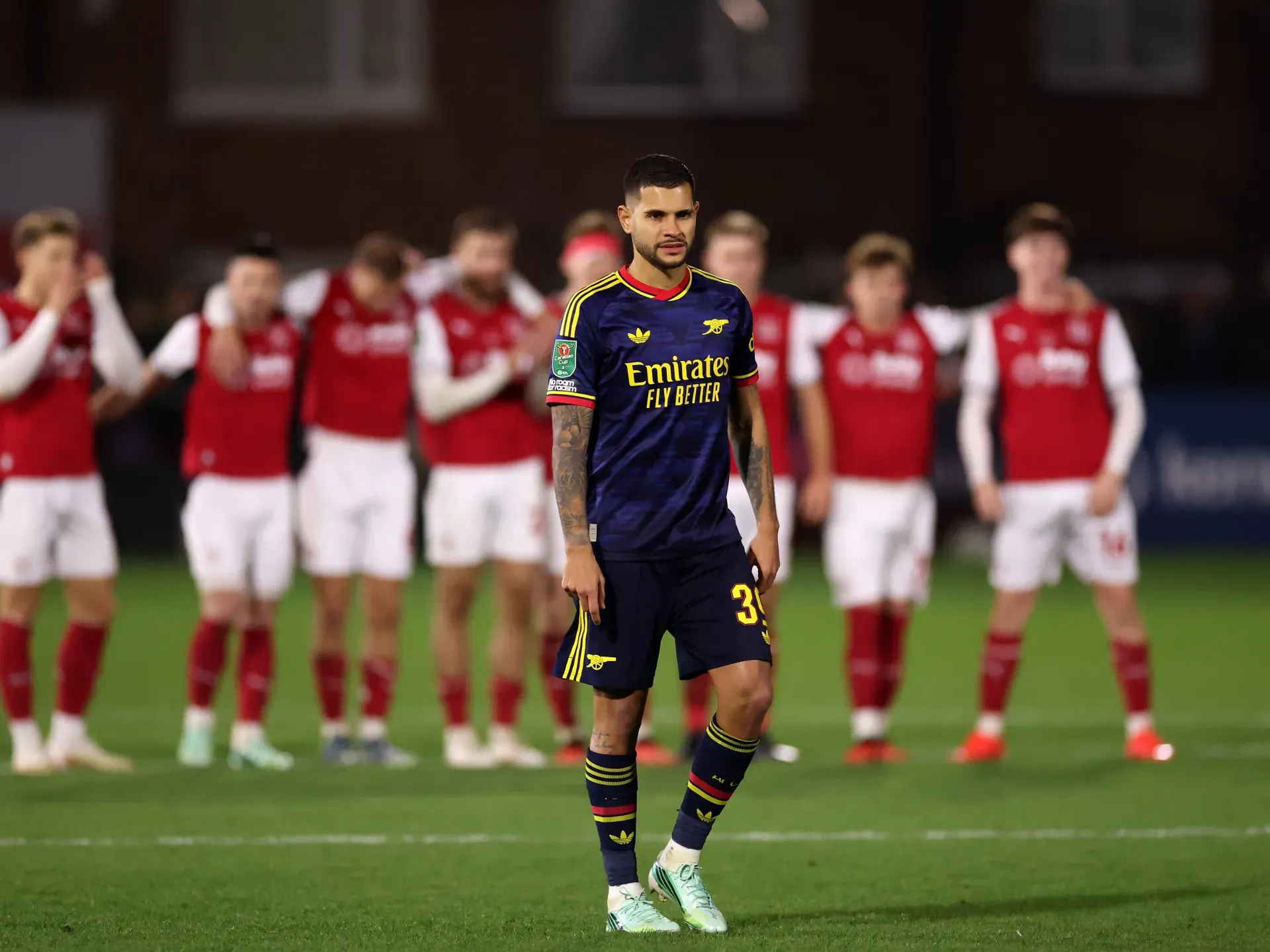
Fleetwood Town secured their 5-3 penalty shootout victory by maintaining composure while Arsenal's high-profile stars faltered. After both sides successfully converted their initial three penalties, the pressure shifted to the Premier League champions. Bruno Guimaraes saw his attempt saved by Fleetwood goalkeeper Jay Lynch, providing the decisive opening for the underdogs.
Conor Haughey then stepped up to score the winning penalty, sealing what is being described as the biggest shock in League Cup history. The victory was met with jubilant scenes as Fleetwood manager Matt Lawlor wept with joy and supporters flooded the pitch to celebrate the triumph of the 'Cod Army'.
The decisive moments in the shootout
The shootout was a tense affair that highlighted the psychological gap between the two tiers of English football. While Arsenal's squad features international stars, the pressure of the moment saw Guimaraes miss the crucial opportunity to keep the Gunners in the contest. Lynch's save proved to be the turning point that allowed Fleetwood to capitalize on their momentum.
What happened during the regulation time of the match?
Fleetwood Town took a surprising lead in the 21st minute following a defensive error by Arsenal's Marli Salmon. The 17-year-old Salmon was outmuscled by Aaron Loupalo-Bi, who drove into the penalty area to finish past debutant goalkeeper Illan Meslier. This early goal placed the Premier League champions on the back foot against a side languishing in 18th place in League Two.
Arsenal responded in the second half through Viktor Gyokeres, who equalized five minutes after the interval. The goal came from a scrappy sequence where Gyokeres wrestled with his marker before poking the ball past Jay Lynch from close range, following a cross from Ceadach O’Neill. Despite Arsenal monopolizing possession for much of the match, they struggled to find the clinical edge required to break down the Fleetwood defense.
Why did Mikel Arteta's selection strategy backfire?
Mikel Arteta's decision to rotate his squad heavily backfired, as he made nine changes to the starting lineup to prioritize the upcoming Premier League fixture against Liverpool. Only Myles Lewis-Skelly and Viktor Gyokeres retained their places from the previous victory over Everton. This tactical gamble left the side lacking the cohesion and experience needed to navigate a difficult away fixture.
The reliance on youth was evident in the starting lineup, which included teenagers Max Dowman and Marli Salmon, alongside 18-year-old Ceadach O’Neill. While the intention was to manage player fatigue, the lack of depth and experience in the midfield and defense proved costly against a motivated Fleetwood side. The mismatch in physical presence, particularly in the first half, allowed Fleetwood to dictate the tempo of the game despite the disparity in league standings.
The impact of the red card
The match took a further turn for Arsenal in the 85th minute when 16-year-old Max Dowman was sent off for violent conduct. The dismissal occurred after Dowman kicked out at Fleetwood's Harrison Neal following a heavy challenge. Although the decision was contested by some, it left Arsenal with only ten men for the final minutes of regulation time, complicating their efforts to find a winning goal before the shootout.
How does this defeat compare to Arsenal's historical upsets?
This defeat ranks among the most significant losses in Arsenal's history, surpassing several notable previous exits to lower-league opposition. While the club has suffered shocks before, the scale of losing to a fourth-tier side like Fleetwood Town adds a new layer of embarrassment to the club's record. The defeat occurred at a time when the team was performing strongly in the Premier League, making the contrast even more stark.
To understand the magnitude of this loss, it is helpful to look at Arsenal's previous struggles against lower-tier clubs:
- 2012: Arsene Wenger's side lost to fourth-tier Bradford in the League Cup.
- 2022: The club was eliminated by Nottingham Forest, then in the Championship.
- Last Season: Arsenal suffered an FA Cup exit against second-tier Southampton.
- Historical Context: Older fans recall losses to Swindon (third-tier) in 1969 and Wrexham (fourth-tier) in 1992.
Unlike the 1992 exit against Wrexham or the 1969 loss to Swindon, the Fleetwood defeat is viewed as particularly chastening due to the current era's high expectations and the team's recent dominance in the top flight.
What were the unique conditions at the Fleetwood stadium?
The match was played under challenging conditions at Fleetwood's small, 5,327-capacity ground, which is a significant departure from the professional environment of the Emirates Stadium. The evening was marked by windy weather off the Irish Sea and an eight-minute delay caused by an unauthorized drone flying over the stadium. These disruptions appeared to affect Arsenal's ability to settle into the game.
The atmosphere at the ground is distinct, characterized by the use of the 'Captain Pugwash' theme song over the tannoy during celebrations. For Arsenal, the venue also holds a coincidental connection, as Fleetwood's ground shares the same name as Highbury, Arsenal's former home. However, rather than providing a sense of nostalgia, the match will likely be remembered for the tactical and competitive failure of the Premier League champions on that pitch.
FAQ: Arsenal vs Fleetwood Town
How many players did Arsenal have on the pitch during the end of regulation?
Arsenal played the final minutes of the match with 10 players. This was due to Max Dowman receiving a red card in the 85th minute for violent conduct following a challenge involving Harrison Neal.
Who scored the goals for both teams?
Aaron Loupalo-Bi scored the opening goal for Fleetwood Town in the 21st minute. Viktor Gyokeres scored the equalizing goal for Arsenal shortly after the halftime interval to bring the score to 1-1.
What was the final result of the penalty shootout?
Fleetwood Town won the penalty shootout 5-3. After both teams converted their first three attempts, Jay Lynch saved a penalty from Bruno Guimaraes, and Conor Haughey scored the decisive winning penalty for Fleetwood.
Why did Arsenal make so many changes to their lineup?
Mikel Arteta made nine changes to the starting lineup to prioritize the upcoming Premier League match against Liverpool. This rotation strategy aimed to manage player workload but ultimately resulted in a loss of cohesion and experience.
What is Fleetwood Town's nickname?
Fleetwood Town is nicknamed the "Cod Army," a reference to the town's historical fishing industry. The team is currently competing in League Two, sitting in 18th place in the league standings.
Key takeaways
- Fleetwood Town defeated Arsenal 5-3 on penalties after a 1-1 draw in the League Cup.
- Arsenal's Bruno Guimaraes missed his penalty, which was saved by Jay Lynch.
- Mikel Arteta made nine changes to the lineup to prioritize the Premier League.
- Max Dowman was sent off for violent conduct in the 85th minute.
- This marks one of the most significant upsets in Arsenal's recent history.
The aftermath of the upset
The defeat leaves Arsenal in a precarious position regarding their domestic cup ambitions, having already struggled in the FA Cup against lower-tier opposition in previous seasons. For Fleetwood Town, the victory represents a monumental achievement that transcends their current league standing. While Arsenal must now refocus on their Premier League title race, the "Cod Army" will celebrate a night that has secured their place in English football folklore.