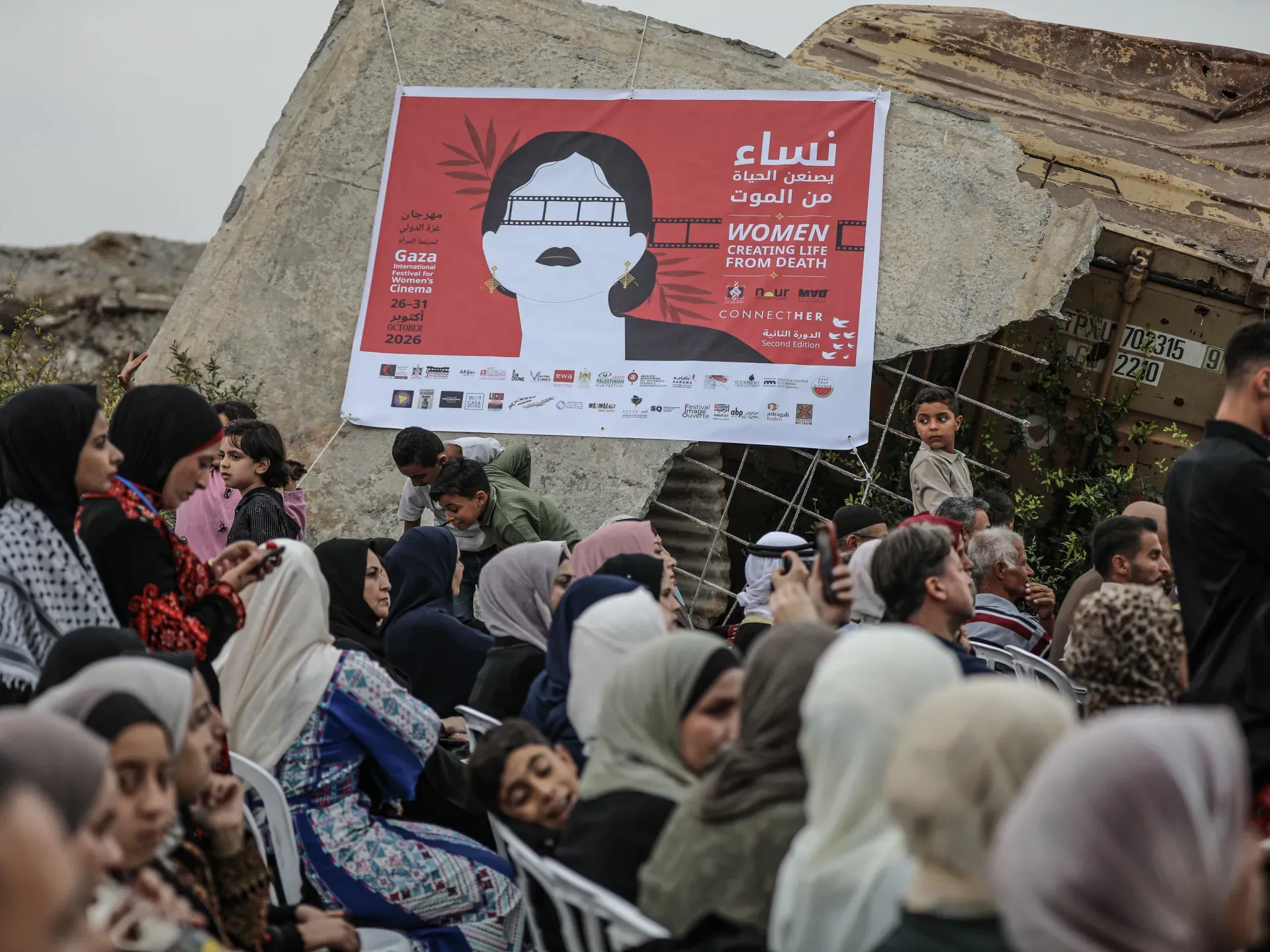
How are Gaza women filmmakers using cinema to document the war?
Gaza women filmmakers are transforming personal trauma into visual testimony to ensure the human experience of the conflict is not erased. At the opening of the second Gaza International Women’s Film Festival, several documentaries showcased the diverse ways women are processing the ongoing violence through lens and narrative. These films serve as both artistic expression and historical record, capturing the psychological and social scars left by years of bombardment and siege.
The documentaries presented at the festival include a range of perspectives on survival and loss:
- A Sack of Flour: An 11-minute documentary by Mona Abu Qass that examines the impact of starvation and the dangers faced by Palestinians attempting to access food aid.
- Beyond Silence: Raghda al-Buhaisi’s directorial debut, which focuses on the specific challenges faced by people with disabilities, including a deaf artist displaced from Rafah.
- Soso: The Lifeline: A story following an orphaned child and his donkey as they navigate survival in the enclave.
- Remnants of Light: A narrative centered on a filmmaker dealing with the destruction of her home and the loss of her family.
- Dandana: A film about a mother of eight who lost all her children and uses traditional Palestinian songs to manage grief.
According to festival director Ezzedine Shallah, these films turn individual suffering into broader human stories, providing a platform for women to speak in their own voices rather than being spoken for by others.
What is the purpose of the new Gaza Cinema Academy?
The Gaza Cinema Academy was officially launched alongside the film festival to provide structured, accredited professional training for the next generation of Palestinian directors. The academy is addressing a critical gap in technical education and professional development that has been exacerbated by the destruction of cultural infrastructure.
The academy's educational framework includes several key components:
Accreditation and Training Programs
The academy has developed a filmmaking diploma program in collaboration with al-Quds Open University. This program is officially accredited by the Palestinian Ministry of Education, ensuring that the skills acquired by students are recognized within formal academic and professional structures. The inaugural cohort included 25 young Palestinian women who participated in a diploma program that began in March 2026.
Beyond technical instruction, the academy aims to bridge the gap between local production and the global film industry. Co-founder Mai Masri stated that the academy is actively seeking agreements with international distributors. The goal is to facilitate the screening of these films in educational and cultural institutions worldwide, as well as on digital platforms and at international festivals focused on human rights and women's issues. This strategy is designed to strengthen the international presence of Palestinian cinema and provide viable career paths for female directors.
What are the primary challenges facing filmmakers in Gaza?
Filmmakers in Gaza face formidable structural and physical obstacles that severely restrict the ability to produce and distribute cinematic work. The intersection of active conflict and long-standing blockades has created an environment where even basic production requirements are difficult to meet.
The challenges can be categorized into three main areas:
- Infrastructure and Resources: The destruction of cultural institutions, combined with a chronic scarcity of filming equipment, makes high-quality production difficult. Furthermore, frequent power and internet outages disrupt both the filming process and the ability to upload or share content.
- Economic and Political Barriers: The Israeli siege, which predates the current conflict, has limited the movement of people and goods. Filmmakers often have to self-fund their projects and rely on rudimentary methods due to a lack of institutional or international funding.
- Gender-Specific Obstacles: Women filmmakers face additional hurdles in accessing training opportunities, production networks, and invitations to international film festivals, which are often difficult to reach from the enclave.
Rima Mahmoud, a co-founder of the festival, noted that despite these limitations, many women are using simple, resourceful methods to document their reality, emphasizing the urgent need for technical and financial support, as well as translation services to reach global audiences.
How does cinema serve as a tool for cultural resistance?
Cinema in Gaza acts as a mechanism for resisting the erasure of Palestinian identity and collective memory. By documenting the minutiae of daily life—from the struggle for food to the preservation of traditional songs—filmmakers are creating a permanent archive of a lived reality that might otherwise be ignored by the global community.
Mai Masri, a co-founder of the festival, highlighted that telling these stories is a way for young women to claim agency. Through film, they can build professional skills that allow them to work via digital platforms, even when physical movement is restricted. This digital connectivity is vital for maintaining a cultural presence when traditional outlets are destroyed or censored. The act of filming becomes an act of preservation, ensuring that the names, faces, and stories of those affected by the war are recorded for future generations.
Frequently asked questions
What is the Gaza International Women's Film Festival?
The Gaza International Women's Film Festival is an event dedicated to showcasing works by female filmmakers, particularly those from Gaza. The second edition, held in October 2026, featured 73 films from 24 different countries, providing a platform for Palestinian women to share their stories with a wider audience.
Who founded the Gaza Cinema Academy?
The academy was established by figures including Mai Masri and Rima Mahmoud. It works in cooperation with al-Quds Open University to provide accredited filmmaking diplomas, aiming to professionalize Palestinian cinema and help local directors access international film festivals and distribution networks.
Why is the festival being held in a destroyed building?
The festival took place at the al-Nakheel Hall in al-Bureij, a site that has been destroyed due to the ongoing war. Holding the event in a damaged space reflects the current reality of Gaza, where cultural and social life must continue amidst widespread physical destruction.
What themes are explored in the festival's documentaries?
The documentaries focus on themes of survival, displacement, and the psychological impact of war. Specific subjects include the effects of food shortages, the struggles of people with disabilities, the loss of family members, and the ways in which art and music are used to cope with grief.
How does the academy help female directors reach global audiences?
The academy seeks to establish partnerships with international distributors and cultural institutions. By securing agreements to screen films in educational settings and human rights-focused festivals abroad, the academy aims to bring Palestinian women's voices to a global stage and increase the international visibility of their work.
Key takeaways
- The Gaza Cinema Academy provides accredited filmmaking diplomas in partnership with al-Quds Open University.
- The second Gaza International Women’s Film Festival featured 73 films from 24 different countries.
- Documentaries at the festival highlighted themes of hunger, disability, and the loss of family.
- Filmmakers in Gaza face significant hurdles including equipment shortages, power outages, and limited funding.
- The festival aims to use cinema to preserve Palestinian collective memory and resist cultural erasure.
Conclusion
The launch of the Gaza Cinema Academy and the continuation of the Gaza International Women’s Film Festival represent a significant effort to sustain Palestinian cultural life under extreme conditions. By providing formal education and a platform for expression, these initiatives allow women to transform personal hardship into a powerful cinematic testimony. While the challenges of equipment shortages, destruction, and restricted movement remain immense, the focus on professional accreditation and international outreach offers a potential pathway for Gaza’s filmmakers to engage with the global community and ensure their stories are preserved.