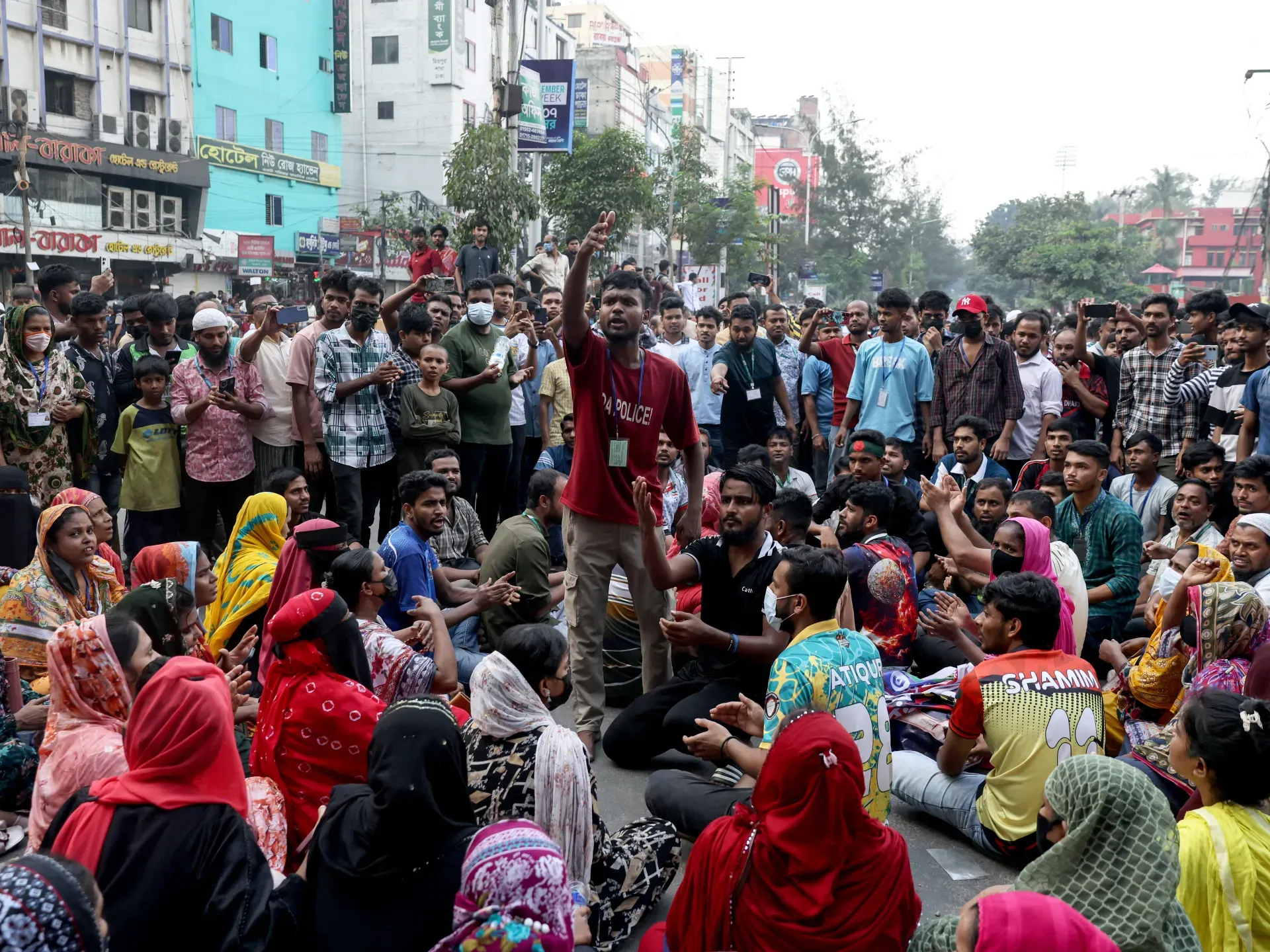
What is driving the Bangladesh garment factory protests?
The primary driver of the ongoing unrest is the widening gap between current wages and the escalating cost of living in Bangladesh. Workers in the nation's largest export sector argue that their existing compensation is no longer sufficient to maintain a basic standard of living due to persistent inflation.
According to Tanvir Chowdhury, reporting from the capital, the current wage levels do not allow workers to manage essential lifestyle costs. Consequently, laborers are demanding a larger share of the profits generated by the multibillion-dollar export industry. The core of the dispute lies in the proposed minimum monthly wage of 30,000 taka ($242), which represents more than double the current rate of 12,500 taka ($101).
The inflation-wage gap
As inflation continues to rise, the purchasing power of garment workers has diminished significantly. This economic pressure has transformed a labor dispute into a widespread social movement, as workers feel the necessity of securing a wage that reflects the true cost of goods and services in the current market.
How have the protests impacted industrial operations?
The demonstrations have caused significant disruptions across the country's industrial heartlands, leading to the temporary shutdown of roughly 500 factories. These closures began on Saturday and have continued through the weekend and into Monday, affecting major production zones.
Reports indicate that protests have been particularly intense in the following areas:
- Mirpur: A heavy police presence was noted in this Dhaka industrial area on Monday.
- Savar, Ashulia, and Gazipur: These hubs have seen three consecutive days of demonstrations.
The atmosphere in these regions has been volatile. Thousands of workers have taken to the streets, where they have faced interventions from law enforcement, including the use of tear gas and sound grenades. Such disruptions pose a direct threat to the stability of the production schedules required by international buyers.
What steps has the government taken to resolve the crisis?
The Bangladeshi government has initiated several emergency measures to address the unrest and prevent further economic damage. These actions aim to provide a structured framework for wage negotiations while maintaining domestic order.
On Sunday, the government formed a new wage board specifically tasked with reviewing the minimum wage for garment workers. This move is intended to facilitate a formal negotiation process between labor representatives and industry stakeholders. Simultaneously, Prime Minister Tarique Rahman convened an emergency meeting with his ministers and advisers to coordinate a national response to the escalating situation.
The role of the new wage board
The newly established wage board includes representatives from the labor sector, such as Babul Akhter, general secretary of the Bangladesh Garment and Industrial Workers Federation. By including worker advocates, the government hopes to reach a consensus that addresses the workers' needs without destabilizing the industry's financial viability.
What are the challenges facing factory owners?
Factory owners have expressed significant concerns regarding the feasibility of the proposed wage hikes, citing a complex landscape of rising operational costs and global economic uncertainty. The industry is currently navigating several headwinds that threaten profit margins.
According to Mahmud Hasan Khan, president of the Bangladesh Garment Manufacturers and Exporters Association, the industry is grappling with:
- Higher production costs: Increasing expenses related to raw materials and labor.
- Energy market instability: Uncertainty in energy markets linked to geopolitical tensions, specifically the conflict involving the United States, Israel, and Iran.
- Slowing global demand: A reduction in orders from key international export markets.
In response to the continued disruptions, Khan has indicated that if protests persist, manufacturers may be forced to invoke "no work, no pay" provisions, which could further exacerbate tensions between employers and the workforce.
Negotiations with international buyers
Babul Akhter, representing workers on the wage board, has argued that the burden of rising costs should not fall solely on the employees. He suggested that if factory owners find it difficult to meet wage demands, they must negotiate more competitive pricing with international buyers to ensure that business models are not built on underpaid labor.
How does the Bangladesh garment sector compare globally?
Bangladesh remains a dominant force in the global textile market, but it faces intense competition from other major manufacturing nations. The stability of its labor relations is a critical factor in maintaining its market share.
The industry, valued at approximately $38bn, competes directly with several key players, including:
- Vietnam
- Cambodia
- India
While Bangladesh offers competitive advantages, Babul Akhter noted that the country currently maintains some of the lowest garment wages in the world. This low-cost advantage is increasingly under scrutiny as workers demand a more equitable distribution of the industry's vast export earnings.
Frequently asked questions
What is the specific wage increase being demanded?
Workers are requesting a minimum monthly wage of 30,000 taka, which is approximately $242. This is a significant increase from the current minimum wage of 12,500 taka ($101), as workers seek to offset the impact of rising inflation.
Which areas of Bangladesh are most affected by the protests?
The disruptions are concentrated in major industrial hubs. Key areas include the Mirpur district of Dhaka, as well as the industrial zones of Savar, Ashulia, and Gazipur, where protests have continued for multiple days.
How many factories have been closed due to the unrest?
Approximately 500 garment factories have been temporarily shuttered since the protests began on Saturday. These closures are a direct result of the widespread demonstrations and the resulting instability in the industrial sectors.
What is the government's plan to address the wage dispute?
The government has formed a new wage board to review the minimum wage requirements. Additionally, Prime Minister Tarique Rahman has held emergency meetings with government advisers to manage the crisis and find a path toward resolution.
What are the main economic pressures on factory owners?
Factory owners are facing higher operational costs, energy market uncertainty caused by international conflicts, and a general slowdown in demand from global export markets, making the proposed wage increases a point of contention.
Key takeaways
- Workers are demanding a minimum wage increase from 12,500 taka to 30,000 taka.
- Approximately 500 factories have been temporarily closed due to ongoing protests.
- The Bangladesh garment industry is a vital $38bn sector for the national economy.
- A new government-led wage board has been established to review pay scales.
- Geopolitical tensions are contributing to energy market uncertainty for manufacturers.
Conclusion
The ongoing garment factory protests in Bangladesh represent a critical juncture for the nation's economy. As workers demand wages that reflect the reality of rising inflation, the $38bn export sector faces significant operational risks and industrial instability. The government's decision to form a new wage board offers a potential pathway for mediation, yet the tension between labor demands and factory owners' cost concerns remains high. The resolution of this dispute will not only impact the livelihoods of thousands of workers but will also influence Bangladesh's competitive standing in the global textile market amidst increasing international economic volatility.