What are the specific plans for lunar nuclear reactors?
The United States, Russia, and China are developing distinct nuclear technologies designed to provide long-term, autonomous power on the lunar surface. NASA's proposed 'Lunar Reactor 1' is engineered to generate 20 kilowatts of electricity. This compact unit is designed to weigh less than 6,000kg and operate independently for five years without requiring human maintenance. The reactor's dimensions are constrained to fit within a rocket compartment measuring 3.7 metres in length and 5.5 metres in width.
In contrast, the Russian-led 'Selena' project, intended to support Chinese lunar bases, focuses on a much lighter profile. The Selena reactor is expected to produce 10 kilowatts of power and weigh between 1,100kg and 1,300kg. This lower mass is intended to facilitate a softer, more stable landing on the moon. While lighter, the Selena unit is designed for greater longevity, with an expected operational lifespan of approximately one decade without maintenance.
Historical context of space nuclear power
While these modern missions are ambitious, they build upon a precedent set during the Cold War. Between the late 1960s and the 1980s, the Soviet Union successfully launched more than 30 nuclear fission reactors into Earth's orbit. These units, typically weighing around 1,000kg, provided between 3 and 5 kilowatts of electricity to power radar-tracking spy satellites. Although these historical reactors are no longer operational, they represent the only successful deployment of nuclear fission technology in space to date. The United States has invested $20bn in advanced space nuclear programs over the last seven decades, yet it has not successfully launched a functional reactor since a 1965 experiment. That specific mission failed after 43 days due to a non-nuclear component failure, leaving the unit drifting in orbit.
Why is nuclear energy required for lunar exploration?
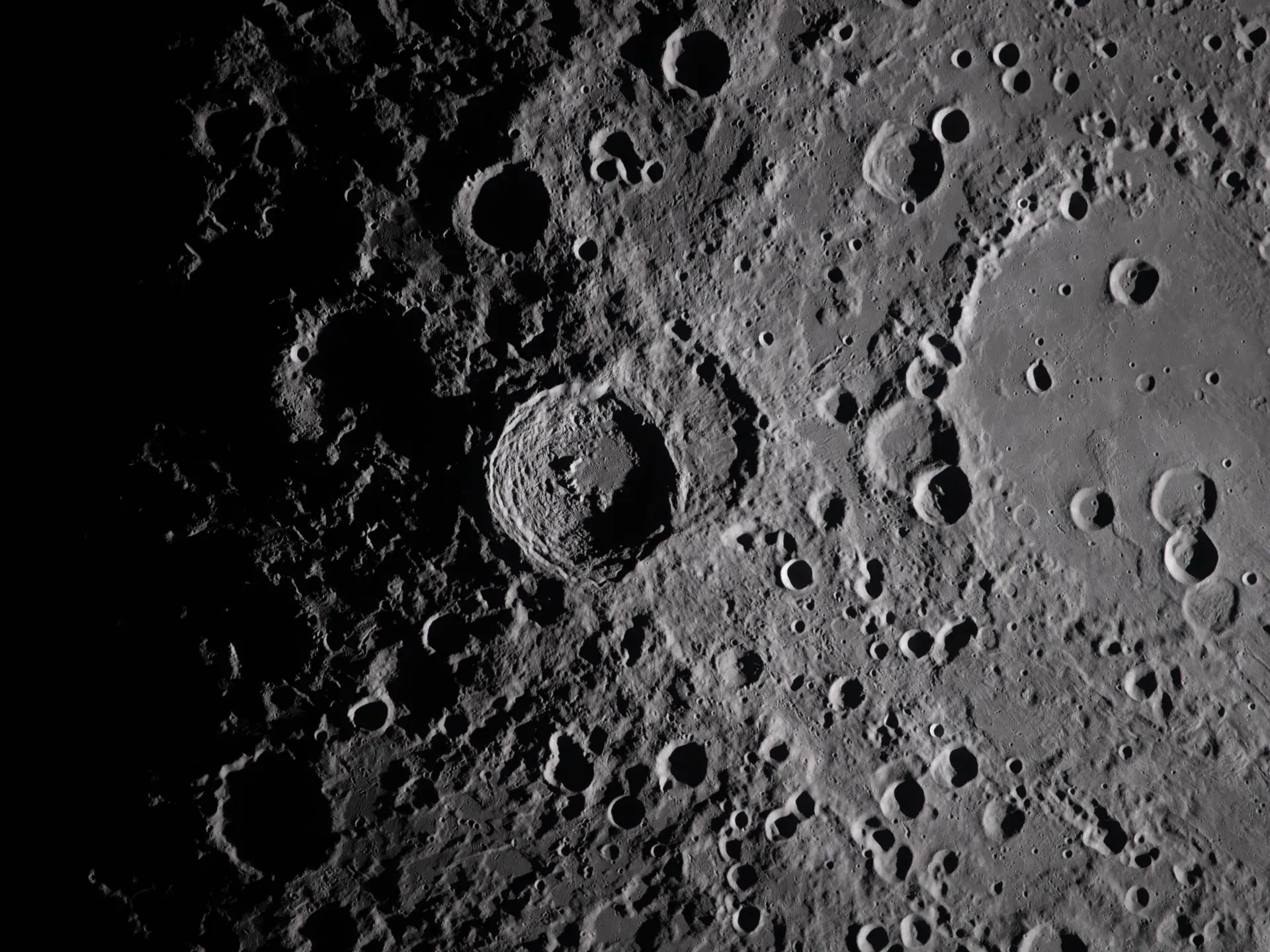
Nuclear energy is considered the most viable solution for sustaining life and industry on the moon because solar power is inherently inconsistent. On the lunar surface, any given location only receives sunlight for approximately half of the lunar cycle, resulting in two-week periods of darkness every month. This intermittent supply makes solar energy insufficient for the continuous energy demands of a permanent base. Furthermore, relying on batteries or diesel fuel is deemed impractical due to the immense cost and logistical difficulty of launching such heavy energy storage systems from Earth.
The primary driver for this energy demand is the extraction of frozen water located in the moon's south pole. These water reserves are trapped in permanently shadowed craters where sunlight has not reached for millions of years. Once extracted, this ice can be processed into several vital resources:
- Life Support: Drinking water and breathable oxygen for lunar inhabitants.
- Propulsion: Hydrogen and oxygen can be converted into rocket fuel for deep-space travel.
- Industrial Manufacturing: Mining for minerals like aluminium, titanium, and silicon to build satellites and structures on-site.
According to Simon Middleburgh, director of Bangor University’s Nuclear Futures Institute (NFI), a single reactor will likely be insufficient for these goals. He suggests that three or four reactors working in tandem would be necessary to support both a stable lunar base and the high-energy requirements of industrial mining operations.
What are the geopolitical drivers behind the lunar race?
The competition to establish lunar nuclear capabilities is deeply rooted in modern geopolitics and national security. In December 2025, a US executive order directed NASA to prepare a lunar reactor for launch by 2030. This move follows similar strategic declarations from Chinese President Xi Jinping and Russian President Vladimir Putin. The urgency is reflected in statements from US officials, such as Transportation Secretary Sean Duffy, who characterized the current era as a direct race between the US and China to reach the moon.
This competition extends beyond resource acquisition into the realm of orbital security and military dominance. The race is occurring alongside increasing tensions regarding 'space weapons.' While the US has announced the deployment of orbital assets to defend its forces, experts suggest these are likely communication jammers rather than kinetic weapons. However, the potential for space-based technology to target critical satellite infrastructure—including GPS and intelligence networks—remains a significant concern for global stability.
What are the potential risks of lunar nuclear deployment?
The deployment of nuclear material in space carries inherent risks of contamination, though the severity depends on where an accident occurs. During the launch phase, the primary concern is the radioactive material itself. However, experts note that uranium is not highly radioactive before it is processed into a functioning reactor. The greater danger arises if a reactor is active and experiences a catastrophic failure that causes it to fall back toward Earth.
A historical precedent for such a failure is the 1978 Kosmos 954 incident, where a Soviet satellite carrying a reactor scattered radioactive debris across 124,300 square kilometres of northern Canada. This event necessitated an extensive and costly military cleanup operation. On the lunar surface, however, the impact of an accident would be significantly different. Simon Middleburgh suggests that any contamination resulting from a lunar mishap would be 'extremely localised' compared to a terrestrial impact.
Regulatory and legal frameworks
The legal status of nuclear power on the moon is governed by international treaties, specifically the 1967 Outer Space Treaty. While this treaty prohibits nations from claiming sovereignty over the moon or any celestial body, it does not explicitly ban the use of nuclear energy in space. Under the treaty, nations maintain ownership of the equipment they deploy, provided they adhere to the principle of peaceful use. According to Antonino Salmeri, director of the Lunar Policy Platform, a nuclear reactor can be considered lawful as long as its operation avoids harmful contamination and aligns with the treaty's foundational principles of international cooperation and non-interference.
Frequently asked questions
How much power will the NASA lunar reactor produce?
NASA's planned Lunar Reactor 1 is designed to generate 20 kilowatts of electricity. This capacity is intended to support lunar operations for a five-year period without the need for human intervention or maintenance, making it a reliable energy source for early lunar outposts.
Why can't solar panels be used on the moon?
Solar energy is insufficient for permanent lunar bases because the moon experiences long periods of darkness. Any specific location on the moon only receives sunlight for about half of the month, meaning solar panels would be inactive for roughly two weeks at a time, failing to provide a steady energy flow.
What is the main goal of mining lunar ice?
The primary objective of mining frozen water from lunar craters is to secure essential resources for long-term habitation. This ice can be converted into drinking water, breathable air, and hydrogen-based rocket fuel, which is critical for sustaining both human life and future space exploration missions.
Is it legal to use nuclear power on the moon?
Yes, the use of nuclear power in space is not prohibited by the 1967 Outer Space Treaty. While the treaty forbids countries from claiming ownership of lunar territory, it allows for the deployment of technology, provided that the use is peaceful and does not cause harmful contamination.
What happened with the Soviet nuclear satellites?
Between the late 1960s and the 1980s, the Soviet Union launched over 30 nuclear fission reactors into Earth's orbit. These small reactors, producing 3 to 5 kilowatts of electricity, were used to power radar-tracking spy satellites during the Cold War era.
Key takeaways
- NASA aims to launch a 20kW lunar reactor by 2030 to power long-term moon missions.
- Russia and China are targeting 2036 for the deployment of the lightweight Selena reactor.
- Nuclear energy is essential because solar power is unavailable during the moon's two-week nights.
- Lunar water ice is a strategic resource for creating drinking water, oxygen, and rocket fuel.
- The 1967 Outer Space Treaty permits nuclear use if it remains peaceful and avoids contamination.
Conclusion
The race to establish lunar nuclear power represents a pivotal shift in human space exploration, moving from short-term visits to permanent habitation. While the technical challenges of landing and maintaining these reactors are significant, the geopolitical stakes are even higher. As the US, China, and Russia compete for control over strategic resources like water ice, the moon is becoming a new frontier for both industrial potential and international tension. Balancing the immense benefits of lunar energy against the risks of radioactive contamination will be the defining challenge for the next generation of space agencies and international regulators.